Navigation
Dry drilling is a diamond core drilling method that uses air cooling alone — no water. Dry drilling avoids the need for water supply equipment and works around jobsite constraints. But dust and heat management remain real challenges, so understand when dry drilling fits the application and site conditions.
This page explains how dry drilling works, its key characteristics, how it differs from wet drilling, and the operational details that matter on the jobsite.
What This Page Covers
- How Dry Drilling Works and Its Key Characteristics
- Differences from Wet Drilling and How to Choose Between Them
- Types of Dry Bits and Key Jobsite Management Practices
What Is Dry Drilling?
Dry drilling makes holes with a diamond core drill using air cooling alone (no water). It's used where wet drilling isn't feasible — on finished interior floors and walls, near electrical installations, or wherever water is hard to bring in. Setup is simpler because you don't need water supply equipment or wastewater handling. The trade-off: dust control and heat management matter even more than in wet drilling.
How Dry Drilling Works and Its Key Characteristics
Cooling: Air Flow and Bit Design Handle the Heat
In dry drilling, with no water cooling, the bit itself has to be designed to dissipate heat effectively. Dry-rated bits use slits between segments and turbo-shaped grooves to channel airflow and pull friction heat away. Even so, heat still builds up during continuous drilling and large-diameter work, so standard practice is to drill in short bursts with rest intervals to keep temperatures down.
Dust Removal: A Dust Extractor Is Required
Dry drilling generates large volumes of fine dust when cutting concrete and stone. Inhaling this dust can cause serious health problems, including silicosis, so a dust extractor is a basic health-and-safety requirement. Attach a dust collection shroud to the drill so it captures dust as you cut.
Productivity: Quick, Water-Free Setup
With no water supply to set up, no wastewater to collect, and no splash protection to install, dry drilling cuts setup time. That speed pays off on jobs with only a few holes, short tasks, and sites where crews need to move around frequently. But depending on hole diameter and material, bits can wear faster than they would with wet drilling, so confirm requirements before settling on a method.
Dry vs. Wet Drilling: Key Differences and How to Choose
The key differences come down to cooling method, dust management, and applicable scope.
| Comparison Items | Dry Drilling | Wet Drilling |
|---|---|---|
| Cooling Method | Air cooling (natural cooling) | Water feed |
| Bit Life | Varies by application and conditions | Long (handles high loads well) |
| Dust Generation | High (dust extraction required) | Low |
| Wastewater Treatment | Not required | Required |
| Water Supply | Not required | Required |
| Hole Diameter Range | Mainly small to medium diameters | Wide range from small to large diameters |
Dry drilling is the effective choice on jobsites where water isn't available — indoors, on finished floors, or near electrical installations. Wet drilling remains the standard for large-diameter holes, continuous runs, and hard materials. Review jobsite conditions and project scope before picking a method.
Types of Dry Core Bits
Segment-Type Bits
Segment-type bits have multiple segments — metal tips containing diamond grit — set around the leading edge of the bit. The gaps between segments act as airflow channels, helping dissipate heat and clear dust. This bit is widely used for drilling concrete and lightweight block, making it one of the most versatile dry-rated bits on the market.
Turbo-Type Bits
Turbo-type bits have spiral grooves (turbo grooves) on the side of the bit that generate airflow as it spins. This bit provides superior heat dissipation and dust removal compared with segment-type bits, making it well-suited for dry drilling in hard concrete and reinforced concrete. However, turbo-type bits tend to be priced higher than segment-type bits.
Key Jobsite Management Practices for Dry Drilling
Connecting a Dust Extractor
Always connect a dust extractor to the drill before dry drilling. The extractor's suction power and filter performance directly affect operator safety, so verify the compatible model, hose diameter, and filter class (such as M-class or H-class) up front. Also confirm in advance that the dust collection shroud matches the bit diameter.
Setting Rest Intervals
Continuous drilling lets heat build at the bit's leading edge, raising the risk of rapid wear and seizure. Pausing for a few seconds — up to about half a minute — between every few holes lets air cooling pull the bit temperature back down. Built-in cooling pauses make a big difference in bit life, especially in hard materials or deep holes.
Managing Rotation and Feed Rates
In dry drilling, running too fast makes friction heat spike. Follow the manufacturer's recommended speed and feed rate and pick settings that match material hardness and hole diameter. Forcing the bit concentrates heat and load — instead, apply steady, light pressure throughout the cut.
Summary
Dry drilling is an effective method for jobsites where water is unavailable or when a simpler setup is preferred. It cuts out water supply needs and works around jobsite constraints. But a proper dust extraction setup and disciplined bit-temperature management are non-negotiable for safe operation.
Compare wet and dry drilling and pick the one that fits the jobsite — it pays off in both work quality and safety. This site features a wide range of diamond core drills, including models for dry drilling. Use it as a reference when selecting a drill.
By Priority:
3 Diamond Core Drills, Matched to Your Need-
Prioritize Lightweight
Japanese-Built Durability in a Serviceable Compact Design
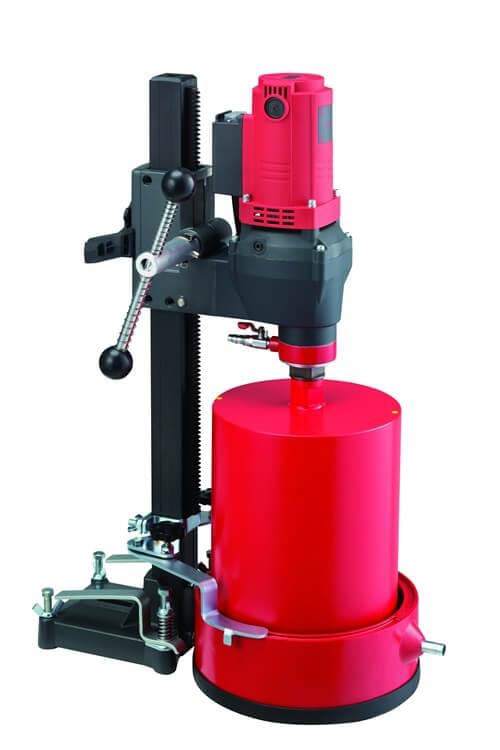
Hakken(CONSEC)SPZ-253U2i
 Source: CONSEC CORPORATION Official Website
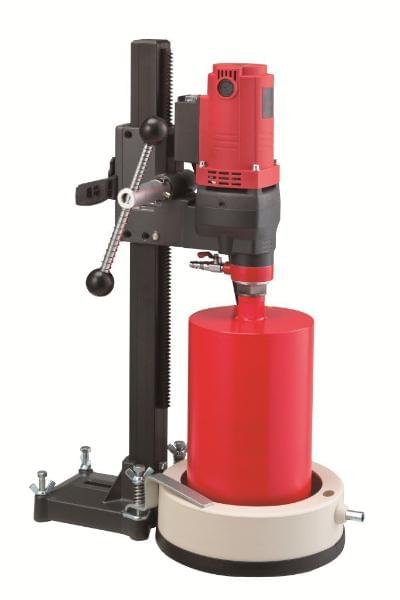
(https://www.consec.co.jp/article_source/data/en_product/detail/158.html)Drill Head SPN-203At
 Source: CONSEC CORPORATION Official Website
(https://www.consec.co.jp/article_source/data/en_product/detail/162.html)SPO-400U3w
 Source: CONSEC CORPORATION Official Website
(https://www.consec.co.jp/article_source/data/en_product/detail/166.html)Built to strict Japanese quality standards, this compact machine packs a high-performance motor into a 13.6 kg body. Robust against temperature swings and tough conditions—lightweight yet reliable enough to keep crews drilling with minimal downtime.
A proprietary control design that delivers both precision and light weight. The Automatic Feeding System reads drilling load in real time, physically preventing operator over-feeding and eliminating abnormal tool wear. Holds steady drilling speed and extends consumable life(*1)—even on sites with limited space or a high volume of small-diameter holes.
-
Prioritize Automation
Advanced Digital Control for Automation and On-Site Safety
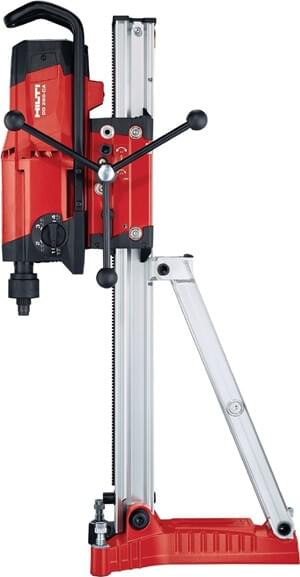
HiltiDD 250-CA
 Source: Hilti Official Website (https://www.hilti.com/c/CLS_POWER_TOOLS_7125/CLS_DIAMOND_CORING_7125/r12321865)
DD 110-U-22
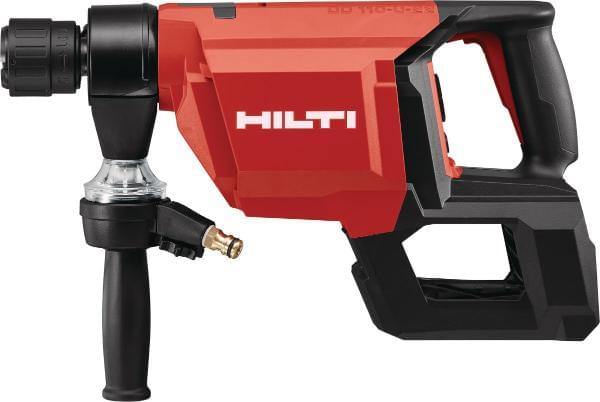 Source: Hilti Official Website (https://www.hilti.co.jp/c/CLS_POWER_TOOLS_7125/CLS_DIAMOND_CORING_7125/r18888605)
DD 160-22
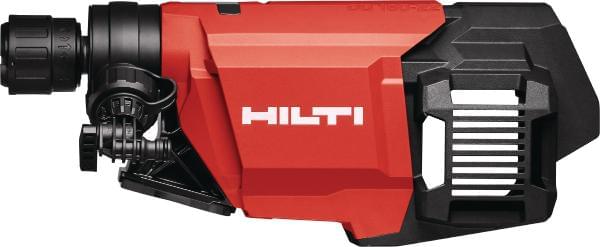 Source: Hilti Official Website (https://www.hilti.co.jp/c/CLS_POWER_TOOLS_7125/CLS_DIAMOND_CORING_7125/r18888607)
Hilti Cut Assist digitally controls drilling pressure and water flow throughout the cut. Once set, the hole is drilled fully automatically. This drives labor savings and productivity gains on large-scale jobs with hundreds of holes.
Active Torque Control (ATC) instantly detects jamming of the core bit, and electronically stops sudden kickback that can cause workplace injuries. ATC meets strict safety standards for large-scale projects while reducing the risk of human error.
-
Prioritize Value
Professional Coring Performance at a Reasonable Price
CAYKENOND-925 (E)
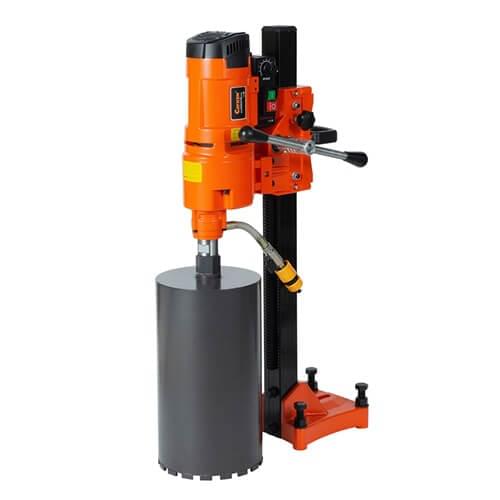 Source: CAYKEN Official Website (https://caykentools.com/ja/diamond-core-drill-machine/ond-925e-diamond-core-drill/)
SCY-18/2EBM
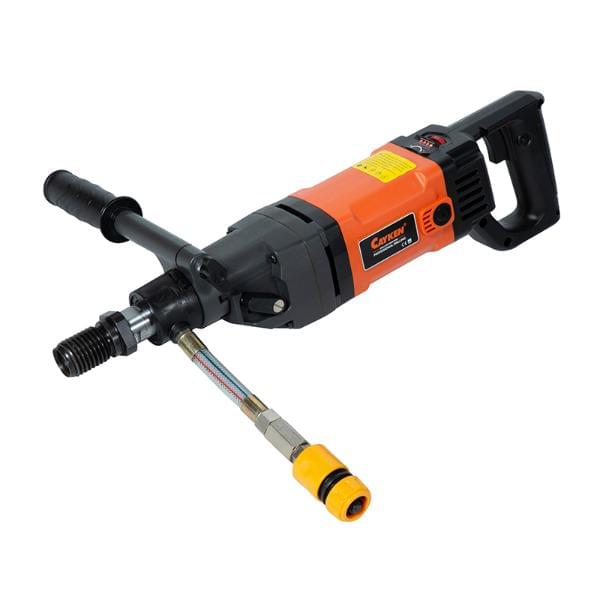 Source: CAYKEN Official Website (https://caykentools.com/diamond-core-drill-machine/scy-18-diamond-core-drill/)
SCY-1780/3EBS
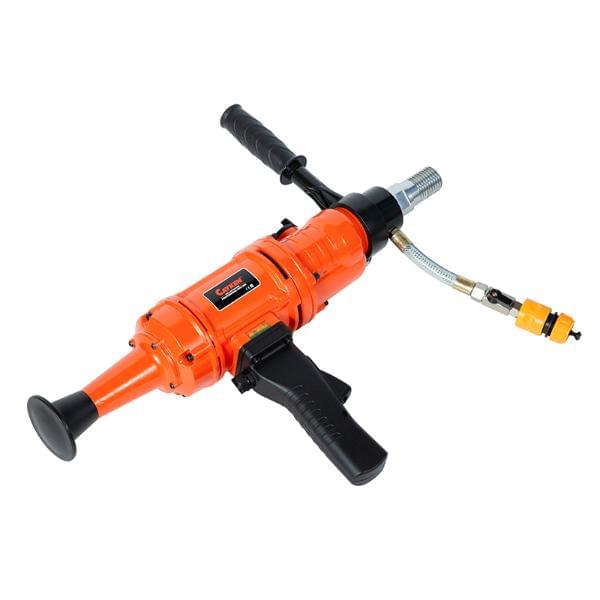 Source: CAYKEN Official Website (https://caykentools.com/diamond-core-drill-machine/scy-1780-diamond-core-drill/)
Rig-based drills start in the $200s, while handheld models start in the $100s, offering affordable options across the lineup(*2). The drill delivers a strong ROI both as a backup for primary machine downtime and for rapid deployment at expanding jobsites.
A reliable mechanical gearbox and a rigid extruded-aluminum stand reflect a specialist manufacturer's focus on core drilling fundamentals. It reliably delivers precise drilling performance even at demanding jobsites, at a competitive cost.
*1.Based on CONSEC SPZ-253U2i specifications: two-speed no-load at 490/1,150 min⁻¹ with the proprietary Automatic Feeding System (optional).
Source: CONSEC CORPORATION Official Website.(https://www.consec.co.jp/article_source/data/en_product/detail/158.html)
*2.Among the 15 brands ranking at the top of an English-language Google search for "diamond core drill," these models are priced below the category average and are among the lowest in both rig-based and handheld categories (based on the editorial team's independent research as of April 17, 2026).