Industrial Diamond Core Drill Compendium » Diamond Core Drill Comparison
Choosing a diamond core drill is not just a matter of motor power or maximum drilling diameter. The right setup depends on the material, hole size, drilling depth, drilling direction, operating method, power supply, and site conditions.
A working setup may include the drill motor, core bit, drill stand, fixing base, water supply, slurry collection, dust extraction, and power equipment. Each part needs to match both the machine and the job.
This guide explains the main points to check before comparing diamond core drill brands and products in detail.
What This Page Covers
- Check the base material, required diameter, drilling depth, and drilling direction before comparing machines.
- Compare the full operating setup, including stands, bits, fixing equipment, water or dust management, maintenance, and local support.
What Is a Diamond Core Drill?
A diamond core drill uses a cylindrical bit with diamond cutting segments. The bit cuts around the edge of the opening and leaves a cylindrical core, which can be removed after drilling.
Core drilling is used for plumbing, electrical conduit, HVAC services, anchors, ducts, and other building systems. Depending on the drill and bit, it can be used on concrete, reinforced concrete, masonry, asphalt, wood, and other approved materials.
Before purchasing, confirm the approved combination of drill, bit, connection type, stand, and accessories. Parts from different models, series, or brands should not be treated as interchangeable unless the manufacturer confirms compatibility.
Select the Drill Type and Power Source
Start with hole size, required stability, and jobsite mobility.
Handheld and rig-mounted drills
Handheld drills work well for smaller openings, confined spaces, and jobs that require frequent movement. Rig-mounted drills provide more stability for larger diameters, deeper holes, and repeated drilling.
Some models support both methods, but the permitted diameter may change between handheld and stand-mounted use. Check the specifications for the actual setup you plan to use.
Corded, cordless, and hydraulic options
Corded drills are suited to continuous work where a reliable power supply is available. Cordless models improve mobility. Hydraulic systems are generally used for heavy-duty or large-diameter drilling.
Check the Material, Hole Size, and Drilling Method
The base material, hole diameter, and drilling depth determine the machine and core bit required. Confirm that both are approved for the planned work.
◀◀ Swipe to scroll ▶▶
| Selection Point | What to Confirm |
|---|---|
| Base Material | Compatibility with concrete, reinforced concrete, masonry, asphalt, wood, or other materials |
| Hole Size and Depth | Approved diameter and depth for the material and operating method |
| Wet Drilling | Water supply, bit cooling, slurry collection, and drainage |
| Dry Drilling | Dry-compatible bit, dust extraction, and material compatibility |
Larger or deeper holes usually require a more powerful drill, a stable stand, and additional supporting equipment. Wet or dry drilling should be selected based on the material, indoor conditions, dust limits, drainage, and other site restrictions.
Check the Application and Full System Requirements
Site conditions affect the drill type, fixing method, and supporting equipment.
- Use compact or handheld equipment where space and mobility matter most.
- Use a rig-mounted system for larger, deeper, repeated, or precisely aligned holes.
- Plan dust and water control for renovation work or occupied buildings.
- Confirm safety and fixing requirements for horizontal or overhead drilling.
When comparing quotations, look at the full setup: drill motor, core bit, stand, fixing base, water or dust-management equipment, and power source. The motor price alone does not show the actual cost of the drilling system.
Diamond Core Drill Brand Comparisons
The comparison page below reviews product range, operating methods, power options, heavy-duty capability, supporting equipment, and purchasing factors for two diamond core drill brands.
CONSEC vs Hilti Diamond Core Drills
CONSEC offers light-duty, middle-duty, heavy-duty, and hydraulic core drilling systems. Hilti provides handheld and rig-based models in corded and cordless configurations. Compare the two brands by drilling method, power source, compatible accessories, heavy-duty capability, and local support before choosing a full system.
By Priority:
3 Diamond Core Drills, Matched to Your Need-
Prioritize Lightweight
Japanese-Built Durability in a Serviceable Compact Design
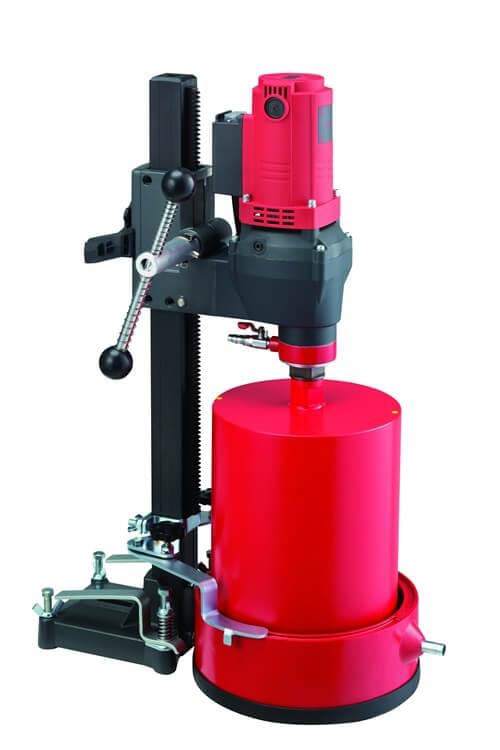
Hakken(CONSEC)SPZ-253U2i
 Source: CONSEC CORPORATION Official Website
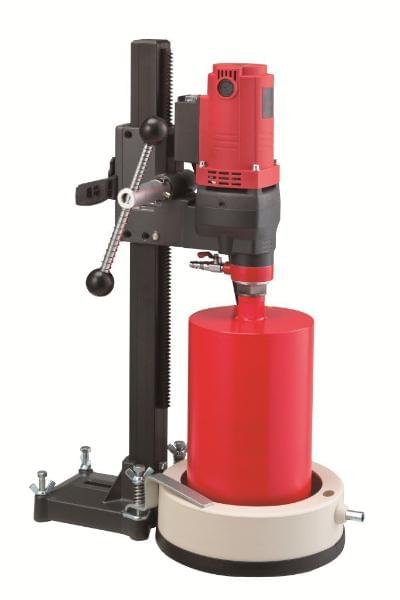
(https://www.consec.co.jp/article_source/data/en_product/detail/158.html)Drill Head SPN-203At
 Source: CONSEC CORPORATION Official Website
(https://www.consec.co.jp/article_source/data/en_product/detail/162.html)SPO-400U3w
 Source: CONSEC CORPORATION Official Website
(https://www.consec.co.jp/article_source/data/en_product/detail/166.html)Built to strict Japanese quality standards, this compact machine packs a high-performance motor into a 13.6 kg body. Robust against temperature swings and tough conditions—lightweight yet reliable enough to keep crews drilling with minimal downtime.
A proprietary control design that delivers both precision and light weight. The Automatic Feeding System reads drilling load in real time, physically preventing operator over-feeding and eliminating abnormal tool wear. Holds steady drilling speed and extends consumable life(*1)—even on sites with limited space or a high volume of small-diameter holes.
-
Prioritize Automation
Advanced Digital Control for Automation and On-Site Safety
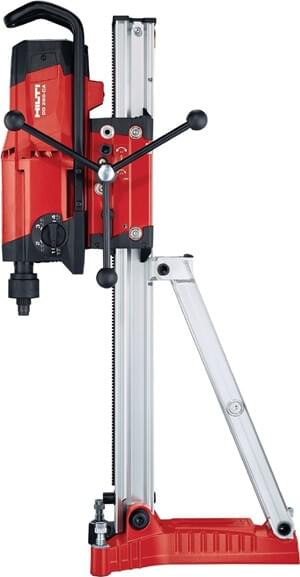
HiltiDD 250-CA
 Source: Hilti Official Website (https://www.hilti.com/c/CLS_POWER_TOOLS_7125/CLS_DIAMOND_CORING_7125/r12321865)
DD 110-U-22
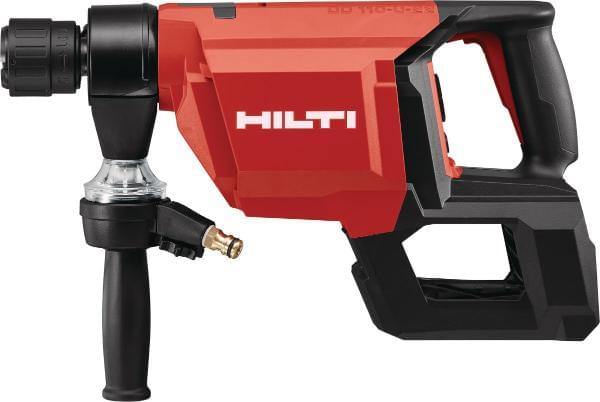 Source: Hilti Official Website (https://www.hilti.co.jp/c/CLS_POWER_TOOLS_7125/CLS_DIAMOND_CORING_7125/r18888605)
DD 160-22
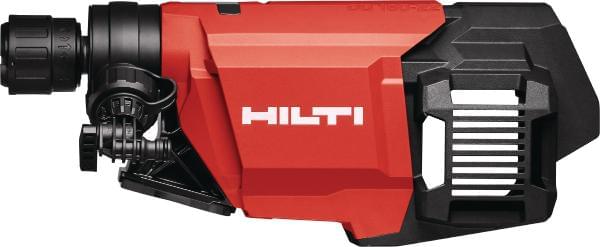 Source: Hilti Official Website (https://www.hilti.co.jp/c/CLS_POWER_TOOLS_7125/CLS_DIAMOND_CORING_7125/r18888607)
Hilti Cut Assist digitally controls drilling pressure and water flow throughout the cut. Once set, the hole is drilled fully automatically. This drives labor savings and productivity gains on large-scale jobs with hundreds of holes.
Active Torque Control (ATC) instantly detects jamming of the core bit, and electronically stops sudden kickback that can cause workplace injuries. ATC meets strict safety standards for large-scale projects while reducing the risk of human error.
-
Prioritize Value
Professional Coring Performance at a Reasonable Price
CAYKENOND-925 (E)
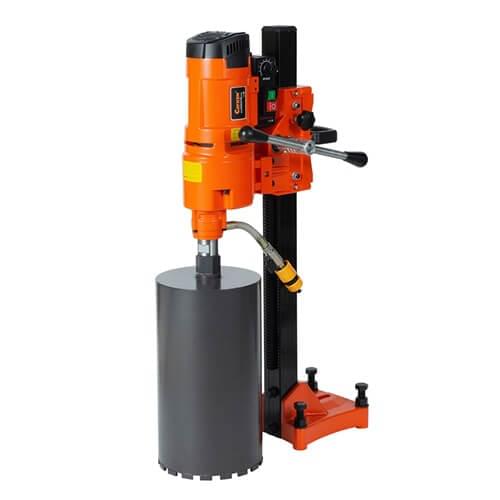 Source: CAYKEN Official Website (https://caykentools.com/ja/diamond-core-drill-machine/ond-925e-diamond-core-drill/)
SCY-18/2EBM
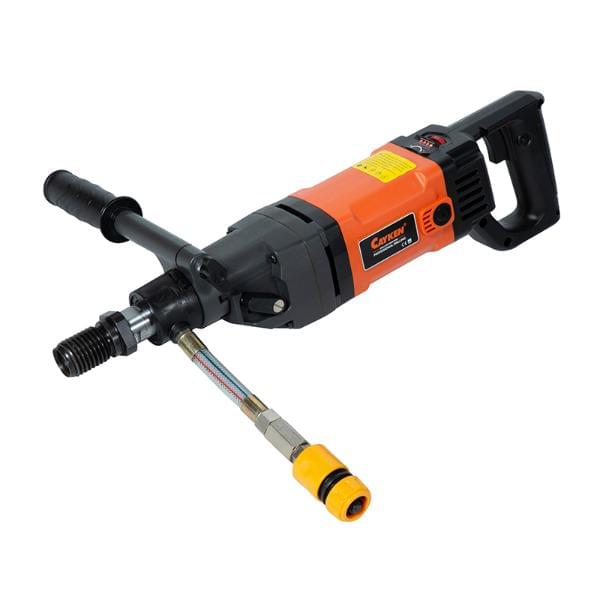 Source: CAYKEN Official Website (https://caykentools.com/diamond-core-drill-machine/scy-18-diamond-core-drill/)
SCY-1780/3EBS
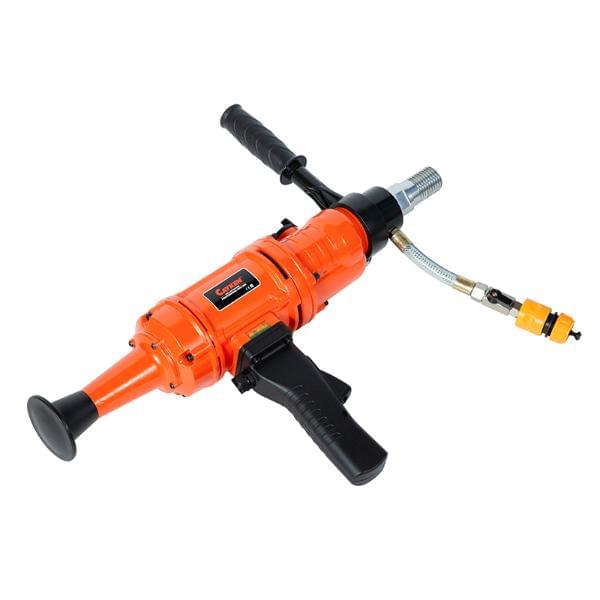 Source: CAYKEN Official Website (https://caykentools.com/diamond-core-drill-machine/scy-1780-diamond-core-drill/)
Rig-based drills start in the $200s, while handheld models start in the $100s, offering affordable options across the lineup(*2). The drill delivers a strong ROI both as a backup for primary machine downtime and for rapid deployment at expanding jobsites.
A reliable mechanical gearbox and a rigid extruded-aluminum stand reflect a specialist manufacturer's focus on core drilling fundamentals. It reliably delivers precise drilling performance even at demanding jobsites, at a competitive cost.
*1.Based on CONSEC SPZ-253U2i specifications: two-speed no-load at 490/1,150 min⁻¹ with the proprietary Automatic Feeding System (optional).
Source: CONSEC CORPORATION Official Website.(https://www.consec.co.jp/article_source/data/en_product/detail/158.html)
*2.Among the 15 brands ranking at the top of an English-language Google search for "diamond core drill," these models are priced below the category average and are among the lowest in both rig-based and handheld categories (based on the editorial team's independent research as of April 17, 2026).