Navigation
Selecting a diamond core drill for stone based solely on hole diameter or price can easily lead to the wrong decision. Selection must account for hardness variation across stone types (granite, marble, sandstone, etc.), chipping and cracking risks, and measures for dust control and heat buildup.
This page covers the fundamentals of the diamond core drill for stone, common jobsite challenges, and how to choose the right model.
What This Page Covers
- Stone Core Drill Basics and Applications
- How to Handle Hardness Variation, Chipping, and Cracking by Stone Type
- Matching Method and Specifications to Jobsite Conditions
What Is a Diamond Core Drill for Stone?
A diamond core drill for stone is both the tool and the technique of using a rotating cylindrical diamond core bit to drill circular holes in stone. Typical applications include openings and renovation work on building exteriors and interiors, garden stones, headstones, and monuments, as well as pipe penetrations during construction. Because hardness, brittleness, and water absorption vary widely across stone types, product selection must factor in wet or dry drilling, compatible stone types, hole diameter, and RPM.
Specific Challenges and Solutions in Stone Drilling
Hardness Variation by Stone Type and Bit Compatibility
Hardness varies dramatically across stone types: high-hardness stones like granite, medium-hardness stones like marble, and softer stones like sandstone each call for different core bit specifications. Using a core bit that is mismatched to the stone's hardness raises cutting resistance and accelerates bit wear. For any diamond core drill for stone, confirming compatible stone types up front is non-negotiable.
How to Choose a Diamond Core Drill That Matches Each Stone Type
On the specifications table, start by checking the list of compatible stone types (granite, marble, sandstone, limestone, etc.). High-hardness stones (such as granite) generally call for bits with high diamond concentration and excellent wear resistance, while softer materials (such as sandstone and tuff) respond better to bits with moderate diamond concentration. On jobsites with unknown stone types or mixed substrates, the safest move to avoid delaying the decision is to ask the manufacturer for a direct assessment.
Chipping, Cracking, and the Impact on Finish Quality
Stone is more brittle than concrete, which makes the edge of the hole highly prone to chipping and cracking. Particularly with brittle stone types such as decorative finish stone, thin stone, and sandstone, inappropriate RPM or feed pressure will trigger chipping during bit entry and exit. Choosing a drill based solely on hole diameter or price puts both finish quality and project schedule at a disadvantage.
How to Choose a Diamond Core Drill That Mitigates Chipping and Cracking Risks
On the specifications table, start by checking the ratings for stone compatibility, finish-surface compatibility, and brittle-stone compatibility. When you're core-drilling stone, the baseline is to keep both RPM and feed pressure low. To address brittleness during coring, applying site protection to the entry side—using masking tape or anti-chip backing, for example—is also a practical factor to consider during selection. For thin materials like tile and thin stone, running a sacrificial wet cut is a proven way to control chipping. This method works for a wide range of situations.
Friction Heat, Dust, and Wastewater
Stone core drilling generates friction heat. Heat directly affects bit life and drilling stability. Dry drilling produces dust and wet drilling produces wastewater, both of which must be managed on the jobsite. Because stone dust can contain harmful particulates that lodge in the lungs, a method must be evaluated not just on performance but also from a perspective that accounts for occupational safety, site protection, and post-drilling cleanup.
How to Choose a Diamond Core Drill That Manages Heat, Dust, and Wastewater
Inhaling the dust from stone core drilling is a serious occupational health risk. To minimize friction heat and dust, start by prioritizing wet drilling, which better contains airborne dust. Selection should cover the water feed system, adequate water flow, wastewater recovery, and ease of site protection.
On the other hand, if you must select dry drilling in water-restricted environments, pairing dry core bits with a high-performance dust extractor interlocking system is absolutely essential. Checking compatibility not only for the main unit but also for water supply, recovery, and dust extraction accessories helps reduce oversights.
Summary
A diamond core drill for stone is easier to evaluate when the choice focuses on three points: verifying compatible stone types, selecting the appropriate bit, and matching specifications to jobsite conditions. Before considering hole diameter or price, narrowing specifications down to the failure factors that arise on the jobsite is the best way to reduce the risk of an incorrect choice.
This site features a wide range of diamond core drills, including models built for stone. Use it to help narrow the shortlist.
By Priority:
3 Diamond Core Drills, Matched to Your Need-
Prioritize Lightweight
Japanese-Built Durability in a Serviceable Compact Design
Hakken(CONSEC)SPZ-253U2i
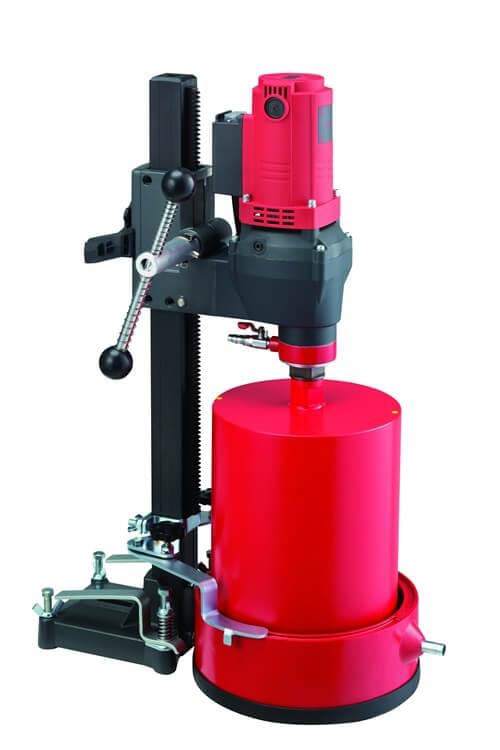 Source: CONSEC CORPORATION Official Website
(https://www.consec.co.jp/article_source/data/en_product/detail/158.html)Drill Head SPN-203At
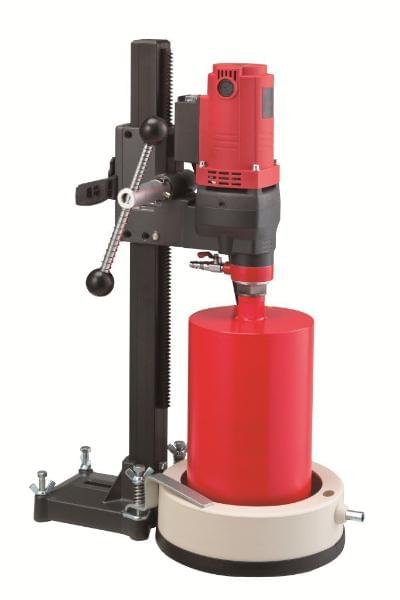 Source: CONSEC CORPORATION Official Website
(https://www.consec.co.jp/article_source/data/en_product/detail/162.html)SPO-400U3w
 Source: CONSEC CORPORATION Official Website
(https://www.consec.co.jp/article_source/data/en_product/detail/166.html)Built to strict Japanese quality standards, this compact machine packs a high-performance motor into a 13.6 kg body. Robust against temperature swings and tough conditions—lightweight yet reliable enough to keep crews drilling with minimal downtime.
A proprietary control design that delivers both precision and light weight. The Automatic Feeding System reads drilling load in real time, physically preventing operator over-feeding and eliminating abnormal tool wear. Holds steady drilling speed and extends consumable life(*1)—even on sites with limited space or a high volume of small-diameter holes.
-
Prioritize Automation
Advanced Digital Control for Automation and On-Site Safety
HiltiDD 250-CA
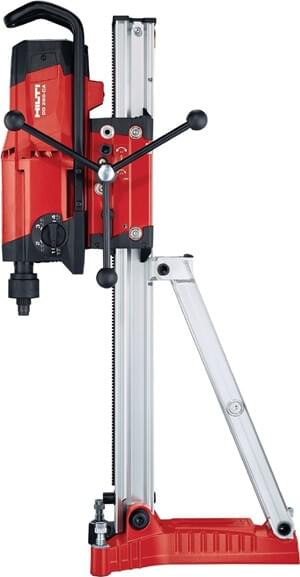 Source: Hilti Official Website (https://www.hilti.com/c/CLS_POWER_TOOLS_7125/CLS_DIAMOND_CORING_7125/r12321865)
DD 110-U-22
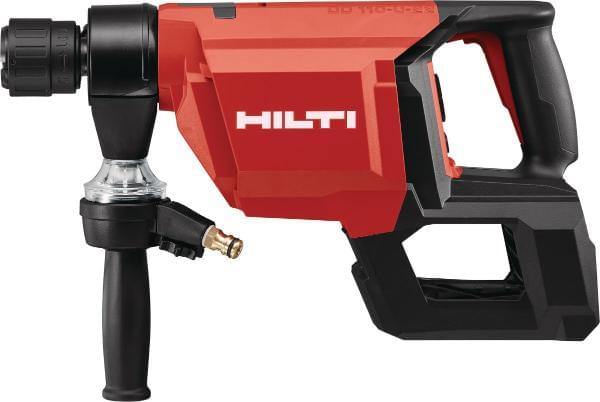 Source: Hilti Official Website (https://www.hilti.co.jp/c/CLS_POWER_TOOLS_7125/CLS_DIAMOND_CORING_7125/r18888605)
DD 160-22
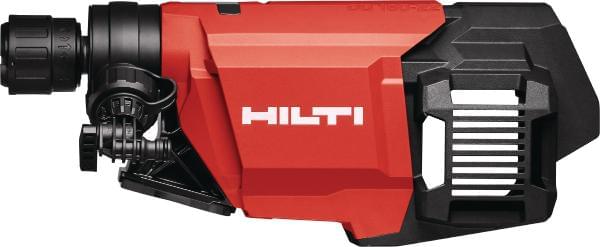 Source: Hilti Official Website (https://www.hilti.co.jp/c/CLS_POWER_TOOLS_7125/CLS_DIAMOND_CORING_7125/r18888607)
Hilti Cut Assist digitally controls drilling pressure and water flow throughout the cut. Once set, the hole is drilled fully automatically. This drives labor savings and productivity gains on large-scale jobs with hundreds of holes.
Active Torque Control (ATC) instantly detects jamming of the core bit, and electronically stops sudden kickback that can cause workplace injuries. ATC meets strict safety standards for large-scale projects while reducing the risk of human error.
-
Prioritize Value
Professional Coring Performance at a Reasonable Price
CAYKENOND-925 (E)
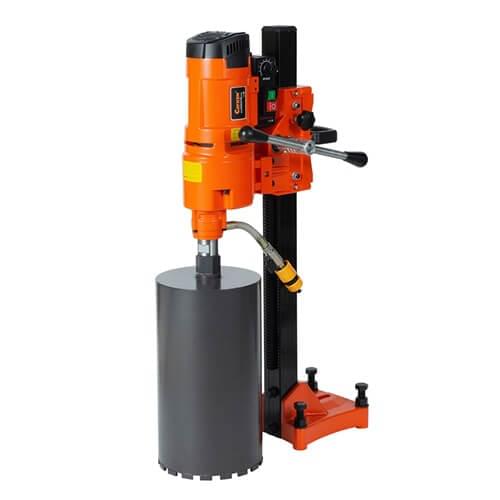 Source: CAYKEN Official Website (https://caykentools.com/ja/diamond-core-drill-machine/ond-925e-diamond-core-drill/)
SCY-18/2EBM
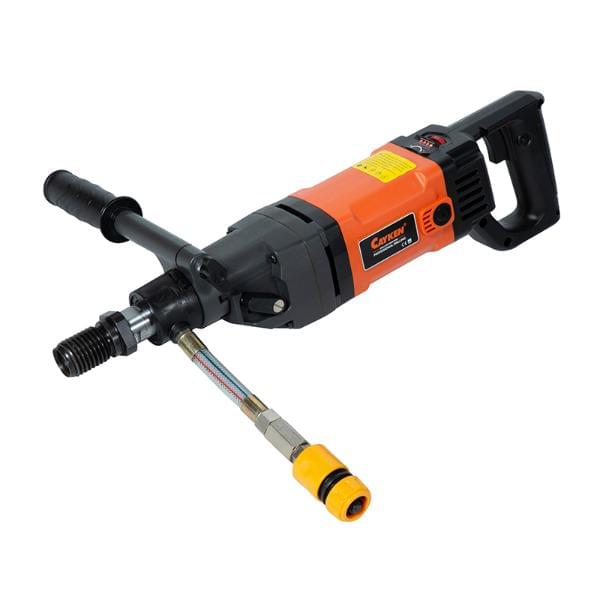 Source: CAYKEN Official Website (https://caykentools.com/diamond-core-drill-machine/scy-18-diamond-core-drill/)
SCY-1780/3EBS
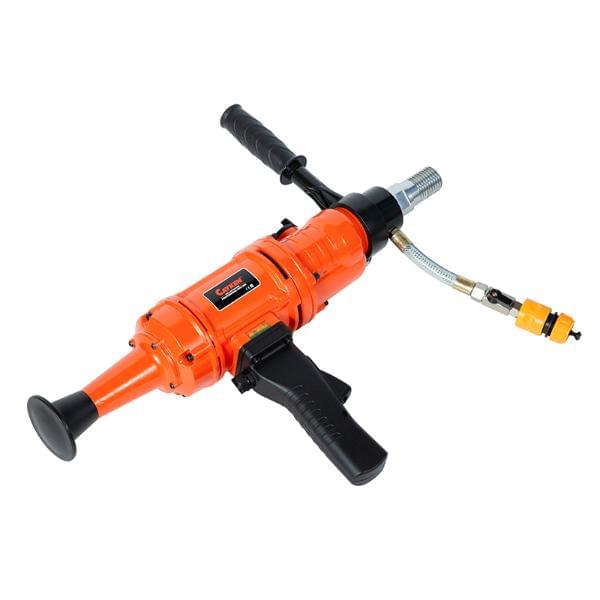 Source: CAYKEN Official Website (https://caykentools.com/diamond-core-drill-machine/scy-1780-diamond-core-drill/)
Rig-based drills start in the $200s, while handheld models start in the $100s, offering affordable options across the lineup(*2). The drill delivers a strong ROI both as a backup for primary machine downtime and for rapid deployment at expanding jobsites.
A reliable mechanical gearbox and a rigid extruded-aluminum stand reflect a specialist manufacturer's focus on core drilling fundamentals. It reliably delivers precise drilling performance even at demanding jobsites, at a competitive cost.
*1.Based on CONSEC SPZ-253U2i specifications: two-speed no-load at 490/1,150 min⁻¹ with the proprietary Automatic Feeding System (optional).
Source: CONSEC CORPORATION Official Website.(https://www.consec.co.jp/article_source/data/en_product/detail/158.html)
*2.Among the 15 brands ranking at the top of an English-language Google search for "diamond core drill," these models are priced below the category average and are among the lowest in both rig-based and handheld categories (based on the editorial team's independent research as of April 17, 2026).