
Industrial Diamond Core Drill Compendium » Types of diamond core drills
Navigation
A diamond core drill is a tool for drilling circular holes in materials such as concrete and stone. There are multiple types of diamond core drills because multiple classification criteria are established according to jobsite requirements, including water use, hole diameter, and power source.
As foundational knowledge before comparing products, this page explains classifications of diamond core drills based on jobsite conditions.
What This Page Covers
- How to classify diamond core drills using the three criteria of water use, hole diameter, and power source
- Differences between wet and dry drilling, and the jobsite conditions suited to each method
- The roles of handheld, rig-based, hydraulic, and pneumatic models, and how to choose between them
The Importance of Choosing the Right Type of Core Drill
Selecting the appropriate type of diamond core drill affects overall jobsite setup and planning, including dust control, water usage, power availability, and operational stability during work.
For example, wet drilling effectively suppresses dust through a continuous water supply. However, when water is used, electrical safety considerations and slurry disposal after drilling become issues. Dry drilling, on the other hand, is a viable option on jobsites where water is unavailable, but dust control measures and dust extraction systems must be incorporated.
By following a process of narrowing down candidates based on jobsite conditions, comparison and evaluation become less variable and more consistent.
Choose by Jobsite Conditions: Selection Chart for Diamond Core Drills
First, set the method by deciding whether water can be used. Next, gauge the mounting approach from the required hole diameter. Finally, decide on the type of drill by considering the available power source. Working through the steps in this order facilitates decision-making.
Q. What power source is available?
Once water availability and hole diameter have been determined, the type of drill is then finalized based on the available power source. The standard option is electric (mains or battery), but hydraulic or pneumatic models may be considered depending on jobsite power conditions and special requirements. Instead of focusing on whether a certain method is "superior" or "inferior," use the perspective of selecting methods based on compatibility with jobsite infrastructure.
Power Available and Small Hole Diameter → Electric Core Drill (handheld)
When power source is available and the holes being drilled are small to medium-diameter, a handheld electric core drill is the top choice. The value of handheld drills lies not only in their light weight, but also in their portability, including ease of movement within the jobsite, quick setup changes, and handling multiple drilling locations. Ease of maneuverability on jobsites with many drilling locations or where setup space is limited is the main reason handheld drills are chosen.
Power Available and Medium to Large Hole Diameter → Electric Core Drill (rig-based)
When drilling holes with a medium to large hole diameter, mounting the drill on a rig is the best approach. As hole diameter increases, reaction forces during operation also increase, making it more difficult to maintain a stable posture when operating a handheld drill. Rig-mounted setups are designed to absorb these reaction forces, ensuring positional accuracy and drilling repeatability. For precision concrete penetrations and large-diameter drilling operations, planning with a rig-mounted drill as the standard setup is the most practical approach.
No Power but Hydraulics Available → Hydraulic Core Drill (rig-based)
On jobsites where mains power is hard to access or high-torque heavy-duty work is required, a hydraulic core drill becomes a strong candidate. Powered by a hydraulic power pack, this type of drill has fewer electrical components, which also helps reduce the risk of sparking. Rig-mounted hydraulic core drills are ideal for large-diameter holes that are challenging to drill with electric models and are chosen based on compatibility with jobsite conditions such as infrastructure or renovation work. Another differentiator from electric models is that certain hydraulic versions support underwater operation.
No Power and Specialty Requirements Such as Explosion Protection → Pneumatic Core Drill
Driven by compressed air, the pneumatic core drill is an ideal option for work zones that require explosion protection and other special environments where sparks must be avoided. Pneumatic core drills are not typically the standard choice on regular jobsites. However, for specific applications such as energy facilities, mining sites, and underwater projects, pneumatic models are chosen over electric or hydraulic models. Using a pneumatic core drill requires a compressor, so planning must take into account the necessary auxiliary equipment.
Q. Can cooling water be used on the jobsite?
This is the first decision point in choosing a drilling method. Depending on whether water is available, the choice between wet drilling and dry drilling is determined. The decision is not simply whether water can be used or not; it also requires consideration of dust control methods, whether slurry can be handled, and how easily containment can be set up.
When water is available: Wet drilling
How Wet Drilling Works
Wet drilling is a method in which drilling is performed while continuously supplying water, keeping both the cutting area and the base material wet. The water suppresses dust and simultaneously functions as coolant water for the cutting bit. When used indoors or in enclosed spaces, it is necessary to ensure adequate ventilation and to be mindful of treatment to prevent slurry from drying and resuspending in the air.
Recommended applications
In jobsites where water supply and drainage arrangements can be made, wet drilling is suitable for drilling into concrete and reinforced concrete. Wet drilling is also the default choice for continuous work and for stably drilling relatively large holes. It is a method widely used in general construction work, including wall penetrations for piping, ductwork, and HVAC equipment in building services (MEP) work.
When water is not available: Dry drilling
{1How Dry Drilling Works
Dry drilling is a method of drilling without using water. It assumes the use of dedicated bits and the capture of generated dust with a dust extractor. The main advantage of dry drilling is that it eliminates the constraint of not being able to use water. That said, inadequate dust control poses health risks, so dust extraction measures cannot, in principle, be omitted.
Recommended applications
Dry drilling is a suitable option for jobsites where the use of water itself is difficult, such as existing facilities where leakage must be avoided, or finished interior spaces. Dry drilling is also commonly recommended for through-holes in brick, block, and stone masonry. Dedicated dry bits are available for a wide range of applications, including piping, electrical, and HVAC penetration work.
Q. What is the required hole diameter?
For convenience, this page explains selection using three categories of hole diameter: small, medium, and large. Note that these are not strict industry-wide standards, and the supported diameter for actual machines may vary by model.
Broadly speaking, a small diameter is used for anchor fixing and thin wiring or piping, a medium diameter for general equipment penetrations, and a large diameter for ductwork, drainage pipes, and penetrations in large-scale renovation work. Organizing diameter in this way makes it easier to understand the distinctions.
Summary
When selecting a diamond core drill, consider the following three characteristics in order: the availability of water, the required hole diameter, and the available power source. First, determine whether water can be used to decide between wet and dry drilling. Then, use hole diameter to determine whether a handheld or rig-based drill is appropriate. Finally, select the power source—electric, hydraulic, or pneumatic—that matches the jobsite conditions.
This evaluation sequence is not about comparing performance levels; rather, it is a way to narrow down suitable options based on jobsite conditions. Details such as base material types, supported diameter ranges, and specifications related to dust collection or water supply are best reviewed at the product comparison stage to enable a more specific selection.
This site features information on a wide range of diamond core drill manufacturers. Use it as a reference when comparing and evaluating drills.
By Priority:
3 Diamond Core Drills, Matched to Your Need-
Prioritize Lightweight
Japanese-Built Durability in a Serviceable Compact Design
Hakken(CONSEC)SPZ-253U2i
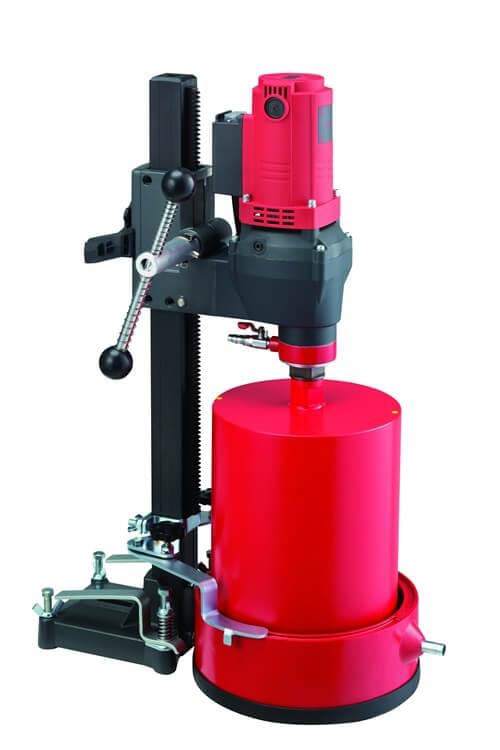 Source: CONSEC CORPORATION Official Website
(https://www.consec.co.jp/article_source/data/en_product/detail/158.html)Drill Head SPN-203At
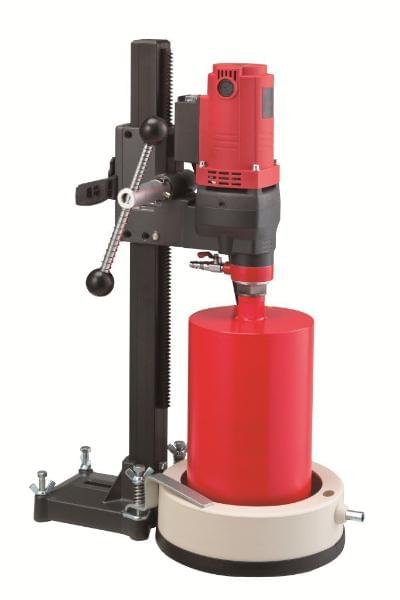 Source: CONSEC CORPORATION Official Website
(https://www.consec.co.jp/article_source/data/en_product/detail/162.html)SPO-400U3w
 Source: CONSEC CORPORATION Official Website
(https://www.consec.co.jp/article_source/data/en_product/detail/166.html)Built to strict Japanese quality standards, this compact machine packs a high-performance motor into a 13.6 kg body. Robust against temperature swings and tough conditions—lightweight yet reliable enough to keep crews drilling with minimal downtime.
A proprietary control design that delivers both precision and light weight. The Automatic Feeding System reads drilling load in real time, physically preventing operator over-feeding and eliminating abnormal tool wear. Holds steady drilling speed and extends consumable life(*1)—even on sites with limited space or a high volume of small-diameter holes.
-
Prioritize Automation
Advanced Digital Control for Automation and On-Site Safety
HiltiDD 250-CA
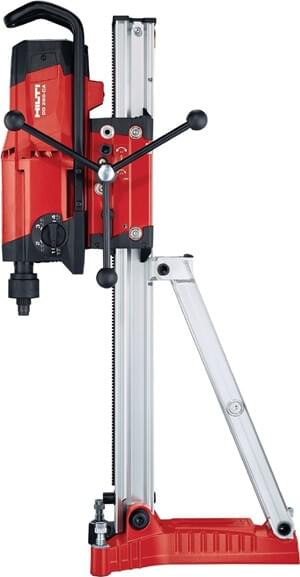 Source: Hilti Official Website (https://www.hilti.com/c/CLS_POWER_TOOLS_7125/CLS_DIAMOND_CORING_7125/r12321865)
DD 110-U-22
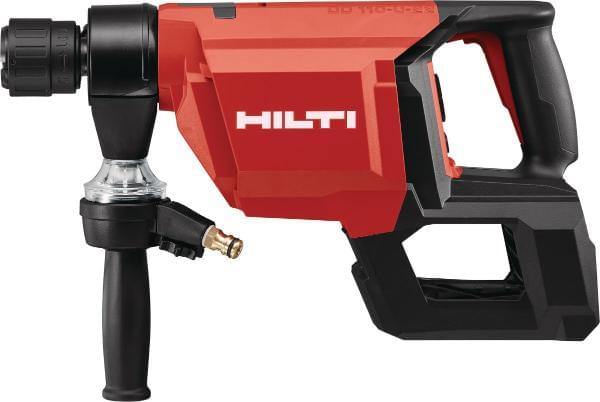 Source: Hilti Official Website (https://www.hilti.co.jp/c/CLS_POWER_TOOLS_7125/CLS_DIAMOND_CORING_7125/r18888605)
DD 160-22
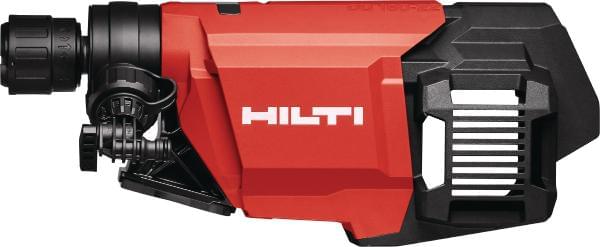 Source: Hilti Official Website (https://www.hilti.co.jp/c/CLS_POWER_TOOLS_7125/CLS_DIAMOND_CORING_7125/r18888607)
Hilti Cut Assist digitally controls drilling pressure and water flow throughout the cut. Once set, the hole is drilled fully automatically. This drives labor savings and productivity gains on large-scale jobs with hundreds of holes.
Active Torque Control (ATC) instantly detects jamming of the core bit, and electronically stops sudden kickback that can cause workplace injuries. ATC meets strict safety standards for large-scale projects while reducing the risk of human error.
-
Prioritize Value
Professional Coring Performance at a Reasonable Price
CAYKENOND-925 (E)
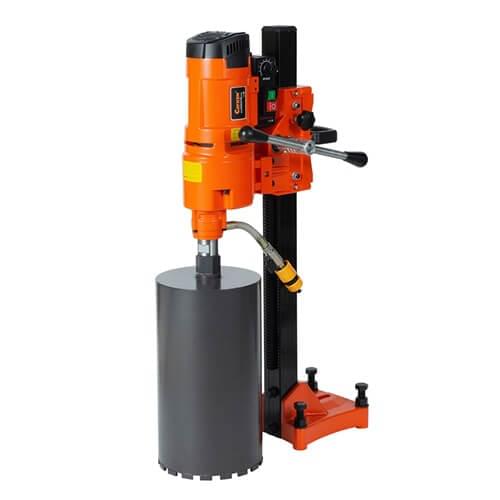 Source: CAYKEN Official Website (https://caykentools.com/ja/diamond-core-drill-machine/ond-925e-diamond-core-drill/)
SCY-18/2EBM
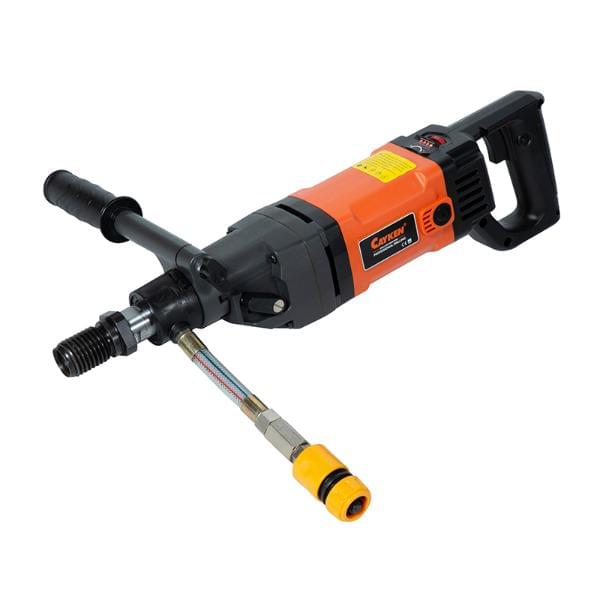 Source: CAYKEN Official Website (https://caykentools.com/diamond-core-drill-machine/scy-18-diamond-core-drill/)
SCY-1780/3EBS
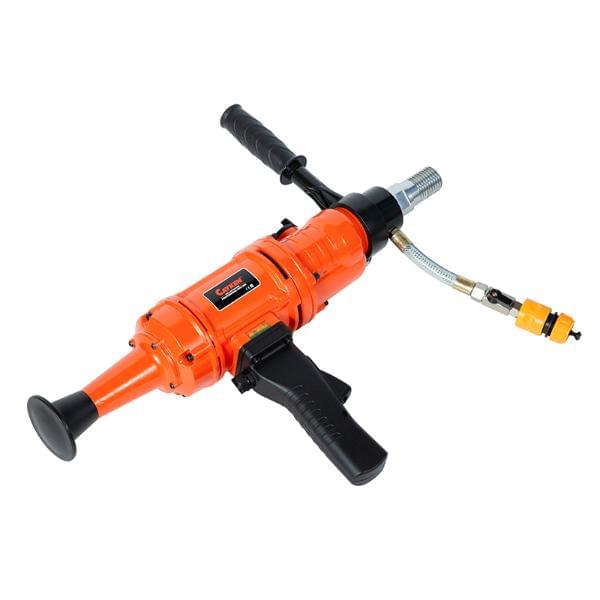 Source: CAYKEN Official Website (https://caykentools.com/diamond-core-drill-machine/scy-1780-diamond-core-drill/)
Rig-based drills start in the $200s, while handheld models start in the $100s, offering affordable options across the lineup(*2). The drill delivers a strong ROI both as a backup for primary machine downtime and for rapid deployment at expanding jobsites.
A reliable mechanical gearbox and a rigid extruded-aluminum stand reflect a specialist manufacturer's focus on core drilling fundamentals. It reliably delivers precise drilling performance even at demanding jobsites, at a competitive cost.
*1.Based on CONSEC SPZ-253U2i specifications: two-speed no-load at 490/1,150 min⁻¹ with the proprietary Automatic Feeding System (optional).
Source: CONSEC CORPORATION Official Website.(https://www.consec.co.jp/article_source/data/en_product/detail/158.html)
*2.Among the 15 brands ranking at the top of an English-language Google search for "diamond core drill," these models are priced below the category average and are among the lowest in both rig-based and handheld categories (based on the editorial team's independent research as of April 17, 2026).