
Industrial Diamond Core Drill Compendium » What is diamond core drill
Navigation
A diamond core drill is a tool and drilling method for drilling precise circular holes in materials such as concrete and stone. These drills are used on jobsites that demand precise finishes, such as piping installation and inspection core sampling.
This page summarizes how diamond core drills work, their uses, how they compare to other drills, wet and dry drilling methods, dust and slurry control, and the basics of inspection and repair.
What This Page Covers
- How diamond core drills work and their uses
- Differences from hammer drills and impact drills
- Wet drilling and dry drilling: how to choose
- Dust and slurry control and the basics of inspection and repair
How Diamond Core Drills Work and Their Uses
A diamond core drill is a tool and drilling method that drills holes in hard materials such as concrete and stone by spinning a bit embedded with diamond grit at its cutting edge at high speed. The cutting principle relies on rotational grinding rather than impact, so the edge of the hole resists chipping and the circular shape stays cleanly defined.
Main drilling applications include holes for electrical, water supply, and air-conditioning piping; pilot holes for ventilation ducts; inspection core sampling for verifying the quality of ground and structures; and pilot holes for anchor bolt installation. Diamond core drills are ideal for jobs that demand a clean finish or larger hole diameters.
Source: Japan Concrete Sawing & Drilling Association Official Website (https://www.jcsda.gr.jp/method/method-coredrilling.html)
Differences From Other Drills
When comparing diamond core drills to other types of drills, it is helpful to consider not just the basic drilling method but also the suitable hole diameters, finish precision, and the degree of vibration transmitted during work. The following section examines how diamond core drills differ from hammer drills and impact drills, which are the two tools it is most often compared with on the jobsite.
Differences from Hammer Drills
A hammer drill is a tool used to create holes in hard materials such as concrete by combining rotational motion with axial impact. Because the bit bores into the material by pulverizing with impact force, it is ideal for tasks that require drilling of a large number of holes in a short period of time. One example is small- to medium-diameter anchor installation holes.
In contrast, a diamond core drill progresses through rotational cutting instead of using impact. This minimizes chipping at the edges of the hole, making it an ideal choice for scenarios requiring precision finishes, such as large-diameter piping penetrations or through-holes. Furthermore, by mounting a diamond core drill on a rig, you gain the benefit of reduced vibration transmitted to the user compared to a hammer drill, which is generally handheld. As a general guideline, use a hammer drill for drilling numerous small-diameter holes consecutively, and a diamond core drill when prioritizing the finish quality and hole diameter.
Differences From Impact Drills
An impact drill advances into the material by adding fine axial vibrations to the rotating bit, generated by its internal ratchet mechanism. Impact drills are most often used for smaller drilling jobs and light-duty work. The rate at which these drills bore into the material depends on the pressure the user applies to the bit, so maintaining steady feed pressure is essential.
Conversely, a diamond core drill rotates the bit with the unit fixed in place. This means that drilling progresses under consistent conditions without relying on the adjustments to feed pressure by the operator. For large-diameter holes or situations where high finishing accuracy is required, how securely the machine is fixed in place directly impacts drilling precision. Diamond core drills can be considered tools specialized for both high precision and specific applications.
Price Range of Diamond Core Drills
The cost of a diamond core drill varies significantly depending on the main unit, the core bit, and the attachments. Main units run from about $800 to over $2,000, bits start at around $60, and attachments mostly fall between $20 and $150. Pricing also shifts with wet versus dry operation and capacity differences.
The following page summarizes the price range and the factors behind price differences.
Source: MonotaRO Official Website (https://www.monotaro.com/k/store/コアドリル 本体/)
Source: Yahoo! Shopping Official Website (https://store.shopping.yahoo.co.jp/k-tenyarou/dm172.html)
Source: HiKOKI Official Website (https://www.hikoki-powertools.jp/products/powertools/ac-drill/dc32v/dc32v.html)
Source: MonotaRO Official Website (https://www.monotaro.com/k/store/湿式ダイヤモンドコアビット/)
Source: Kakaku.com Official Website (https://search.kakaku.com/diamond_core_drill/)
Source: Yahoo! Shopping Official Website (https://shopping.yahoo.co.jp/products/z4h3t5gqil)
Wet Drilling and Dry Drilling
Diamond core drills operate using one of two methods depending on whether water is used during drilling. Choosing the right method based on jobsite conditions — water availability, material type, and dust management requirements — directly affects bit life, finish quality, and site safety.
Wet drilling delivers water to the cutting edge throughout the operation, cooling the bit and suppressing dust at the same time. It is the standard approach for large-diameter holes, continuous drilling runs, and hard materials such as reinforced concrete. Dry drilling requires no water supply and is well suited for indoor renovation work and sites where water cannot be used, but requires a dust extraction system to control airborne particles.
Dust and Slurry Control
Drilling into concrete or stone can release dust containing crystalline silica. Repeated inhalation of crystalline silica dust is recognized as a risk factor for health conditions such as silicosis, so controls are required to protect workers.
In wet drilling, a continuous flow of water to the cutting face suppresses airborne dust while simultaneously cooling the bit. Dry drilling involves collecting the dust generated using a dust extractor or a vacuum collection unit. In either method, proper dust control is a baseline requirement.
When working indoors or in confined spaces, management is required to provide ventilation to reduce the dust concentration. Wet drilling leaves slurry behind after the hole is finished. It is important to collect and dispose of the slurry before it dries and turns into dust.
Important Points of Inspection, Maintenance, and Repair
To safely operate a diamond core drill over the long term, it is fundamental to make routine inspections and pre-shift checks a habit. Prevention is key—do not wait for abnormalities to occur. Key inspection items include wear and chipping of the bits, damage or clogging in the water supply hoses and nozzles, reduced suction of the dust extractor and filters, and any looseness in the unit's mounting hardware.
If you notice symptoms such as a drop in cutting speed, unusual noise or increased vibration during operation, poor dust collection, or misalignment of the hole, refrain from continuing to use the equipment and consider inspecting or repairing it.
If you are unsure about what needs to be inspected or repaired, the appropriate action from a safety standpoint is to pause its use and consult the tool manufacturer or a qualified specialist.
By Priority:
3 Diamond Core Drills, Matched to Your Need-
Prioritize Lightweight
Japanese-Built Durability in a Serviceable Compact Design
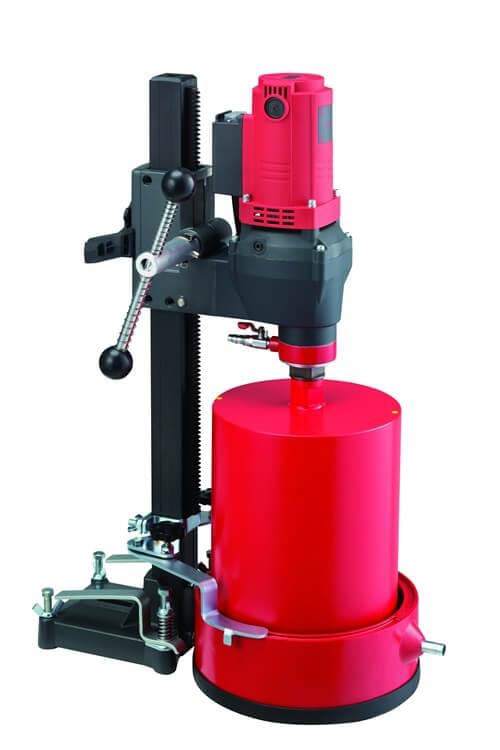
Hakken(CONSEC)SPZ-253U2i
 Source: CONSEC CORPORATION Official Website
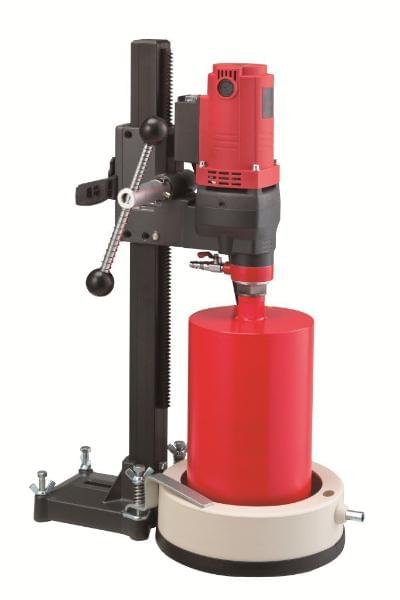
(https://www.consec.co.jp/article_source/data/en_product/detail/158.html)Drill Head SPN-203At
 Source: CONSEC CORPORATION Official Website
(https://www.consec.co.jp/article_source/data/en_product/detail/162.html)SPO-400U3w
 Source: CONSEC CORPORATION Official Website
(https://www.consec.co.jp/article_source/data/en_product/detail/166.html)Built to strict Japanese quality standards, this compact machine packs a high-performance motor into a 13.6 kg body. Robust against temperature swings and tough conditions—lightweight yet reliable enough to keep crews drilling with minimal downtime.
A proprietary control design that delivers both precision and light weight. The Automatic Feeding System reads drilling load in real time, physically preventing operator over-feeding and eliminating abnormal tool wear. Holds steady drilling speed and extends consumable life(*1)—even on sites with limited space or a high volume of small-diameter holes.
-
Prioritize Automation
Advanced Digital Control for Automation and On-Site Safety
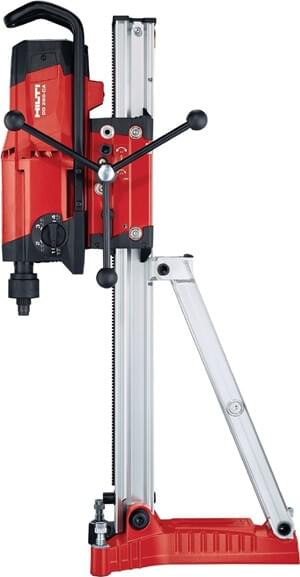
HiltiDD 250-CA
 Source: Hilti Official Website (https://www.hilti.com/c/CLS_POWER_TOOLS_7125/CLS_DIAMOND_CORING_7125/r12321865)
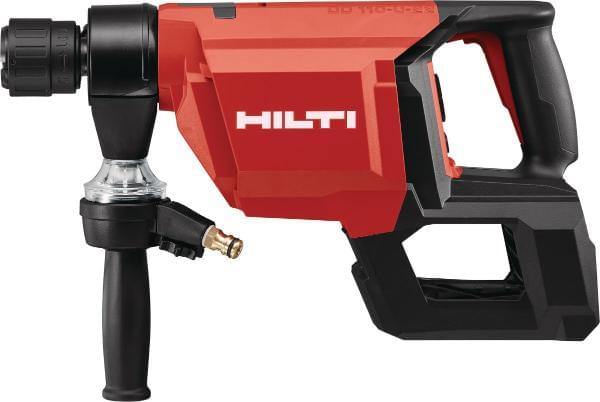
DD 110-U-22
 Source: Hilti Official Website (https://www.hilti.co.jp/c/CLS_POWER_TOOLS_7125/CLS_DIAMOND_CORING_7125/r18888605)
DD 160-22
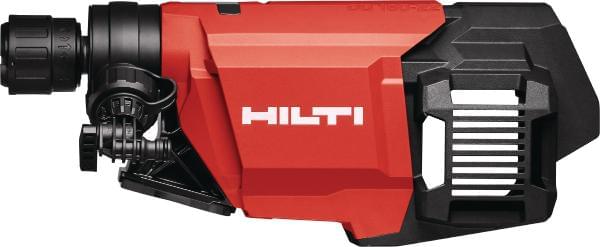 Source: Hilti Official Website (https://www.hilti.co.jp/c/CLS_POWER_TOOLS_7125/CLS_DIAMOND_CORING_7125/r18888607)
Hilti Cut Assist digitally controls drilling pressure and water flow throughout the cut. Once set, the hole is drilled fully automatically. This drives labor savings and productivity gains on large-scale jobs with hundreds of holes.
Active Torque Control (ATC) instantly detects jamming of the core bit, and electronically stops sudden kickback that can cause workplace injuries. ATC meets strict safety standards for large-scale projects while reducing the risk of human error.
-
Prioritize Value
Professional Coring Performance at a Reasonable Price
CAYKENOND-925 (E)
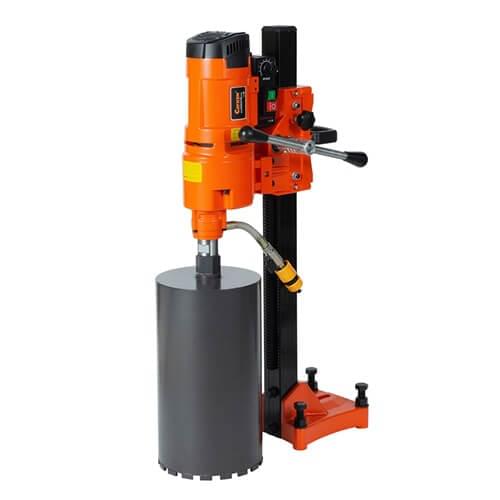 Source: CAYKEN Official Website (https://caykentools.com/ja/diamond-core-drill-machine/ond-925e-diamond-core-drill/)
SCY-18/2EBM
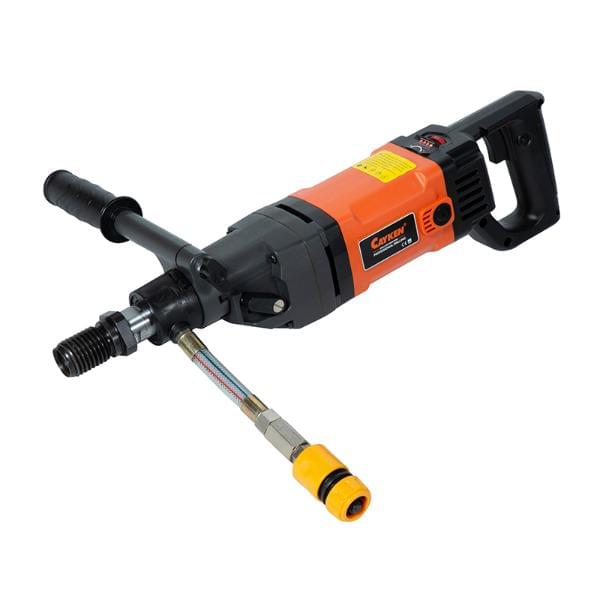 Source: CAYKEN Official Website (https://caykentools.com/diamond-core-drill-machine/scy-18-diamond-core-drill/)
SCY-1780/3EBS
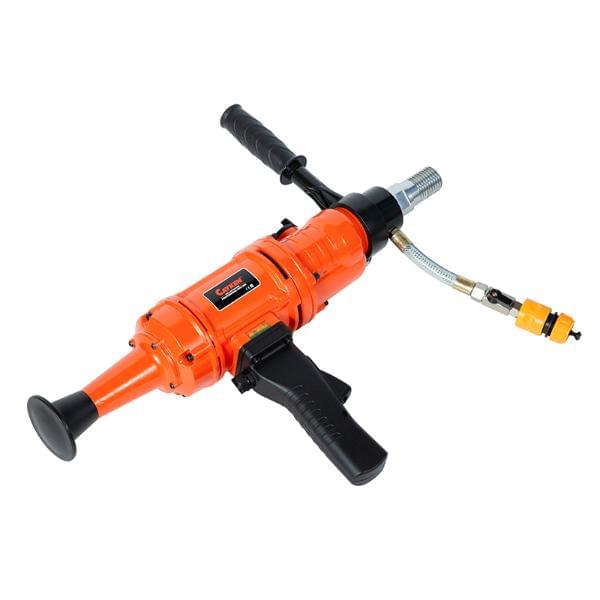 Source: CAYKEN Official Website (https://caykentools.com/diamond-core-drill-machine/scy-1780-diamond-core-drill/)
Rig-based drills start in the $200s, while handheld models start in the $100s, offering affordable options across the lineup(*2). The drill delivers a strong ROI both as a backup for primary machine downtime and for rapid deployment at expanding jobsites.
A reliable mechanical gearbox and a rigid extruded-aluminum stand reflect a specialist manufacturer's focus on core drilling fundamentals. It reliably delivers precise drilling performance even at demanding jobsites, at a competitive cost.
*1.Based on CONSEC SPZ-253U2i specifications: two-speed no-load at 490/1,150 min⁻¹ with the proprietary Automatic Feeding System (optional).
Source: CONSEC CORPORATION Official Website.(https://www.consec.co.jp/article_source/data/en_product/detail/158.html)
*2.Among the 15 brands ranking at the top of an English-language Google search for "diamond core drill," these models are priced below the category average and are among the lowest in both rig-based and handheld categories (based on the editorial team's independent research as of April 17, 2026).