Navigation
Selecting a diamond core drill for steel based solely on hole diameter or price can easily lead to the wrong decision. Before making a decision, you also need to factor in the heavy load steel's hardness and toughness place on the cutting edge, bit burnout from heat buildup, and the management of iron dust and cuttings.
This page summarizes the fundamentals of the diamond core drill for steel, common jobsite challenges, and how to choose the right model.
What This Page Covers
- Steel Core Drill Basics and Applications
- How to Handle the Hardness, Toughness, and Heat Buildup of Steel
- How to Select Methods and Specifications That Match Jobsite Conditions
What Is a Diamond Core Drill for Steel?
A diamond core drill for steel is both the tool and the technique—using a rotating cylindrical diamond bit to drill circular holes in steel. It is used to drill steel structures and steel piping, cut openings in machinery plates and structural steel sections on the jobsite, and create pipe penetrations during construction. Unlike concrete or stone, steel is highly tough and quickly puts excessive load on the bit, so you have to factor in wet or dry drilling, the steel grade, hole diameter, RPM, and the cooling/water-feed system when picking a product.
Specific Challenges and Solutions in Steel Drilling
Heavy Cutting-Edge Loads from the Hardness and Toughness of Steel
Compared with concrete or stone, steel has higher toughness and places a heavier cutting load on the bit edge. When the cutting edge catches in the metal grain during drilling, the bit slows and torsional load builds, increasing the risk of breakage or wear. When using a diamond core drill for steel, it is crucial to verify that the bit is explicitly rated for steel.
How to Choose a Diamond Core Drill That Avoids Excessive Load
On the specifications table, start by checking for an explicit steel or metal rating. Diamond core bits for steel are built with optimized segment geometry and bond composition tuned for cutting into metal grain. RPM has to be set appropriately based on the material and hole diameter, so make sure the specifications table clearly lists the recommended values. Compatible bits often vary by steel grade (mild, hard, stainless, etc.), so identifying the grade of the target steel is the starting point for comparing bits.
Heat Buildup, Bit Burnout, and Sudden Drops in Cutting Performance
Drilling steel generates intense friction heat where the cutting edge meets the metal. Once the cutting edge degrades or burns out, drilling speed and accuracy both drop sharply. As overheating progresses, drilling speed drops and the bit has to be replaced—a drag on productivity. Choosing a drill based solely on hole diameter or price compromises both operational efficiency and tool life.
How to Choose a Diamond Core Drill That Handles Heat Buildup and Burnout
On the specifications table, start by confirming wet-drilling capability and an internal water-feed system. Securing sufficient water flow to cool the cutting edge is fundamental when drilling steel. Wet drilling helps extend bit life. At indoor jobsites with no water access or in no-flame zones, a hydraulic core drill may be the appropriate choice. As this shows, both the power source and the cooling method must be considered together when assessing jobsite conditions.
Iron Dust, Cuttings, and Jobsite Management
Iron dust and cuttings are unavoidable byproducts when drilling steel. Iron dust and cuttings that land on other equipment or rust-prone parts can cause corrosion or electrical leakage, and they also add to the cleaning burden. Wet drilling also produces metal-laden wastewater that can stain or contaminate floors and surrounding equipment. Therefore, when choosing a drilling method, performance alone is not enough—safety, site protection, and post-work cleanup all need to be considered.
How to Choose a Diamond Core Drill That Handles Iron Dust, Cuttings, and Wastewater
For wet drilling, plan to catch the iron-laden wastewater by adding a water collection ring and a vacuum system to the setup. To prevent rust, corrosion, and secondary contamination from wastewater, it is important to confirm up front how the wastewater will be handled, including treatment and disposal. For dry drilling, it is essential to pair the tool with a dust extractor to contain flying iron cuttings. Checking compatibility not only for the main unit but also for cooling, recovery, and dust extraction accessories helps reduce oversights.
Summary
A diamond core drill for steel is easier to evaluate when the choice focuses on three points: bit compatibility for the specific steel grade, a cooling method matched to the jobsite, and a wastewater plan. Before considering hole diameter or price, narrowing specifications down to the failure factors that arise on the jobsite is the best way to reduce the risk of an incorrect choice.
This site features a wide range of diamond core drills, including models built for steel. Use it as a reference when selecting a product.
By Priority:
3 Diamond Core Drills, Matched to Your Need-
Prioritize Lightweight
Japanese-Built Durability in a Serviceable Compact Design
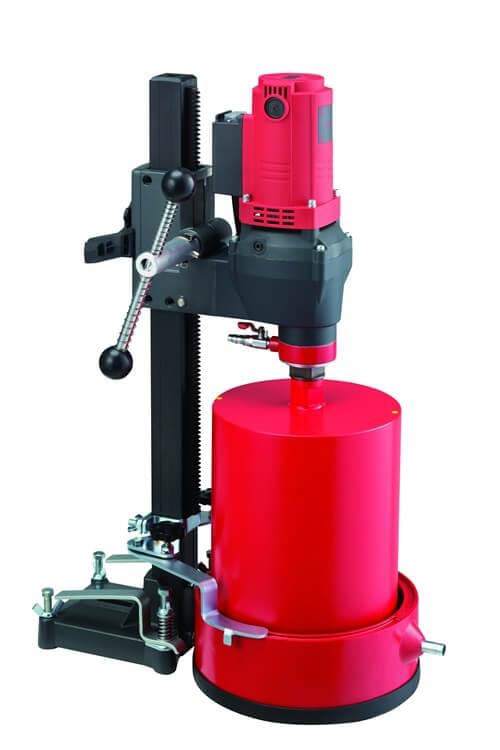
Hakken(CONSEC)SPZ-253U2i
 Source: CONSEC CORPORATION Official Website
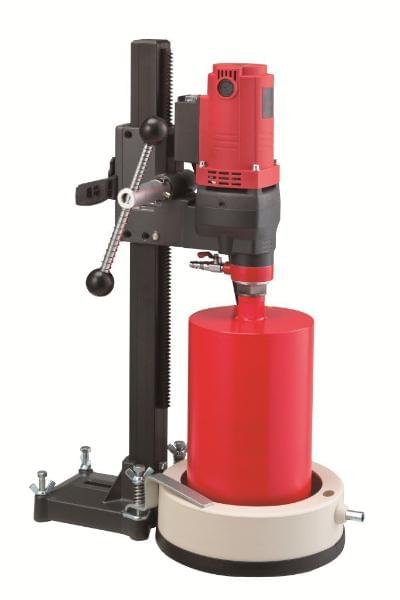
(https://www.consec.co.jp/article_source/data/en_product/detail/158.html)Drill Head SPN-203At
 Source: CONSEC CORPORATION Official Website
(https://www.consec.co.jp/article_source/data/en_product/detail/162.html)SPO-400U3w
 Source: CONSEC CORPORATION Official Website
(https://www.consec.co.jp/article_source/data/en_product/detail/166.html)Built to strict Japanese quality standards, this compact machine packs a high-performance motor into a 13.6 kg body. Robust against temperature swings and tough conditions—lightweight yet reliable enough to keep crews drilling with minimal downtime.
A proprietary control design that delivers both precision and light weight. The Automatic Feeding System reads drilling load in real time, physically preventing operator over-feeding and eliminating abnormal tool wear. Holds steady drilling speed and extends consumable life(*1)—even on sites with limited space or a high volume of small-diameter holes.
-
Prioritize Automation
Advanced Digital Control for Automation and On-Site Safety
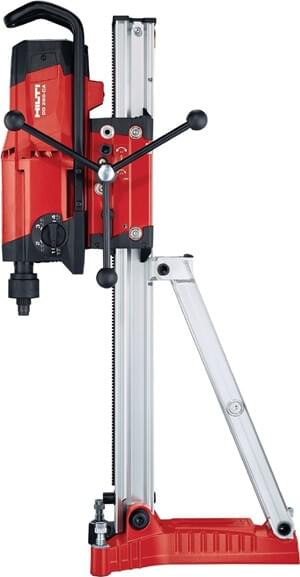
HiltiDD 250-CA
 Source: Hilti Official Website (https://www.hilti.com/c/CLS_POWER_TOOLS_7125/CLS_DIAMOND_CORING_7125/r12321865)
DD 110-U-22
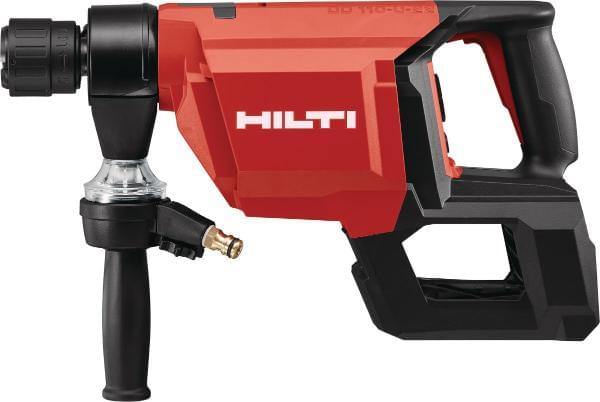 Source: Hilti Official Website (https://www.hilti.co.jp/c/CLS_POWER_TOOLS_7125/CLS_DIAMOND_CORING_7125/r18888605)
DD 160-22
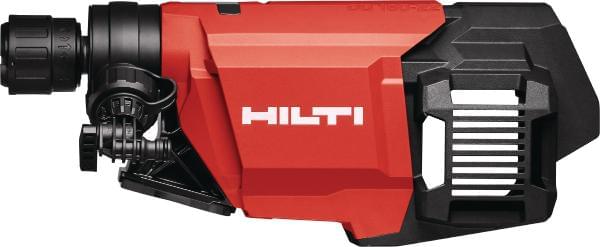 Source: Hilti Official Website (https://www.hilti.co.jp/c/CLS_POWER_TOOLS_7125/CLS_DIAMOND_CORING_7125/r18888607)
Hilti Cut Assist digitally controls drilling pressure and water flow throughout the cut. Once set, the hole is drilled fully automatically. This drives labor savings and productivity gains on large-scale jobs with hundreds of holes.
Active Torque Control (ATC) instantly detects jamming of the core bit, and electronically stops sudden kickback that can cause workplace injuries. ATC meets strict safety standards for large-scale projects while reducing the risk of human error.
-
Prioritize Value
Professional Coring Performance at a Reasonable Price
CAYKENOND-925 (E)
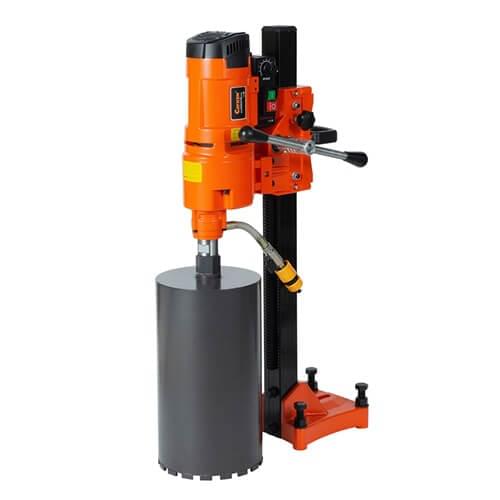 Source: CAYKEN Official Website (https://caykentools.com/ja/diamond-core-drill-machine/ond-925e-diamond-core-drill/)
SCY-18/2EBM
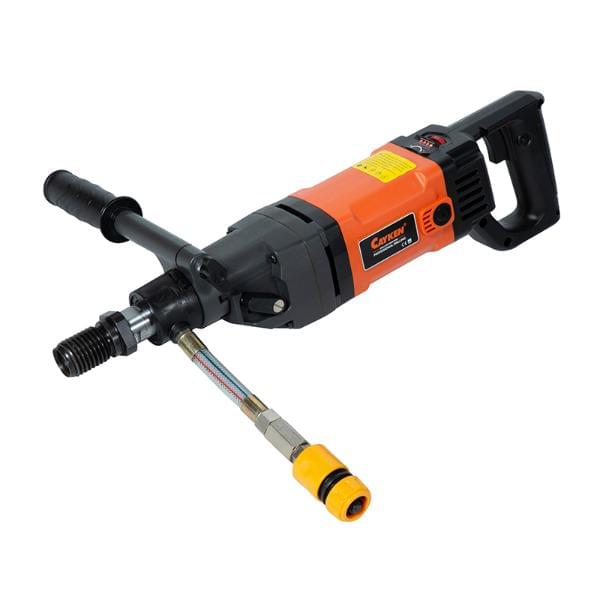 Source: CAYKEN Official Website (https://caykentools.com/diamond-core-drill-machine/scy-18-diamond-core-drill/)
SCY-1780/3EBS
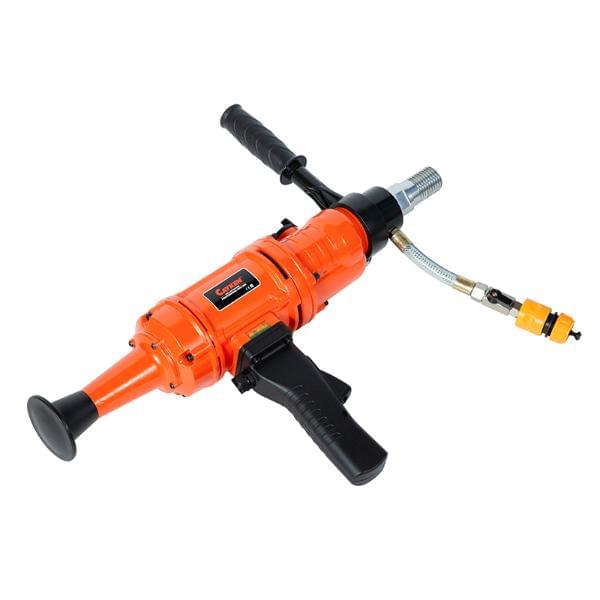 Source: CAYKEN Official Website (https://caykentools.com/diamond-core-drill-machine/scy-1780-diamond-core-drill/)
Rig-based drills start in the $200s, while handheld models start in the $100s, offering affordable options across the lineup(*2). The drill delivers a strong ROI both as a backup for primary machine downtime and for rapid deployment at expanding jobsites.
A reliable mechanical gearbox and a rigid extruded-aluminum stand reflect a specialist manufacturer's focus on core drilling fundamentals. It reliably delivers precise drilling performance even at demanding jobsites, at a competitive cost.
*1.Based on CONSEC SPZ-253U2i specifications: two-speed no-load at 490/1,150 min⁻¹ with the proprietary Automatic Feeding System (optional).
Source: CONSEC CORPORATION Official Website.(https://www.consec.co.jp/article_source/data/en_product/detail/158.html)
*2.Among the 15 brands ranking at the top of an English-language Google search for "diamond core drill," these models are priced below the category average and are among the lowest in both rig-based and handheld categories (based on the editorial team's independent research as of April 17, 2026).