
Industrial Diamond Core Drill Compendium » Diamond core drill Use Cases
Navigation
A diamond core drill is a tool for cutting clean, circular holes in hard, brittle materials such as concrete, stone, steel, and sapphire. The purpose and the priorities of selecting a diamond core drill change depending on the material being drilled. This page summarizes diamond core drill use cases across four typical materials.
What This Page Covers
- Typical use cases for concrete, stone, steel, and sapphire
- Why diamond core drills are chosen for each material
- Key considerations during machining and construction
Use Cases for Diamond Core Drills on Concrete
Use cases on concrete generally fall into two categories. The first is creating openings for routing building services. The second is drilling holes for anchoring or structural strength testing. Because the goals differ, each case calls for its own level of accuracy and a unique approach on the jobsite.
Plumbing and electrical work on buildings and civil engineering sites
At buildings and civil engineering sites, electrical wiring, water and drainage piping, and HVAC ductwork must be routed through the structure. This requires circular through-holes to be drilled into walls, floors, and structural elements. The diamond core drill is widely used in MEP work as a tool for creating openings of a specified diameter and position in existing concrete structural frames.
It is not just about drilling a hole; the diameter and position must be accurate to the type of service being installed. Pre-drilling checks to avoid hitting embedded utilities are also essential. Cutting and drilling concrete generates dust, so wet drilling, which uses running water during operation, is essential for effective dust control.
Source: Japan Concrete Sawing & Drilling Association Official Website (https://www.jcsda.gr.jp/method/method-coredrilling.html)
Source: OSHA (U.S. Occupational Safety and Health Administration) [PDF] (https://www.osha.gov/sites/default/files/publications/OSHA3929.pdf)
Anchor installation and core sampling for strength testing
Installing anchor bolts requires holes drilled to a specified diameter and depth, and a diamond core drill is the tool used for this drilling. Without correct hole dimensions and positioning, the anchor cannot achieve its rated holding strength.
For condition assessments and structural evaluations of existing concrete, core specimens are extracted for use in tests such as compressive strength testing. Standards such as ASTM C42 define methods for evaluating strength using drilled cores, and the extraction conditions are a prerequisite for consistent sample quality. Diamond core drills are also used in this scenario.
Source: Japan Concrete Sawing & Drilling Association Official Website (https://www.jcsda.gr.jp/method/method-coredrilling.html)
Source: ASTM International (ASTM C42) (https://store.astm.org/c0042_c0042m-20.html)
Use Cases for Diamond Core Drills on Stone
Use cases on stone generally fall into two categories. The first is drilling for mounting and installation work on finished stone surfaces. The second is extracting core specimens for geological surveys and material testing. Because stone varies widely in hardness and brittleness, the approach to drilling must be adapted to the specific material.
Handrail posts, fixture mounting, and architectural stonework
In construction and interior finishing, diamond core drills are used to create holes in granite countertops, marble walls, stone facades, and similar surfaces for mounting handrails, hardware, sanitary fixtures, and signage. These applications demand clean, chip-free holes with precise diameter and positioning, as surface finish quality is a critical requirement in visible architectural elements.
Stone materials such as granite and marble are hard and brittle, making them prone to cracking or chipping if drilled incorrectly. Running water during drilling is essential to cool the bit and suppress heat buildup at the cutting edge. Low rotational speed and steady, controlled feed pressure are standard practice for minimizing surface damage and extending bit life.
Source: Natural Stone Institute Official Website (https://www.naturalstoneinstitute.org/)
Geological core sampling and material strength testing
In site investigations and geological surveys, diamond core drills are used to extract cylindrical rock specimens from the ground. The extracted cores provide direct information on rock type, layer structure, fracture patterns, and ground conditions, and serve as the primary physical evidence for foundation design and subsurface assessments.
For material testing, intact core specimens are required to run standardized tests such as unconfined compressive strength (UCS) testing. ASTM D2113 defines the standard practice for rock core drilling and sampling, and the quality of the extraction process directly affects the reliability of test results. Diamond core drills are the tool of choice for obtaining the undisturbed samples these tests require.
Source: Natural Stone Institute Official Website (https://www.naturalstoneinstitute.org/)
Use Cases for Diamond Core Drills on Steel
Use cases on steel generally fall into two categories. The first is creating openings in structural steel members for building services and utility routing. The second is fabrication and maintenance work on industrial steel equipment such as tanks and vessels. Steel generates significant heat and cutting resistance during drilling, making bit selection and thermal management critical factors in both cases.
MEP penetrations and openings in structural steel members
In steel-framed buildings and industrial facilities, diamond core drills are used to cut circular openings through steel columns, beams, decking, and floor plates for routing electrical conduit, plumbing pipes, HVAC ducts, and cable trays. Precise hole diameter and positioning are essential, as misplaced or oversized openings can compromise the structural integrity of load-bearing members and require costly remediation.
Steel is significantly harder and more thermally conductive than concrete, which means it generates heat rapidly at the cutting edge. Coolant application during drilling is essential to prevent bit burnout and workpiece deformation. Steel-rated core bits with appropriate bond hardness and feed rate management are required to maintain cutting efficiency and hole quality throughout the operation.
Source: American Institute of Steel Construction (AISC) Official Website (https://www.aisc.org/)
Source: OSHA (U.S. Occupational Safety and Health Administration) [PDF] (https://www.osha.gov/sites/default/files/publications/OSHA3929.pdf)
Fabrication and maintenance of industrial steel tanks, vessels, and equipment
In industrial plant construction and maintenance, diamond core drills are used to cut openings in steel pressure vessels, storage tanks, pipe walls, and machinery housings for nozzle installation, sensor fittings, and access ports. These applications often involve thick steel plate in confined or elevated work areas, making a compact, controllable drill essential.
For maintenance and retrofit work on existing equipment, drilling must be performed without generating sparks or excessive heat that could ignite flammable residues or damage surrounding components. Wet drilling with controlled water flow is the standard approach in these environments. Proper clamping of the drill rig to prevent movement during cutting is also critical, as vibration and lateral drift directly affect hole quality and operator safety.
Source: American Welding Society (AWS) Official Website (https://www.aws.org/Standards-and-Publications/)
Source: OSHA (U.S. Occupational Safety and Health Administration) [PDF] (https://www.osha.gov/sites/default/files/publications/OSHA3929.pdf)
Use Cases for Diamond Core Drills on Sapphire
Use cases on sapphire generally fall into two categories. The first is precision machining of optical and electronic components made from synthetic sapphire. The second is laboratory and R&D work requiring core extraction from sapphire substrates or gemstone-grade materials. Sapphire ranks 9 on the Mohs hardness scale and is highly brittle, making it one of the most demanding materials for diamond core drilling.
Precision machining of optical components and semiconductor substrates
Synthetic sapphire is used as a substrate material for LEDs, power semiconductors, and optical windows in high-performance devices. Diamond core drills are used to create precision bores and through-holes in sapphire wafers and plates for component mounting, fiber optic feedthroughs, and sensor integration. Hole diameter tolerances in these applications are typically measured in microns, requiring ultra-precision-grade equipment and diamond core bits specifically engineered for hard, brittle substrates.
Because sapphire shatters rather than deforms under excessive load, spindle speed must be kept low and feed pressure carefully controlled throughout the cut. Coolant flow is essential to suppress friction heat, which can cause thermal cracking even before visible surface damage appears. Any chipping at the entry or exit edge of the hole is considered a defect in precision optical and semiconductor applications, and typically results in the component being scrapped.
Source: U.S. Department of Energy – Office of Scientific and Technical Information (https://www.osti.gov/biblio/1761975)
Laboratory core extraction and gemological research
In materials science research and gemological laboratories, diamond core drills are used to extract small cylindrical specimens from sapphire crystals and corundum-group gemstones for structural analysis, spectroscopy, and hardness testing. Intact core samples free from micro-fractures are a prerequisite for reliable test results, and the drilling process must be controlled precisely enough to avoid introducing stress or damage into the specimen.
Research applications often involve non-standard specimen geometries and very small diameters, requiring custom-ground diamond core bits and purpose-built drilling fixtures that rigidly constrain the workpiece. Vibration isolation is a critical setup requirement, as even minor movement during drilling causes surface irregularities that compromise measurement accuracy. Water or oil-based coolant is used throughout to control heat and flush away abrasive swarf that would otherwise score the specimen surface.
Source: Gemological Institute of America (GIA) Official Website (https://www.gia.edu/gems-gemology)
By Priority:
3 Diamond Core Drills, Matched to Your Need-
Prioritize Lightweight
Japanese-Built Durability in a Serviceable Compact Design
Hakken(CONSEC)SPZ-253U2i
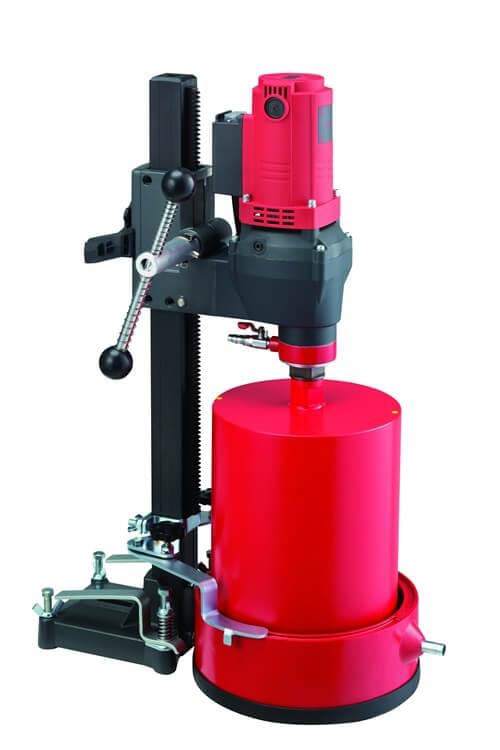 Source: CONSEC CORPORATION Official Website
(https://www.consec.co.jp/article_source/data/en_product/detail/158.html)Drill Head SPN-203At
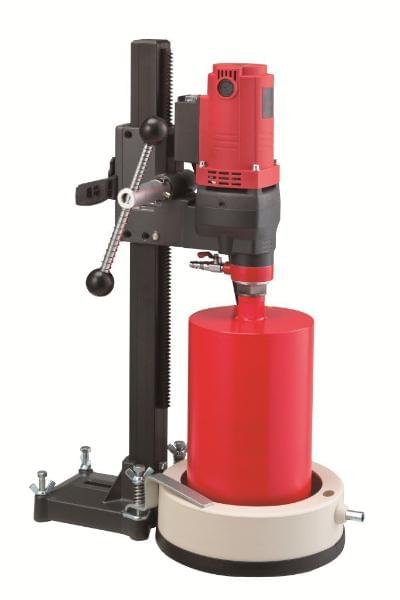 Source: CONSEC CORPORATION Official Website
(https://www.consec.co.jp/article_source/data/en_product/detail/162.html)SPO-400U3w
 Source: CONSEC CORPORATION Official Website
(https://www.consec.co.jp/article_source/data/en_product/detail/166.html)Built to strict Japanese quality standards, this compact machine packs a high-performance motor into a 13.6 kg body. Robust against temperature swings and tough conditions—lightweight yet reliable enough to keep crews drilling with minimal downtime.
A proprietary control design that delivers both precision and light weight. The Automatic Feeding System reads drilling load in real time, physically preventing operator over-feeding and eliminating abnormal tool wear. Holds steady drilling speed and extends consumable life(*1)—even on sites with limited space or a high volume of small-diameter holes.
-
Prioritize Automation
Advanced Digital Control for Automation and On-Site Safety
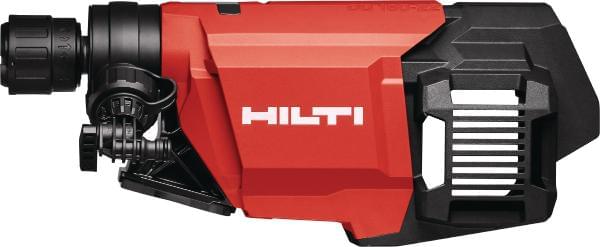
HiltiDD 250-CA
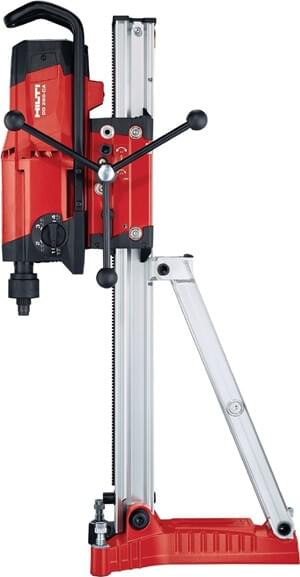 Source: Hilti Official Website (https://www.hilti.com/c/CLS_POWER_TOOLS_7125/CLS_DIAMOND_CORING_7125/r12321865)
DD 110-U-22
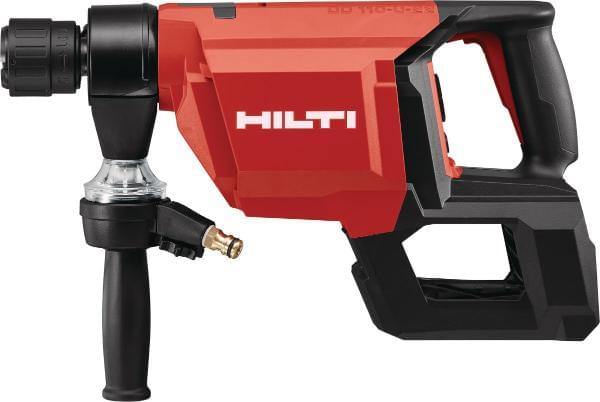 Source: Hilti Official Website (https://www.hilti.co.jp/c/CLS_POWER_TOOLS_7125/CLS_DIAMOND_CORING_7125/r18888605)
DD 160-22
 Source: Hilti Official Website (https://www.hilti.co.jp/c/CLS_POWER_TOOLS_7125/CLS_DIAMOND_CORING_7125/r18888607)
Hilti Cut Assist digitally controls drilling pressure and water flow throughout the cut. Once set, the hole is drilled fully automatically. This drives labor savings and productivity gains on large-scale jobs with hundreds of holes.
Active Torque Control (ATC) instantly detects jamming of the core bit, and electronically stops sudden kickback that can cause workplace injuries. ATC meets strict safety standards for large-scale projects while reducing the risk of human error.
-
Prioritize Value
Professional Coring Performance at a Reasonable Price
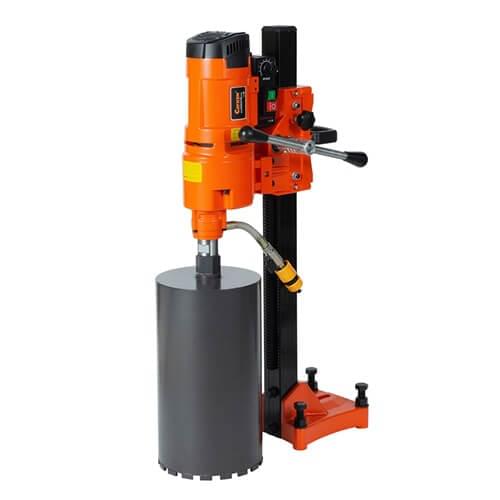
CAYKENOND-925 (E)
 Source: CAYKEN Official Website (https://caykentools.com/ja/diamond-core-drill-machine/ond-925e-diamond-core-drill/)
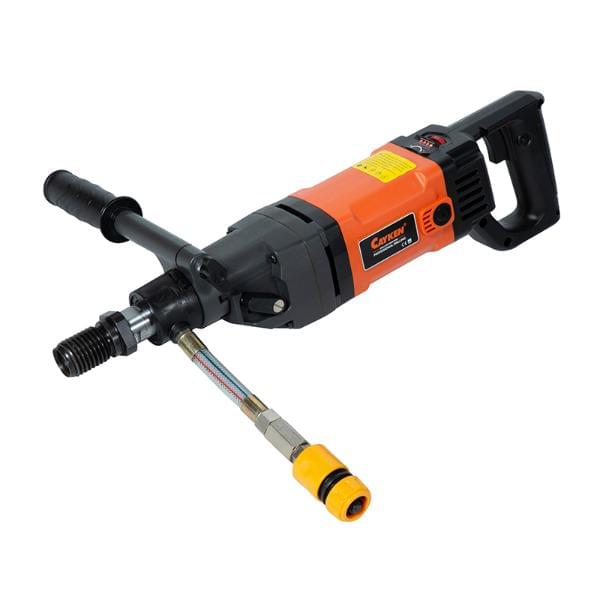
SCY-18/2EBM
 Source: CAYKEN Official Website (https://caykentools.com/diamond-core-drill-machine/scy-18-diamond-core-drill/)
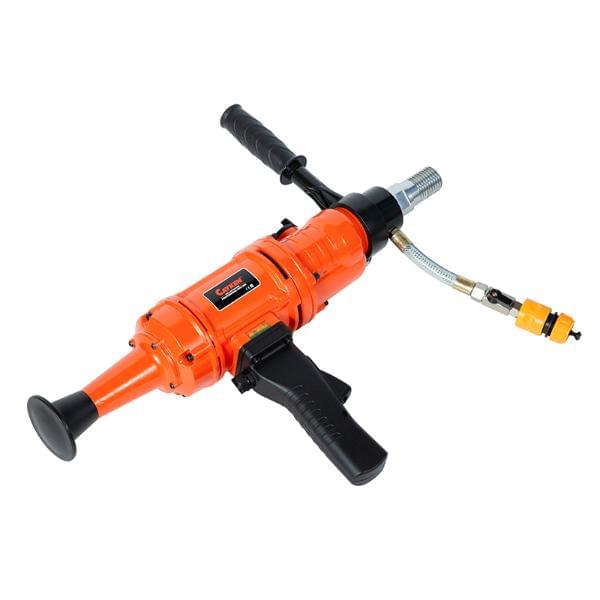
SCY-1780/3EBS
 Source: CAYKEN Official Website (https://caykentools.com/diamond-core-drill-machine/scy-1780-diamond-core-drill/)
Rig-based drills start in the $200s, while handheld models start in the $100s, offering affordable options across the lineup(*2). The drill delivers a strong ROI both as a backup for primary machine downtime and for rapid deployment at expanding jobsites.
A reliable mechanical gearbox and a rigid extruded-aluminum stand reflect a specialist manufacturer's focus on core drilling fundamentals. It reliably delivers precise drilling performance even at demanding jobsites, at a competitive cost.
*1.Based on CONSEC SPZ-253U2i specifications: two-speed no-load at 490/1,150 min⁻¹ with the proprietary Automatic Feeding System (optional).
Source: CONSEC CORPORATION Official Website.(https://www.consec.co.jp/article_source/data/en_product/detail/158.html)
*2.Among the 15 brands ranking at the top of an English-language Google search for "diamond core drill," these models are priced below the category average and are among the lowest in both rig-based and handheld categories (based on the editorial team's independent research as of April 17, 2026).