
Industrial Diamond Core Drill Compendium » A Complete Guide to Diamond Wire Saws
Navigation
Diamond wire sawing is a cutting method that involves looping a diamond-beaded wire around the target structure. They excel in specialized environments, including large-scale structures, deep cutting, confined spaces, and underwater cutting.
This page provides a comprehensive overview of diamond wire saw applications, different drive systems, and product examples, as well as their relationship with the upstream and downstream stages involving core drills.
What This Page Covers
- Why wire saws are preferred for large-scale structures and confined spaces
- Differences between electric servo, hydraulic, and high-frequency motor types and their ideal applications
- The Role of Core Drills in Upstream and Downstream Stages of Wire Sawing
Roles and Applications of Wire Saws
Structures and jobsites where wire saws excel
Wire saws are ideal for cutting thick sections and complex shapes that are beyond the reach of conventional blade-based sawing methods. This is because wire saws are not constrained by cutting depth limitations imposed by blade diameter, and the wire length can be adjusted to allow flexible handling and routing. They are essential for the demolition and major renovation of large-scale structures, such as columns, beams, bridges, and dams.
Wire saws are also ideal for confined spaces with limited equipment footprint, as well as underwater cutting. They are an effective option for jobsites where conventional cutting methods tend to face challenges in maneuverability or cutting depth.
Main materials that can be cut with a wire saw
On construction jobsites, the main cutting materials are concrete and reinforced concrete. Even robust and densely reinforced structures can be efficiently cut using diamond-beaded wire. A key advantage is their versatility in cutting various stone materials, such as granite and marble.
Wire saws are also used for specialized applications, including precision machining of metals, glass, and ceramics.
Types of Wire Saws
Electric servo motor type
This type is driven by an electric servo motor and is an example of a high-output machine that operates on a commercial power supply. Since it does not require a hydraulic unit, the overall system setup is simplified and easy to manage, provided that the power supply requirements are met. For jobsites with an adequate power supply, this type is ideal for balancing ease of handling with high power output.
Hydraulic type
This type is designed to operate in combination with a hydraulic unit. Because power is transmitted via hydraulic hoses, the main unit can be kept compact, enabling flexible installation such as floor mounting or wall mounting. The hydraulic type is an ideal choice for small-scale jobsites and confined work areas due to its excellent portability.
Some models are designed to handle exceptionally thick walls and deep cutting, offering the versatility to adapt to a wide range of jobsite conditions.
High-Frequency Motor Type
This is a high-output electric system that utilizes high-frequency motors and high-frequency power packs. This type is deployed on jobsites that demand higher power output, including for cutting large-scale structures. Some models also support underwater and dry cutting.
Example of an electric servo motor product
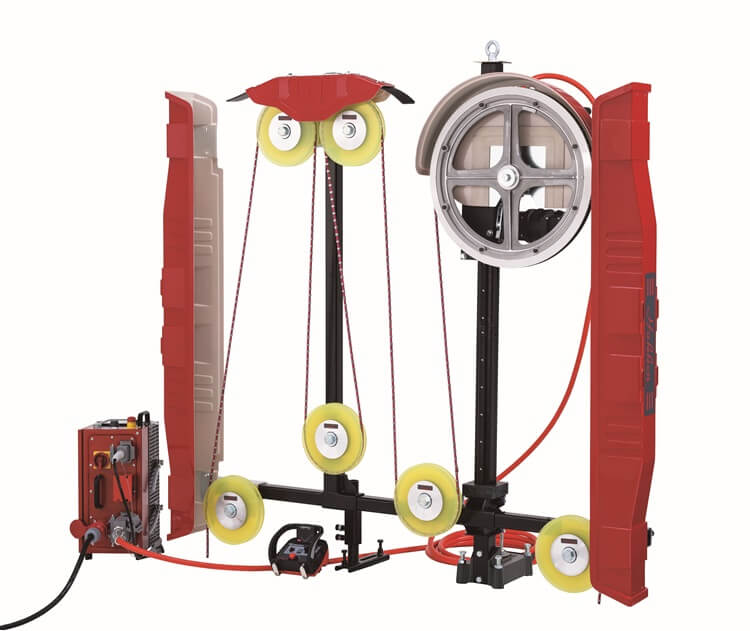
CONSEC Servo Motor Wire Saw DSME-200A
Source: CONSEC Official Website
(https://www.consec.co.jp/article_source/data/en_product/detail/180.html)
(https://www.consec.co.jp/article_source/data/en_product/detail/180.html)
This high-torque model is a strong choice for jobsites where reliable power is available
CONSEC's electric servo motor wire saws are specifically engineered for civil engineering and construction applications. It features a 20 kW high-output servo motor, with a maximum output-shaft torque reaching 276 N-m. This saw performs well on jobs that demand stability during the initial cut and on jobs which place a heavy load on the saw.
Power supply is three-phase 400/440 V, with applicable wire diameters from 10 to 11 mm. It is a strong candidate on jobsites where ample power is available.
Specifications (DSME-200A)
| Item | Specification |
|---|---|
| Model name | DSME-200A |
| Power source | Three-phase AC, 400/440V |
| Motor power | 20 kW |
| Max output shaft torque | 276N-m |
| Applicable wire diameter | 10 to 11 mm |
| Main pulley travel stroke | 1,150 mm |
| Dimensions (W×L×H) | 1,904×543×2,076 mm |
| Weight | 180 kg (excluding servo unit and cables) |
Source: CONSEC Official Website (https://www.consec.co.jp/article_source/data/en_product/detail/180.html)
Example of a hydraulic product
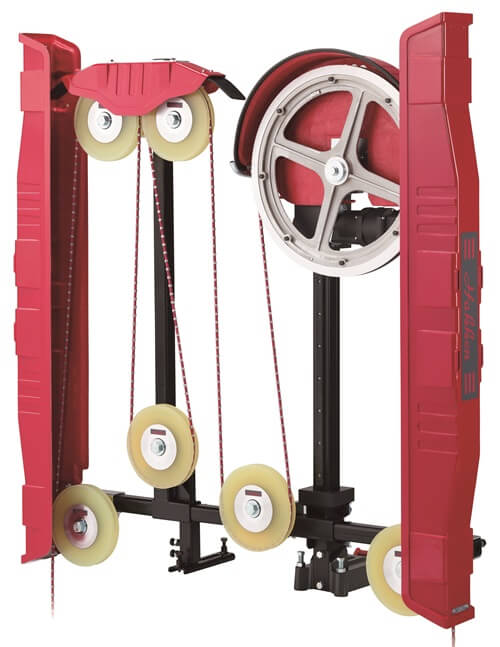
CONSEC Compact Hydraulic Wire Saw DSM-103A
Source: CONSEC Official Website
(https://www.consec.co.jp/article_source/data/ja_product/detail/42.html)
(https://www.consec.co.jp/article_source/data/ja_product/detail/42.html)
A high-end hydraulic model featuring a modular design for enhanced portability to confined spaces and elevated locations.
The DSM-103A is the high-end hydraulic wire saw model offered by CONSEC. Featuring a modular design that allows each component to be disassembled, this model is easy to transport and assemble in confined spaces or elevated locations. This model is operated in combination with a hydraulic power pack (sold separately).
The applicable wire diameter is 10 to 11 mm, with a main pulley travel stroke of 1,150 mm. The assembly weight is 170 kg, realizing a design that makes it easy to deliver the saw to the jobsite.
Specifications (DSM-103A)
| Item | Specification |
|---|---|
| Model name | DSM-103A |
| Rated pressure | 21 MPa |
| Max output shaft speed (allowable) | 850 rpm |
| Applicable wire diameter | 10 to 11 mm |
| Main pulley travel stroke | 1,150 mm |
| Compatible hydraulic power pack (sold separately) | E-2012A eco+ / E-1524A / E-1124A |
| Dimensions (W×L×H) | 1,904×543×2,076 mm |
| Weight | 170 kg (excluding control panel and connection cords) |
Source: CONSEC Official Website (https://www.consec.co.jp/article_source/data/ja_product/detail/42.html)
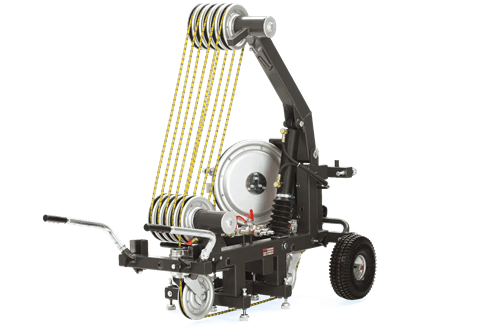
Husqvarna CS 2512
Source: Husqvarna Official Website
(https://www.husqvarnaconstruction.com/int/wire-saws/cs2512/)
(https://www.husqvarnaconstruction.com/int/wire-saws/cs2512/)
Hydraulic model that balances maneuverability with deep-cut capability
A powerful yet easy-to-handle hydraulic wire saw from Husqvarna. It is operated in combination with a separate hydraulic power pack, such as the PP 455 E. The relatively compact unit is easy to transport to smaller jobsites and confined workspaces.
On the other hand, the magazine's large capacity allows it to handle deep and large-scale cutting operations. It works in both floor-mounted and wall-mounted setups, giving it flexibility for complex site conditions.
Specifications (CS 2512)
| Item | Specification |
|---|---|
| Model name | CS 2512 |
| Output power with PP 455 E | 20 kW |
| Wire speed gear 2, max | 25 m/s |
| Net wire storage capacity | 16 m |
| Weight | 150 kg |
| Note: Supports both floor-mounted and wall-mounted setups | |
Source: Husqvarna Construction Official Website (https://www.husqvarnaconstruction.com/int/wire-saws/cs2512/)
Example of a high-frequency motor product
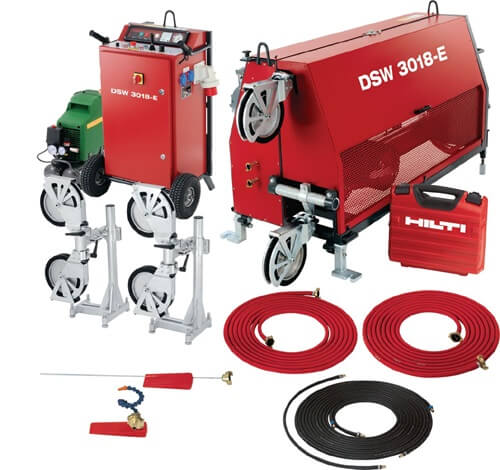
Hilti DSW 3018-E
Source: Hilti Official Website
(https://www.hilti.co.jp/c/CLS_POWER_TOOLS_7125/CLS_DIAMOND_WIRE_WALL_SAWS_7125/r51186)
(https://www.hilti.co.jp/c/CLS_POWER_TOOLS_7125/CLS_DIAMOND_WIRE_WALL_SAWS_7125/r51186)
A high-output electric model ideal for heavy-duty projects and tight construction schedules
A 30 kW high-output electric wire saw from Hilti. With strong drive performance, it is ideal for cutting through tough materials such as high-strength concrete, brick, stone, and steel.
This saw maintains steady productivity on jobs involving tight schedules and the demolition of heavy structures. With a proven track record in controlled demolition, underwater cutting, and dry-cutting applications, this model is characterized by its exceptional versatility across a wide range of jobsite conditions.
Specifications (DSW 3018-E)
| Item | Specification |
|---|---|
| Model name | DSW 3018-E |
| Motor power | 30 kW |
| Power source | Electric |
| Minimum generator output | 80 kVA |
| Wire storage capacity | 18.4 m |
| Weight | 550 kg |
| IP protection class | IP 65 (EN 60529), IP 54 (EN 60529) |
Source: Hilti Official Website (https://www.hilti.co.jp/c/CLS_POWER_TOOLS_7125/CLS_DIAMOND_WIRE_WALL_SAWS_7125/r51186)
How wire saws and core drills work together
Wire saw cutting work is not completed by the wire saw alone. Across the entire process, from pre-construction preparation to post-cutting procedures, core drills play an indispensable role.
Core drills are employed in various stages, including drilling guide holes for wire threading, performing line drilling to define precise cutting boundaries, and creating lifting holes for the removal of cut blocks.
Drilling through holes (guide holes)
To cut a workpiece with a wire saw, a through hole must first be drilled for threading the diamond wire. In this preparatory step, a core drill is usually used to drill a precise hole. Holes are drilled to the appropriate diameter and depth, optimized for the material and thickness of the workpiece.
Utilizing a core drill for consecutive boring at the corners and edges of the cut line ensures smoother corner processing.
Drilling holes for lifting bolts
After the wire saw cuts the workpiece, the resulting concrete block has to be removed safely from the site. Core drilling is often required even after cutting is finished. The reason for post-cut drilling is that crews need to bore holes for the lifting bolts used to hoist (by crane, etc.) or anchor the cut block.
The combination of wire saw cutting and core drilling for removal preparation enables a complete demolition and renovation workflow.
By Priority:
3 Diamond Core Drills, Matched to Your Need-
Prioritize Lightweight
Japanese-Built Durability in a Serviceable Compact Design
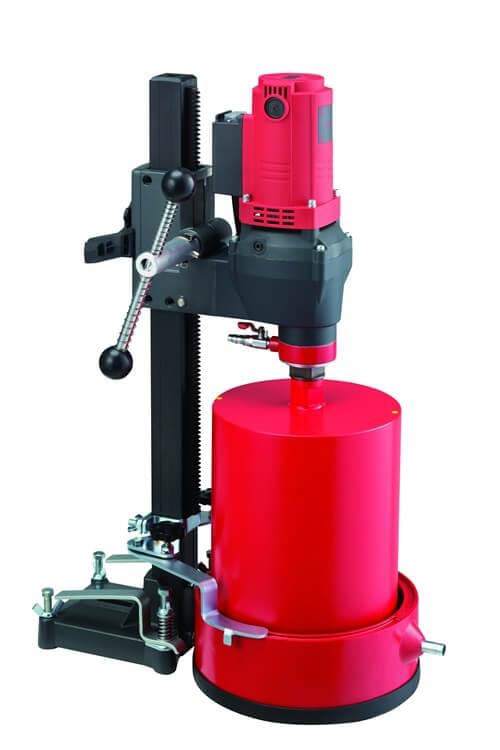
Hakken(CONSEC)SPZ-253U2i
 Source: CONSEC CORPORATION Official Website
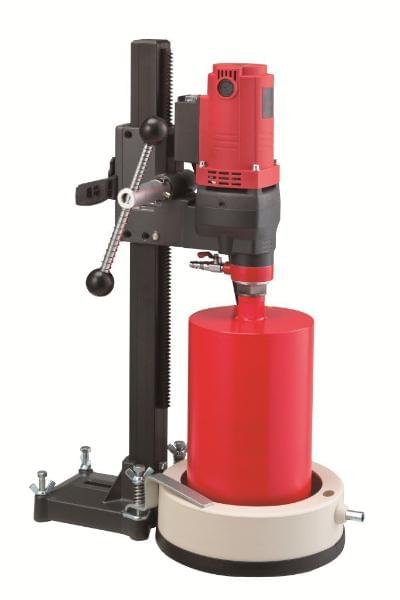
(https://www.consec.co.jp/article_source/data/en_product/detail/158.html)Drill Head SPN-203At
 Source: CONSEC CORPORATION Official Website
(https://www.consec.co.jp/article_source/data/en_product/detail/162.html)SPO-400U3w
 Source: CONSEC CORPORATION Official Website
(https://www.consec.co.jp/article_source/data/en_product/detail/166.html)Built to strict Japanese quality standards, this compact machine packs a high-performance motor into a 13.6 kg body. Robust against temperature swings and tough conditions—lightweight yet reliable enough to keep crews drilling with minimal downtime.
A proprietary control design that delivers both precision and light weight. The Automatic Feeding System reads drilling load in real time, physically preventing operator over-feeding and eliminating abnormal tool wear. Holds steady drilling speed and extends consumable life(*1)—even on sites with limited space or a high volume of small-diameter holes.
-
Prioritize Automation
Advanced Digital Control for Automation and On-Site Safety
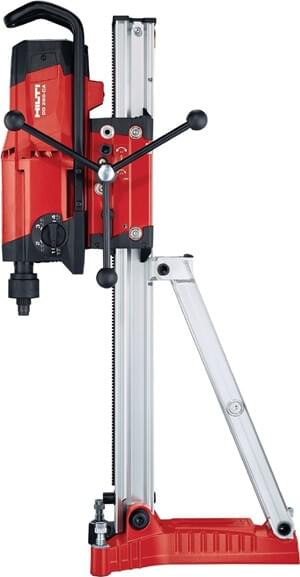
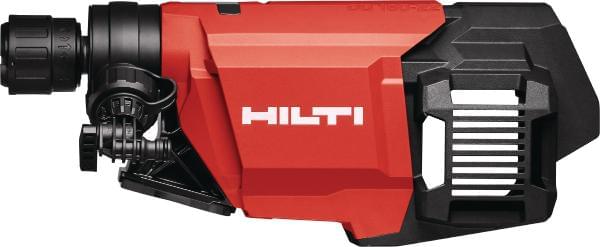
HiltiDD 250-CA
 Source: Hilti Official Website (https://www.hilti.com/c/CLS_POWER_TOOLS_7125/CLS_DIAMOND_CORING_7125/r12321865)
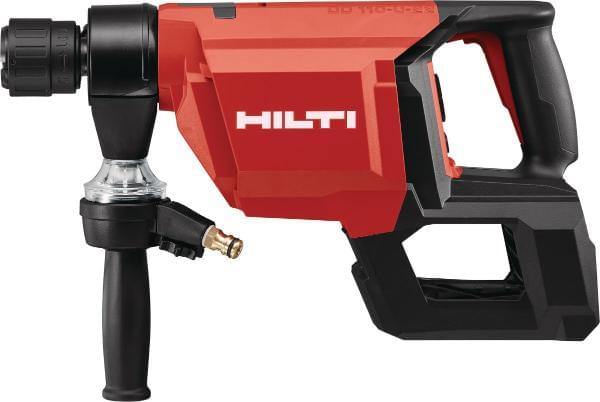
DD 110-U-22
 Source: Hilti Official Website (https://www.hilti.co.jp/c/CLS_POWER_TOOLS_7125/CLS_DIAMOND_CORING_7125/r18888605)
DD 160-22
 Source: Hilti Official Website (https://www.hilti.co.jp/c/CLS_POWER_TOOLS_7125/CLS_DIAMOND_CORING_7125/r18888607)
Hilti Cut Assist digitally controls drilling pressure and water flow throughout the cut. Once set, the hole is drilled fully automatically. This drives labor savings and productivity gains on large-scale jobs with hundreds of holes.
Active Torque Control (ATC) instantly detects jamming of the core bit, and electronically stops sudden kickback that can cause workplace injuries. ATC meets strict safety standards for large-scale projects while reducing the risk of human error.
-
Prioritize Value
Professional Coring Performance at a Reasonable Price
CAYKENOND-925 (E)
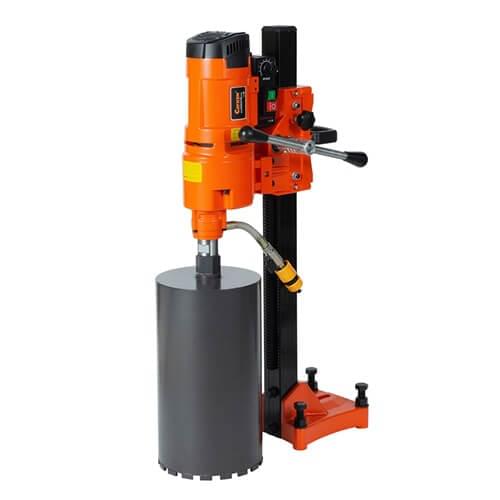 Source: CAYKEN Official Website (https://caykentools.com/ja/diamond-core-drill-machine/ond-925e-diamond-core-drill/)
SCY-18/2EBM
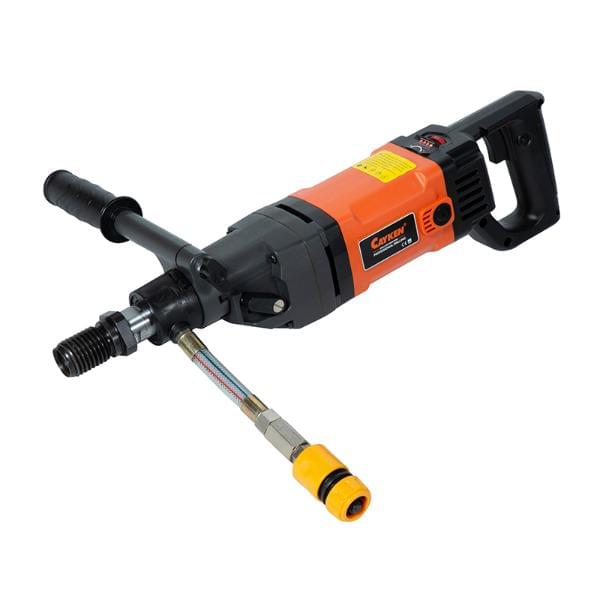 Source: CAYKEN Official Website (https://caykentools.com/diamond-core-drill-machine/scy-18-diamond-core-drill/)
SCY-1780/3EBS
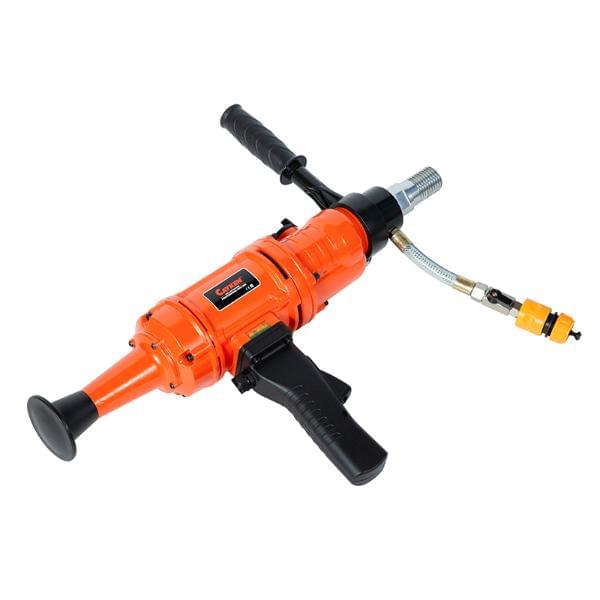 Source: CAYKEN Official Website (https://caykentools.com/diamond-core-drill-machine/scy-1780-diamond-core-drill/)
Rig-based drills start in the $200s, while handheld models start in the $100s, offering affordable options across the lineup(*2). The drill delivers a strong ROI both as a backup for primary machine downtime and for rapid deployment at expanding jobsites.
A reliable mechanical gearbox and a rigid extruded-aluminum stand reflect a specialist manufacturer's focus on core drilling fundamentals. It reliably delivers precise drilling performance even at demanding jobsites, at a competitive cost.
*1.Based on CONSEC SPZ-253U2i specifications: two-speed no-load at 490/1,150 min⁻¹ with the proprietary Automatic Feeding System (optional).
Source: CONSEC CORPORATION Official Website.(https://www.consec.co.jp/article_source/data/en_product/detail/158.html)
*2.Among the 15 brands ranking at the top of an English-language Google search for "diamond core drill," these models are priced below the category average and are among the lowest in both rig-based and handheld categories (based on the editorial team's independent research as of April 17, 2026).