
Industrial Diamond Core Drill Compendium » Diamond core drill bits
Navigation
From the role of diamond core bits to the differences between wet and dry methods, bond types, and connection standards, this article organizes essential information to consider before making a selection.
Use it as a reference to identify the right product for your jobsite conditions.
What This Page Covers
- The Role and Basic Mechanism of Diamond Core Bits
- Differences between wet and dry methods and how to choose based on jobsite conditions
- Important specifications to check: bond, standards, and lifespan
What Is a Diamond Core Bit?
A diamond core bit is a cylindrical cutting tool that mounts on the front end of a core drill. It is designed to cut clean, cylindrical holes in hard materials such as concrete and stone.
Unlike standard drill bits that grind away the entire surface, core bits cut only along the outer periphery. Core bits cut through the workpiece using the hardness of fine diamond particles embedded in the segments at the tip of the bit. Because the bit is a wear part that gradually erodes with use, selecting one matched to the base material and the power of the drill is essential.
Differences Between Wet and Dry Diamond Core Bits
Diamond core bits fall into two categories: wet bits, which use water, and dry bits, which do not. It is critical to choose the right method based on jobsite conditions and base material properties.
Wet drilling continuously feeds water onto the bit during drilling. The water suppresses frictional heat and flushes out cuttings. The wet method is suitable for hard materials like reinforced concrete and long, continuous deep-hole drilling.
In contrast, the dry method drills without any water feed. The dry method avoids water leaks and slurry stains, making it well-suited for indoor work where using water is impractical, such as in office buildings. This method is commonly paired with a dust extractor to prevent airborne dust during operation.
Types of Bonds
The bond is the binding matrix that holds the diamond particles in place within the bit segment. The hardness of the bond has a major impact on both cutting performance and bit life. Match the bond to the hardness of the base material when making a selection.
Soft Bond
A soft bond holds the diamond particles with relatively low retention strength. As work progresses, the bond wears at a controlled rate, continuously exposing fresh abrasive grains at the surface.
This makes a soft bond well-suited for drilling hard materials such as dense concrete and hard stone. When cutting hard materials, grains on the leading edge dull quickly. With a soft bond, fresh cutting edges keep emerging and strong cutting performance is maintained.
Medium Bond
A medium bond offers properties between those of soft and hard bonds. Except for extremely hard or extremely soft materials, it delivers consistent cutting performance across a wide range of jobsite conditions.
It is a sound choice when the base material's properties are not clearly known in advance or when a jobsite involves several different materials.
Hard Bond
A hard bond holds diamond particles tightly and resists wear. It is suited to soft, abrasive materials such as asphalt and lightweight concrete, where cuttings can act like sandpaper and wear down the bit itself.
The name can be misleading; be sure to note that “hard” refers to the bond itself being wear-resistant, not to the hardness of the material being drilled. Hard bonds are best for harsh jobsites with rapid wear conditions, where maximizing tool life is the priority.
Segment Height and Lifespan
The segment height shown on spec sheets indicates the thickness of the usable layer that remains as the bit wears, and it is a key factor that affects the lifespan of the core bit. A higher value means a thicker wearable layer and is better suited for long-term work.
However, actual lifespan is not determined by segment height alone. It also varies due to base material hardness, the presence of rebar, cooling conditions, drill RPM, applied feed pressure, and dust extraction performance. A comprehensive evaluation of jobsite conditions is essential when making a decision.
Thread Size, Shank Standards, and Choosing the Right Adapter
Before starting work with a new core bit, always verify the connection standard with the drill. When the thread size or shank shape of the drill and the core bit do not match, an adapter is required for connection.
When selecting an adapter, it is important to verify in advance whether the core bit diameter falls within the recommended range for the drill's power output. When evaluating equipment, keep in mind that adding intermediate parts increases overall length, which can introduce runout and instability during operation.
Summary
It is critical to select the right diamond core bits for your jobsite conditions and base material. Work efficiency can be significantly improved by checking key items in advance. For example, whether water is available on site, whether the base material is hard or soft, and whether the connection standard matches the drill.
This site features diamond core drills organized by the common jobsite challenges they address, including tight-deadline jobs, large-scale infrastructure projects, and backup machines or supplementary work. For a comparison of products tailored to specific applications and goals, see the View 3 Recommended Diamond Core Drills by Purpose.
By Priority:
3 Diamond Core Drills, Matched to Your Need-
Prioritize Lightweight
Japanese-Built Durability in a Serviceable Compact Design
Hakken(CONSEC)SPZ-253U2i
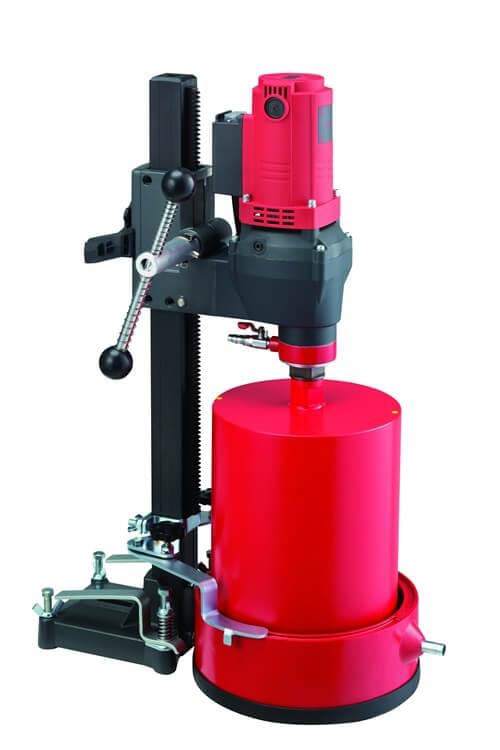 Source: CONSEC CORPORATION Official Website
(https://www.consec.co.jp/article_source/data/en_product/detail/158.html)Drill Head SPN-203At
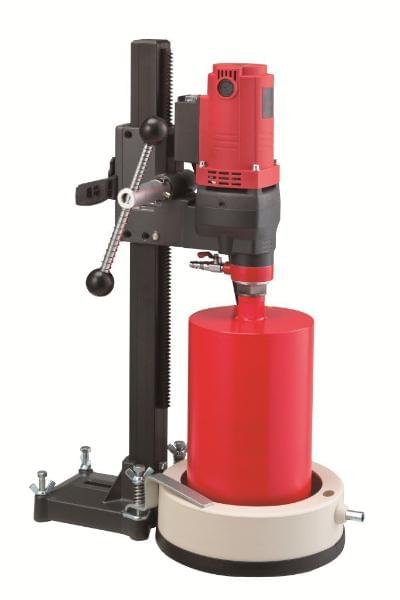 Source: CONSEC CORPORATION Official Website
(https://www.consec.co.jp/article_source/data/en_product/detail/162.html)SPO-400U3w
 Source: CONSEC CORPORATION Official Website
(https://www.consec.co.jp/article_source/data/en_product/detail/166.html)Built to strict Japanese quality standards, this compact machine packs a high-performance motor into a 13.6 kg body. Robust against temperature swings and tough conditions—lightweight yet reliable enough to keep crews drilling with minimal downtime.
A proprietary control design that delivers both precision and light weight. The Automatic Feeding System reads drilling load in real time, physically preventing operator over-feeding and eliminating abnormal tool wear. Holds steady drilling speed and extends consumable life(*1)—even on sites with limited space or a high volume of small-diameter holes.
-
Prioritize Automation
Advanced Digital Control for Automation and On-Site Safety
HiltiDD 250-CA
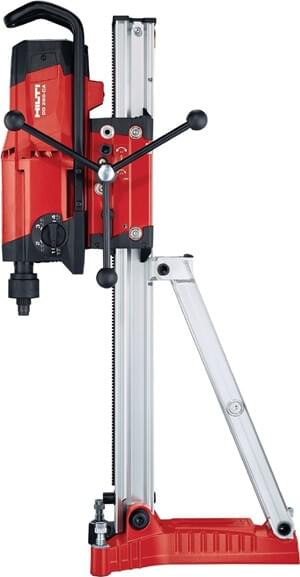 Source: Hilti Official Website (https://www.hilti.com/c/CLS_POWER_TOOLS_7125/CLS_DIAMOND_CORING_7125/r12321865)
DD 110-U-22
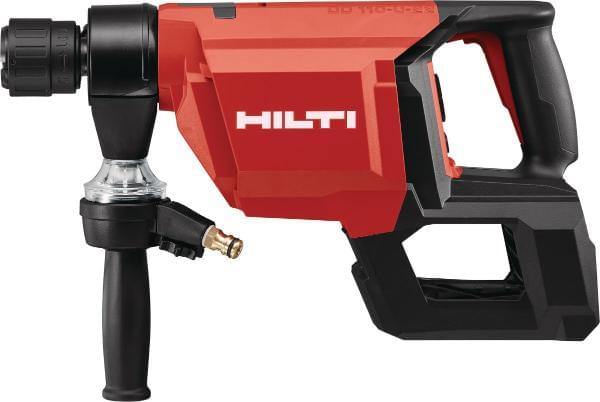 Source: Hilti Official Website (https://www.hilti.co.jp/c/CLS_POWER_TOOLS_7125/CLS_DIAMOND_CORING_7125/r18888605)
DD 160-22
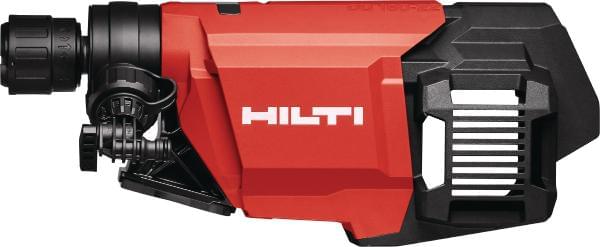 Source: Hilti Official Website (https://www.hilti.co.jp/c/CLS_POWER_TOOLS_7125/CLS_DIAMOND_CORING_7125/r18888607)
Hilti Cut Assist digitally controls drilling pressure and water flow throughout the cut. Once set, the hole is drilled fully automatically. This drives labor savings and productivity gains on large-scale jobs with hundreds of holes.
Active Torque Control (ATC) instantly detects jamming of the core bit, and electronically stops sudden kickback that can cause workplace injuries. ATC meets strict safety standards for large-scale projects while reducing the risk of human error.
-
Prioritize Value
Professional Coring Performance at a Reasonable Price
CAYKENOND-925 (E)
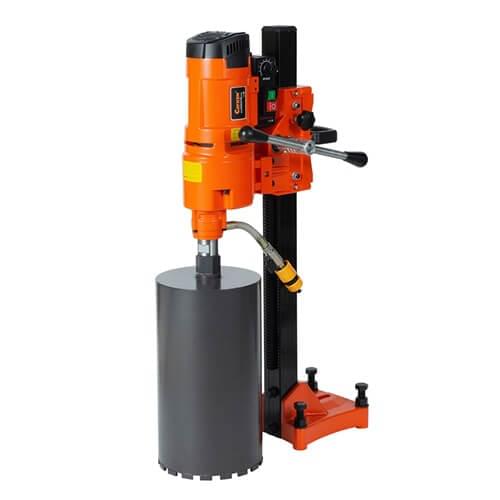 Source: CAYKEN Official Website (https://caykentools.com/ja/diamond-core-drill-machine/ond-925e-diamond-core-drill/)
SCY-18/2EBM
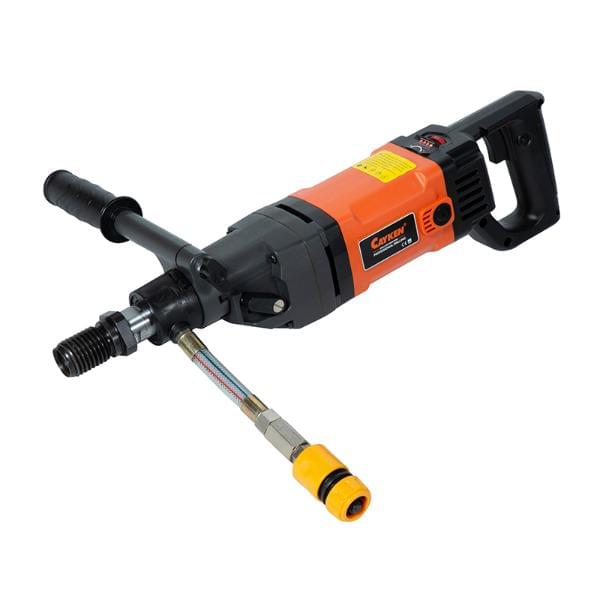 Source: CAYKEN Official Website (https://caykentools.com/diamond-core-drill-machine/scy-18-diamond-core-drill/)
SCY-1780/3EBS
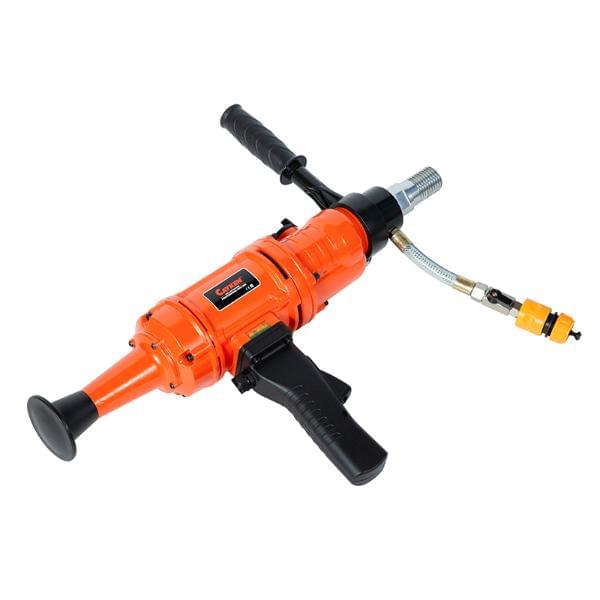 Source: CAYKEN Official Website (https://caykentools.com/diamond-core-drill-machine/scy-1780-diamond-core-drill/)
Rig-based drills start in the $200s, while handheld models start in the $100s, offering affordable options across the lineup(*2). The drill delivers a strong ROI both as a backup for primary machine downtime and for rapid deployment at expanding jobsites.
A reliable mechanical gearbox and a rigid extruded-aluminum stand reflect a specialist manufacturer's focus on core drilling fundamentals. It reliably delivers precise drilling performance even at demanding jobsites, at a competitive cost.
*1.Based on CONSEC SPZ-253U2i specifications: two-speed no-load at 490/1,150 min⁻¹ with the proprietary Automatic Feeding System (optional).
Source: CONSEC CORPORATION Official Website.(https://www.consec.co.jp/article_source/data/en_product/detail/158.html)
*2.Among the 15 brands ranking at the top of an English-language Google search for "diamond core drill," these models are priced below the category average and are among the lowest in both rig-based and handheld categories (based on the editorial team's independent research as of April 17, 2026).