Industrial Diamond Core Drill Compendium » Types of diamond core drills » Hydraulic diamond core drill
Navigation
This page explains the basic mechanism and main applications of the hydraulic diamond core drill, which delivers stable drilling even under heavy-load conditions. It also covers common operational challenges and solutions, along with key points for deciding whether a hydraulic diamond core drill is the right fit for a given jobsite.
What This Page Covers
- The Basic Mechanism of a Hydraulic Diamond Core Drill
- Main applications and the heavy-load jobsite conditions where it performs best
- How to match the right model to jobsite conditions—and what to check before bringing one in
How a Hydraulic Diamond Core Drill Works
A hydraulic diamond core drill is powered by hydraulic oil pressure rather than an electric motor. A separate hydraulic power pack feeds high-pressure oil through hoses to power the drill with strong rotational torque.
A diamond-embedded core bit mounts at the tip and presses against concrete or similar material to cut a cylindrical hole. Because power is transmitted purely by oil flow and pressure rather than electricity, the drill is built to push hard into tough materials with far less risk of stalling.
Main Applications of a Hydraulic Diamond Core Drill
This drill is mainly used for large-diameter through-holes and deep-hole drilling under heavy-load conditions where an electric drill would stall. Its ability to sustain high rotational torque makes it a trusted tool for repairs of bridges and civil infrastructure, and for jobsites with heavy rebar. It also keeps work on schedule and delivers stable performance during long continuous drilling runs, or in wet areas where reliable power is hard to come by.
Typical Bit Shapes and Size Ranges
Sizes range broadly from medium-diameter bits around 50 mm up to large-diameter heads in the 800 mm class. Segmented bits with rugged block-shaped tips are the standard.
High rotational torque generates intense friction heat, so wet drilling with continuous water feed is the standard practice—it cools the bit and flushes out cuttings for stable drilling. Heavy-duty models with drilling capacities up to 800 mm are also available. These models deliver superior performance in demanding large-diameter and deep-hole jobs such as infrastructure repair.
Source: CONSEC Official Website (https://www.consec.co.jp/article_source/data/en_product/detail/173.html)
Source: Husqvarna Construction Official Website (https://www.husqvarnaconstruction.com/us/concrete-core-drills/dm406h/)
Common Challenges and Solutions When Using a Hydraulic Diamond Core Drill
Overspecification Concerns from Equipment Weight and Initial Cost
The overall system is heavy because a large hydraulic power pack is required to power the unit. Transport and setup take considerable time, and the system is often overkill for small- to medium-diameter drilling jobs. To avoid unnecessary capital outlay and setup time, limit hydraulic core drills to jobsites where hydraulics actually pay off—large-diameter and deep-hole work. Contractors focused on smaller jobs are better off with an electric wet drill. If you only handle occasional heavy-load work, renting the unit is the smarter call.
Increased Maintenance from Hose Routing and Oil Leak Risk
Because power is transmitted hydraulically, operators have to manage the thick hoses running between the drill head and the power pack throughout the job. Hoses can be damaged by contact with obstacles or jobsite debris, leading to serious oil leaks you can't afford to ignore.
To prevent unexpected damage at the jobsite, always conduct pre-task inspections and fit hoses with protective covers. Setting up a tracking system for every connection point cuts maintenance load and keeps operations safe and smooth.
How to Choose a Hydraulic Diamond Core Drill
Don't rely on spec-sheet numbers alone—match the configuration to your jobsite's specific conditions.
Even the most capable drill won't deliver full performance unless the jobsite has enough room to set up the large hydraulic power pack and route the thick hoses. Check whether the job calls for deep, large-diameter holes and continuous drill runs, and whether you have a setup in place to operate the surrounding equipment safely.
Hydraulic (wet) drilling is impractical on jobsites where water isn't available or where you need to keep wastewater to a minimum. The article below covers diamond core drills built for dry drilling—no water needed. It's a handy reference for picking the right drill for the job.
Summary
A hydraulic diamond core drill is a dependable machine that excels at heavy-load jobsites that an electric drill cannot fully handle, such as large-diameter and deep-hole work. However, it doesn't boost efficiency on every jobsite. You need a holistic call that factors in the scale of supporting equipment and the maintenance setup.
Given the labor required for large-scale setup, deciding whether hydraulic power is truly necessary directly affects how smoothly the overall project runs.
When contractors aren't sure whether a drill is overspecified for their jobsite or which model to pick, the most practical move is to narrow options by application. The article below groups diamond core drills by purpose to match different jobsite conditions—use it as a guide when picking the right drill for the job.
By Priority:
3 Diamond Core Drills, Matched to Your Need-
Prioritize Lightweight
Japanese-Built Durability in a Serviceable Compact Design
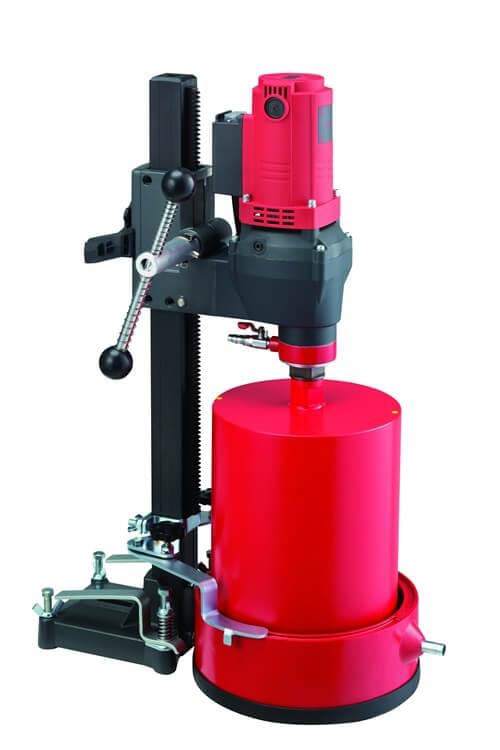
Hakken(CONSEC)SPZ-253U2i
 Source: CONSEC CORPORATION Official Website
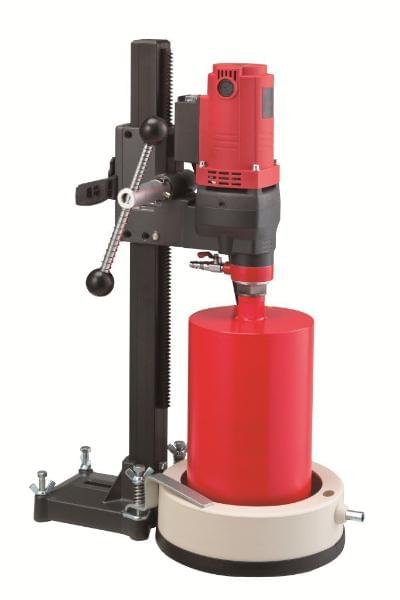
(https://www.consec.co.jp/article_source/data/en_product/detail/158.html)Drill Head SPN-203At
 Source: CONSEC CORPORATION Official Website
(https://www.consec.co.jp/article_source/data/en_product/detail/162.html)SPO-400U3w
 Source: CONSEC CORPORATION Official Website
(https://www.consec.co.jp/article_source/data/en_product/detail/166.html)Built to strict Japanese quality standards, this compact machine packs a high-performance motor into a 13.6 kg body. Robust against temperature swings and tough conditions—lightweight yet reliable enough to keep crews drilling with minimal downtime.
A proprietary control design that delivers both precision and light weight. The Automatic Feeding System reads drilling load in real time, physically preventing operator over-feeding and eliminating abnormal tool wear. Holds steady drilling speed and extends consumable life(*1)—even on sites with limited space or a high volume of small-diameter holes.
-
Prioritize Automation
Advanced Digital Control for Automation and On-Site Safety
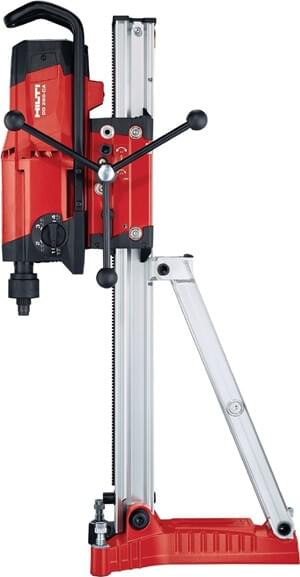
HiltiDD 250-CA
 Source: Hilti Official Website (https://www.hilti.com/c/CLS_POWER_TOOLS_7125/CLS_DIAMOND_CORING_7125/r12321865)
DD 110-U-22
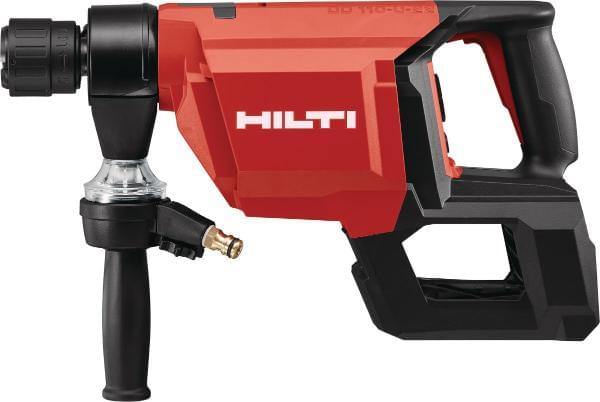 Source: Hilti Official Website (https://www.hilti.co.jp/c/CLS_POWER_TOOLS_7125/CLS_DIAMOND_CORING_7125/r18888605)
DD 160-22
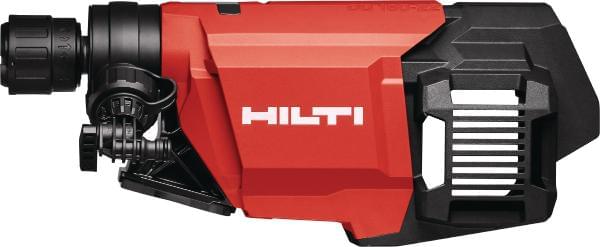 Source: Hilti Official Website (https://www.hilti.co.jp/c/CLS_POWER_TOOLS_7125/CLS_DIAMOND_CORING_7125/r18888607)
Hilti Cut Assist digitally controls drilling pressure and water flow throughout the cut. Once set, the hole is drilled fully automatically. This drives labor savings and productivity gains on large-scale jobs with hundreds of holes.
Active Torque Control (ATC) instantly detects jamming of the core bit, and electronically stops sudden kickback that can cause workplace injuries. ATC meets strict safety standards for large-scale projects while reducing the risk of human error.
-
Prioritize Value
Professional Coring Performance at a Reasonable Price
CAYKENOND-925 (E)
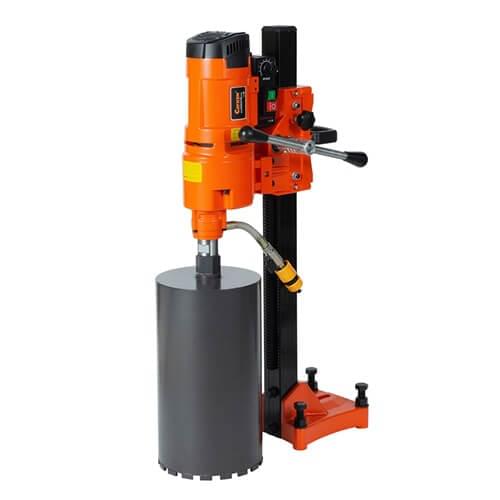 Source: CAYKEN Official Website (https://caykentools.com/ja/diamond-core-drill-machine/ond-925e-diamond-core-drill/)
SCY-18/2EBM
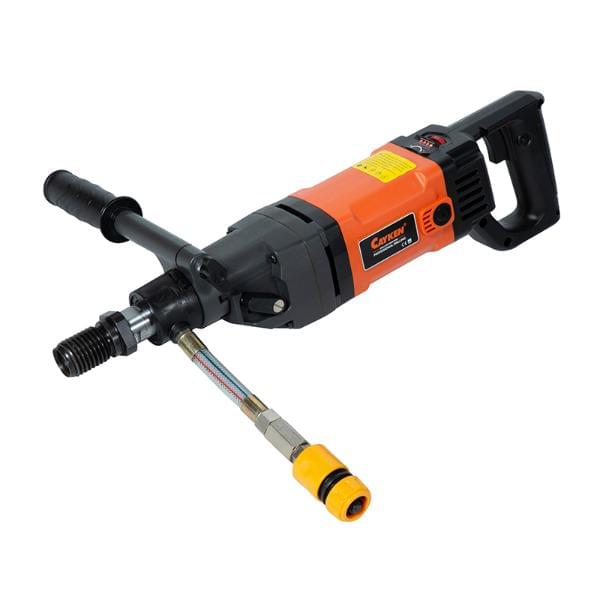 Source: CAYKEN Official Website (https://caykentools.com/diamond-core-drill-machine/scy-18-diamond-core-drill/)
SCY-1780/3EBS
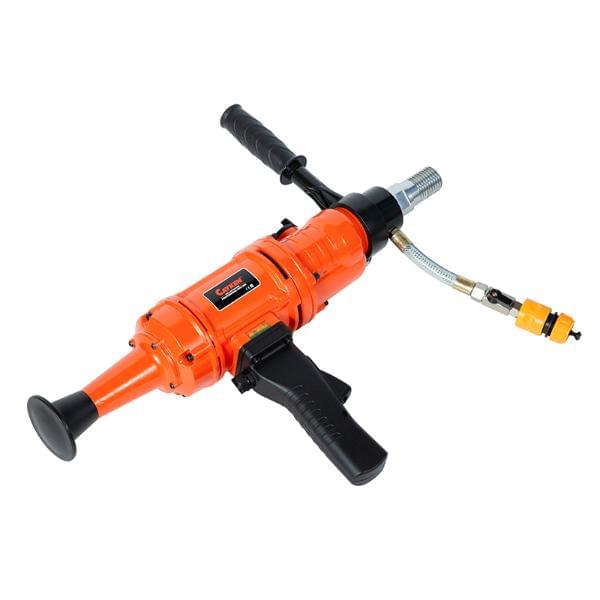 Source: CAYKEN Official Website (https://caykentools.com/diamond-core-drill-machine/scy-1780-diamond-core-drill/)
Rig-based drills start in the $200s, while handheld models start in the $100s, offering affordable options across the lineup(*2). The drill delivers a strong ROI both as a backup for primary machine downtime and for rapid deployment at expanding jobsites.
A reliable mechanical gearbox and a rigid extruded-aluminum stand reflect a specialist manufacturer's focus on core drilling fundamentals. It reliably delivers precise drilling performance even at demanding jobsites, at a competitive cost.
*1.Based on CONSEC SPZ-253U2i specifications: two-speed no-load at 490/1,150 min⁻¹ with the proprietary Automatic Feeding System (optional).
Source: CONSEC CORPORATION Official Website.(https://www.consec.co.jp/article_source/data/en_product/detail/158.html)
*2.Among the 15 brands ranking at the top of an English-language Google search for "diamond core drill," these models are priced below the category average and are among the lowest in both rig-based and handheld categories (based on the editorial team's independent research as of April 17, 2026).