Navigation
This article explains the fundamentals of wet diamond core drills and how to choose the best drill for your needs. It breaks down how the drill works, walks through its ideal uses, and points to reference information that helps you pick the right drill for your jobsite.
What This Page Covers
- How wet drilling cools the bit with water, and how it differs from dry drilling
- Main applications, such as openings for piping and electrical conduit
- Operational challenges such as water management, plus important points for choosing a drill that fits jobsite conditions
How a Wet Diamond Core Drill Works
During drilling, water from a supply hose flows through the inside of the core bit and reaches the cutting tip directly. The bit spins at high speed to cut into the base material while water flows continuously during drilling.
The water flow quickly dissipates the intense heat generated by friction during cutting. Dust mixes with the water to form slurry, which the bit's rotation and water pressure flush out of the hole.
Main Applications of Wet Diamond Core Drills
These drills excel at jobs where core bits wear out quickly, specifically when drilling thick reinforced concrete or deep holes. They are suitable for tasks such as large-diameter plumbing for water supply and drainage work, or HVAC and other MEP installations.
Because wet drilling keeps airborne dust to a minimum, it works well in dust-sensitive occupied facilities and during interior renovations where finishes are already in place.
Typical Bit Shapes and Size Ranges
The standard core bit is a hollow cylindrical shape. The cutting end is typically either a continuous rim (crown type) that resists chipping or a segmented type that lets coolant water flow more freely. Segmented bits come in several profiles, including V-shaped and U-shaped variants.
Sizes range widely—from around 6 mm up to 600 mm or more (roughly 1/4 inch to 24 inches). Standard barrel lengths are approximately 250 to 350 mm, but extension tubes can be used to achieve greater depths when needed.
When selecting a drill, look beyond hole diameter to factors like the bit shape best suited to the base material's hardness, the required length, and whether to go handheld or rig-based.
Challenges and Solutions When Using a Wet Diamond Core Drill
Securing a Water Supply and Managing the Large Volumes of Generated Slurry
On jobsites without a municipal water hookup, crews have to source, fill, and haul their own water tanks—an added burden that scales with the work. One way to reduce that burden is to use a portable pressurized water tank, which makes securing a water source far simpler.
On top of that, the slurry generated during drilling cannot simply be released onto the jobsite—it has to be captured and disposed of properly, adding an extra step to the workflow. A practical fix is to pair a water collection ring with a wet vacuum to capture the slurry at the source as drilling progresses.
Building both water supply and wastewater capture into a repeatable system cuts down on prep time and post-job cleanup alike.
Heavy-Duty Site Containment Required on Finished Interiors and Water-Sensitive Jobsites
Because the process combines water with high-speed cutting, splashing and stray slurry are unavoidable risks. On renovation jobsites with finished interiors—or in environments with precision equipment where moisture is unacceptable—thorough site containment is essential to protect the surrounding area.
When even thorough site containment leaves you worried about water leakage—or when prep takes longer than the drilling itself—it's worth also considering dry drilling equipment that fits the jobsite. Matching wet and dry methods to jobsite constraints ultimately improves both safety and overall productivity.
How to Choose a Wet Diamond Core Drill
Start by checking how well a given drill matches the jobsite's intended use and constraints. Beyond confirming that it has the power and hole-diameter range for reinforced concrete and deep drilling, look closely at how easily the model handles the water supply and wastewater management that wet drilling requires.
Take extra care in moisture-sensitive environments and on jobsites where securing a water supply is difficult. However effective wet methods are at controlling dust, if extensive site containment or arranging water tanks demands more effort than expected, productivity can actually take a hit. On such jobsites, forcing wet drilling is rarely the right call—a broader equipment comparison that includes switching to a dry drilling setup is essential.
The article below covers a wide range of diamond core drills suitable for jobsites with water-management challenges and environments where minimizing wastewater is a priority. Use it as a reference when narrowing down the right unit for specific site conditions.
Summary
A wet diamond core drill uses water to cool and flush the cutting edge, allowing stable drilling through thick reinforced concrete and deep holes alike. Wet drilling keeps airborne dust low, making it an excellent fit for active facilities and indoor renovation work. That said, the method requires a secured water supply, slurry collection, and moisture protection—so switching to a dry drilling option is equally important when jobsite conditions call for it.
Rather than relying on catalog specs alone, the smartest approach is to work backward from the actual constraints and challenges of the jobsite to identify the right equipment. This site features recommended diamond core drills matched to specific jobsite goals and conditions—use it as a reference when narrowing down the right tool.
By Priority:
3 Diamond Core Drills, Matched to Your Need-
Prioritize Lightweight
Japanese-Built Durability in a Serviceable Compact Design
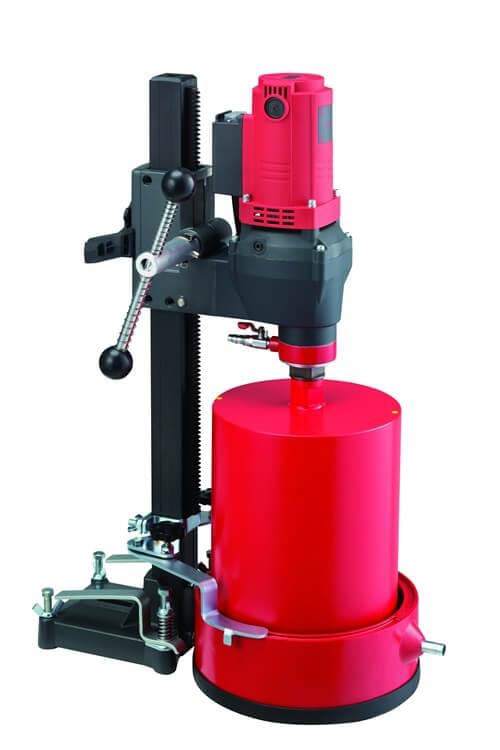
Hakken(CONSEC)SPZ-253U2i
 Source: CONSEC CORPORATION Official Website
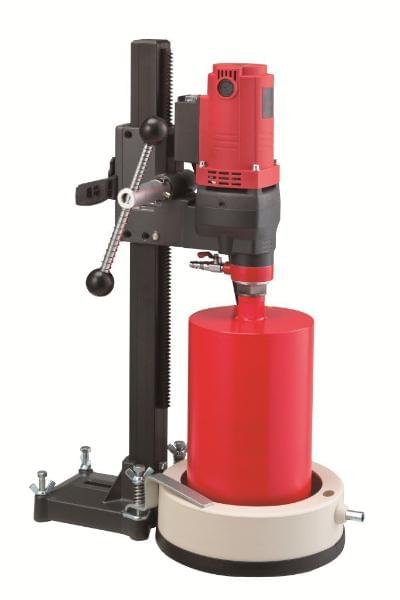
(https://www.consec.co.jp/article_source/data/en_product/detail/158.html)Drill Head SPN-203At
 Source: CONSEC CORPORATION Official Website
(https://www.consec.co.jp/article_source/data/en_product/detail/162.html)SPO-400U3w
 Source: CONSEC CORPORATION Official Website
(https://www.consec.co.jp/article_source/data/en_product/detail/166.html)Built to strict Japanese quality standards, this compact machine packs a high-performance motor into a 13.6 kg body. Robust against temperature swings and tough conditions—lightweight yet reliable enough to keep crews drilling with minimal downtime.
A proprietary control design that delivers both precision and light weight. The Automatic Feeding System reads drilling load in real time, physically preventing operator over-feeding and eliminating abnormal tool wear. Holds steady drilling speed and extends consumable life(*1)—even on sites with limited space or a high volume of small-diameter holes.
-
Prioritize Automation
Advanced Digital Control for Automation and On-Site Safety
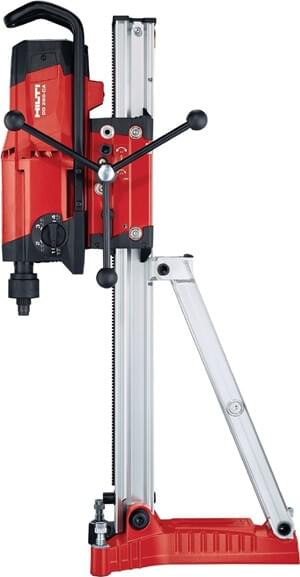
HiltiDD 250-CA
 Source: Hilti Official Website (https://www.hilti.com/c/CLS_POWER_TOOLS_7125/CLS_DIAMOND_CORING_7125/r12321865)
DD 110-U-22
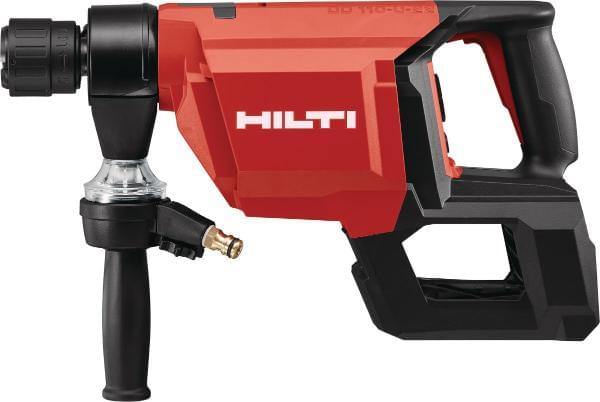 Source: Hilti Official Website (https://www.hilti.co.jp/c/CLS_POWER_TOOLS_7125/CLS_DIAMOND_CORING_7125/r18888605)
DD 160-22
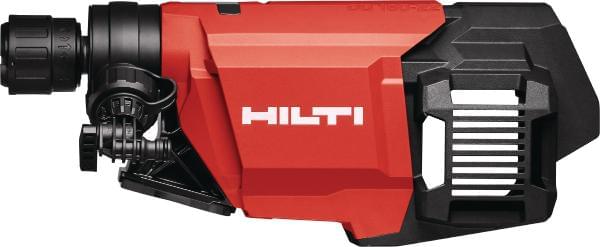 Source: Hilti Official Website (https://www.hilti.co.jp/c/CLS_POWER_TOOLS_7125/CLS_DIAMOND_CORING_7125/r18888607)
Hilti Cut Assist digitally controls drilling pressure and water flow throughout the cut. Once set, the hole is drilled fully automatically. This drives labor savings and productivity gains on large-scale jobs with hundreds of holes.
Active Torque Control (ATC) instantly detects jamming of the core bit, and electronically stops sudden kickback that can cause workplace injuries. ATC meets strict safety standards for large-scale projects while reducing the risk of human error.
-
Prioritize Value
Professional Coring Performance at a Reasonable Price
CAYKENOND-925 (E)
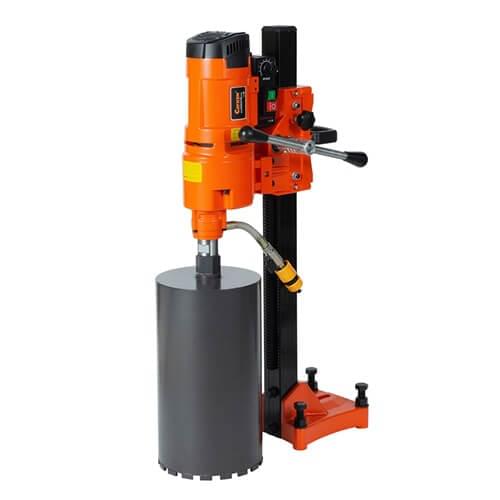 Source: CAYKEN Official Website (https://caykentools.com/ja/diamond-core-drill-machine/ond-925e-diamond-core-drill/)
SCY-18/2EBM
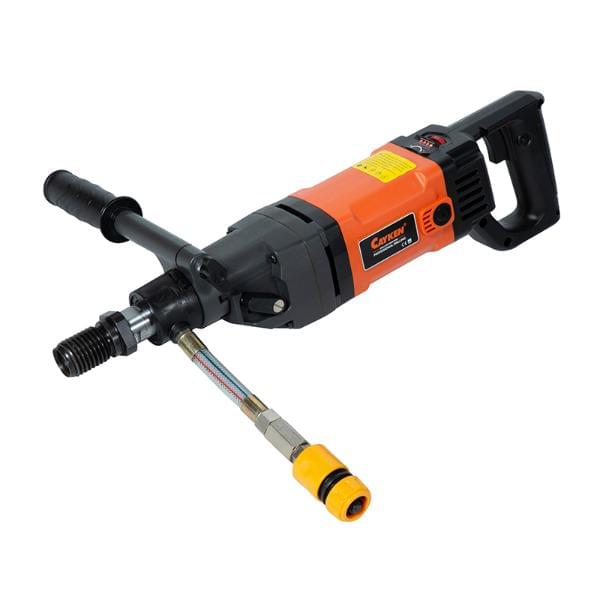 Source: CAYKEN Official Website (https://caykentools.com/diamond-core-drill-machine/scy-18-diamond-core-drill/)
SCY-1780/3EBS
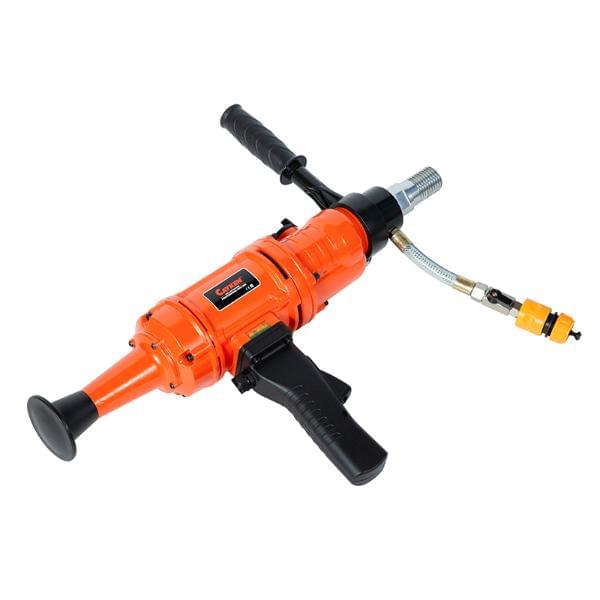 Source: CAYKEN Official Website (https://caykentools.com/diamond-core-drill-machine/scy-1780-diamond-core-drill/)
Rig-based drills start in the $200s, while handheld models start in the $100s, offering affordable options across the lineup(*2). The drill delivers a strong ROI both as a backup for primary machine downtime and for rapid deployment at expanding jobsites.
A reliable mechanical gearbox and a rigid extruded-aluminum stand reflect a specialist manufacturer's focus on core drilling fundamentals. It reliably delivers precise drilling performance even at demanding jobsites, at a competitive cost.
*1.Based on CONSEC SPZ-253U2i specifications: two-speed no-load at 490/1,150 min⁻¹ with the proprietary Automatic Feeding System (optional).
Source: CONSEC CORPORATION Official Website.(https://www.consec.co.jp/article_source/data/en_product/detail/158.html)
*2.Among the 15 brands ranking at the top of an English-language Google search for "diamond core drill," these models are priced below the category average and are among the lowest in both rig-based and handheld categories (based on the editorial team's independent research as of April 17, 2026).