
Navigation
Wet drilling with a diamond core drill is a method in which water is delivered to the bit while drilling. Compared with dry drilling, wet drilling typically extends tool life and gives more stable cuts — but it also requires on-site planning for water supply and wastewater handling.
This page explains how wet drilling works, its key characteristics, how it differs from dry drilling, and the operational details that matter on the jobsite.
What This Page Covers
- How Wet Drilling Works and What Water Does
- Differences from Dry Drilling and How to Choose Between Them
- Water Feed Methods and Key Jobsite Management Points
What Is Wet Drilling?
Wet drilling is a diamond core drilling method that delivers water to the bit tip while the hole is being drilled. It is the standard approach for drilling a wide range of materials, including concrete, brick, and stone. Water cools, lubricates, and flushes out cuttings all at once. That makes wet drilling well-suited to large-diameter holes, deep holes, and continuous runs that dry drilling can't handle well.
How Wet Drilling Works: The Three Jobs Water Performs
Cooling: Extending Bit Life
Diamond bits generate frictional heat during drilling. When too much heat builds up, the bond — the metal matrix that holds the diamond grains — softens, which accelerates bit wear and degrades performance. Water lowers the cutting-edge temperature and keeps the bit operating in its optimal range. Cooling is especially critical for bit life in large-diameter, high-load work.
Lubrication: Reducing Drilling Resistance
Water flows in between the bit and the base material, reducing friction at the cutting surface. This improves drilling efficiency and reduces the load on the motor. At equivalent power, wet drilling progresses more steadily than dry — often the more productive choice.
Flushing Cuttings: Preventing Clogs
Cuttings (slurry) left in the bit's slots clog it and hurt drilling performance. The water flow continuously flushes cuttings out of the hole and helps maintain the bit's cutting performance. The deeper the hole, the more critical this flushing effect becomes.
Wet vs. Dry Drilling: Key Differences and How to Choose
The key differences boil down to three things: whether water can be used on site, how much jobsite management is needed, and the range of applications each method covers.
| Comparison Items | Wet Drilling | Dry Drilling |
|---|---|---|
| Cooling Method | Water feed | Air cooling (natural cooling) |
| Bit Life | Long (handles high loads well) | Varies by application and conditions |
| Dust Generation | Low | High (dust extraction required) |
| Wastewater Treatment | Required | Not required |
| Water Supply | Required | Not required |
| Hole Diameter Range | Wide range from small to large diameters | Mainly small to medium diameters |
Dry drilling is the usual choice where water can't be used — indoors, on finished floors, or near electrical equipment. Wet drilling, on the other hand, is standard for large-diameter holes, continuous runs, and hard materials.
Types of Water Feed Methods
Internal (center) water feed
Water enters through a feed port on the rig or drill body, runs through the center of the bit, and exits at the tip. Water reaches the full bit evenly, delivering strong cooling and flushing. It's the standard setup for large-diameter drilling on dedicated machines. Flow control matters: too little water means inadequate cooling; too much causes splashing on surrounding surfaces.
External water feed
This method applies water to the outside of the bit. It can be used on models that lack an internal water feed system. External water feed is a simpler way to run wet drilling, but water may not consistently reach the cutting edge, so cooling and flushing are weaker than with an internal feed. Therefore, external water feed is best suited as a supplementary option for small-diameter holes and light-duty work.
Key Jobsite Management Practices for Wet Drilling
Collecting and Treating Wastewater
Wet drilling generates wastewater that contains cuttings. Concrete drilling produces highly alkaline wastewater, and discharging it directly into drains may violate environmental regulations. Capture wastewater with collection containers or containment sheeting, then treat and dispose of it properly. Plan your collection setup ahead of time based on jobsite conditions.
Site Protection and Splash Control
Water and slurry splashing during drilling can stain or damage nearby finishes and equipment. Basic measures: use containment sheeting and a dedicated water collection ring to set up containment and block splash paths before you start drilling. When using a stand, combining a water collection ring with a drain hose makes collection easier.
Managing Water Flow
Too little water flow lets the bit overheat and wear faster; too much causes splashing on nearby surfaces. Start from the manufacturer's recommended water flow and adjust based on the material and hole diameter. Cutting off water mid-drilling causes sudden temperature swings, so keep flow continuous from start to finish.
Summary
Wet drilling delivers stable performance of diamond core drills through three core functions: cooling, lubrication, and cuttings flushing. Wet drilling shines on large-diameter holes, high-load work, and continuous runs. But a reliable water supply and a wastewater plan are essential on the jobsite.
Comparing wet and dry drilling and selecting the method that fits jobsite conditions helps balance work quality and cost control. This platform features a wide range of diamond core drills, including models for wet drilling. Use it as a reference when selecting a drill.
By Priority:
3 Diamond Core Drills, Matched to Your Need-
Prioritize Lightweight
Japanese-Built Durability in a Serviceable Compact Design
Hakken(CONSEC)SPZ-253U2i
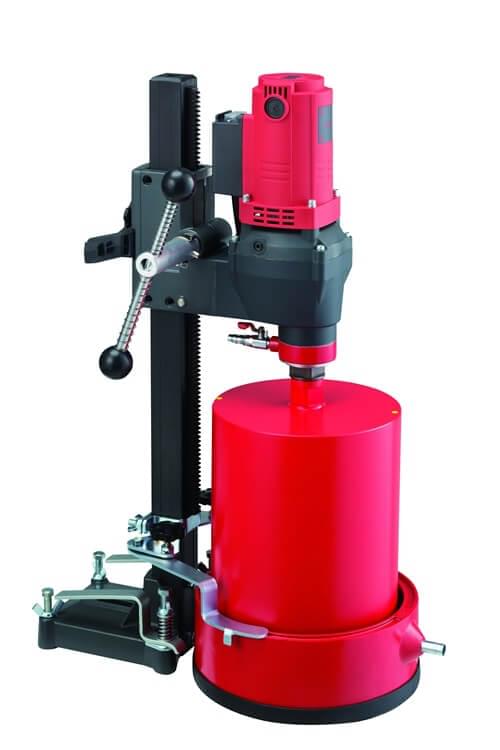 Source: CONSEC CORPORATION Official Website
(https://www.consec.co.jp/article_source/data/en_product/detail/158.html)Drill Head SPN-203At
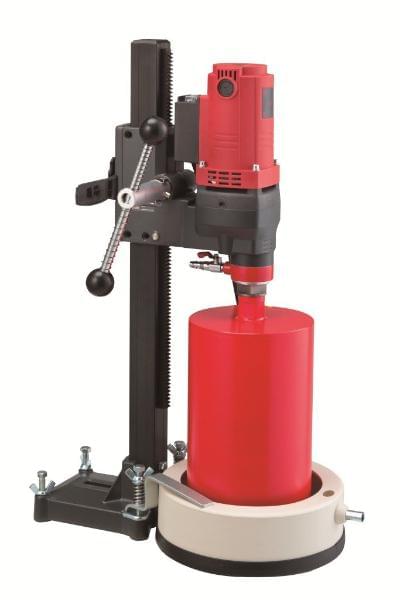 Source: CONSEC CORPORATION Official Website
(https://www.consec.co.jp/article_source/data/en_product/detail/162.html)SPO-400U3w
 Source: CONSEC CORPORATION Official Website
(https://www.consec.co.jp/article_source/data/en_product/detail/166.html)Built to strict Japanese quality standards, this compact machine packs a high-performance motor into a 13.6 kg body. Robust against temperature swings and tough conditions—lightweight yet reliable enough to keep crews drilling with minimal downtime.
A proprietary control design that delivers both precision and light weight. The Automatic Feeding System reads drilling load in real time, physically preventing operator over-feeding and eliminating abnormal tool wear. Holds steady drilling speed and extends consumable life(*1)—even on sites with limited space or a high volume of small-diameter holes.
-
Prioritize Automation
Advanced Digital Control for Automation and On-Site Safety
HiltiDD 250-CA
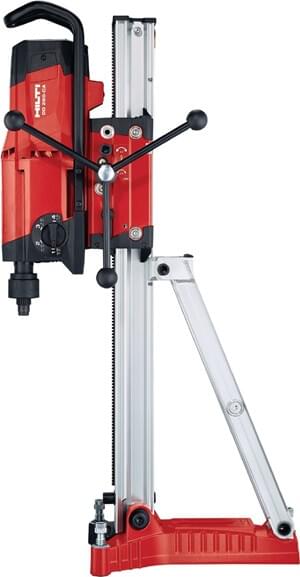 Source: Hilti Official Website (https://www.hilti.com/c/CLS_POWER_TOOLS_7125/CLS_DIAMOND_CORING_7125/r12321865)
DD 110-U-22
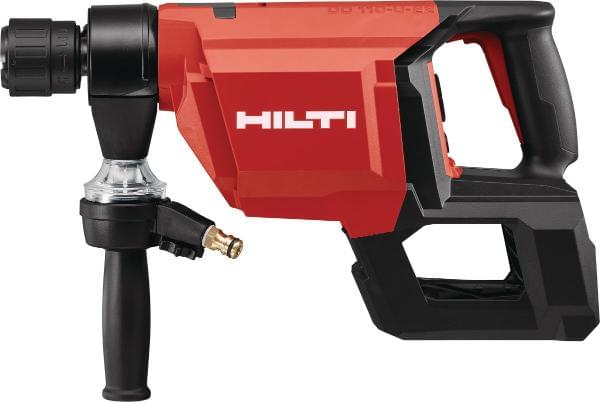 Source: Hilti Official Website (https://www.hilti.co.jp/c/CLS_POWER_TOOLS_7125/CLS_DIAMOND_CORING_7125/r18888605)
DD 160-22
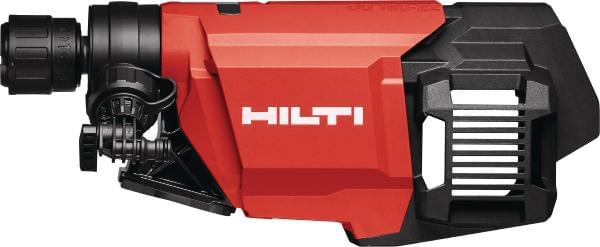 Source: Hilti Official Website (https://www.hilti.co.jp/c/CLS_POWER_TOOLS_7125/CLS_DIAMOND_CORING_7125/r18888607)
Hilti Cut Assist digitally controls drilling pressure and water flow throughout the cut. Once set, the hole is drilled fully automatically. This drives labor savings and productivity gains on large-scale jobs with hundreds of holes.
Active Torque Control (ATC) instantly detects jamming of the core bit, and electronically stops sudden kickback that can cause workplace injuries. ATC meets strict safety standards for large-scale projects while reducing the risk of human error.
-
Prioritize Value
Professional Coring Performance at a Reasonable Price
CAYKENOND-925 (E)
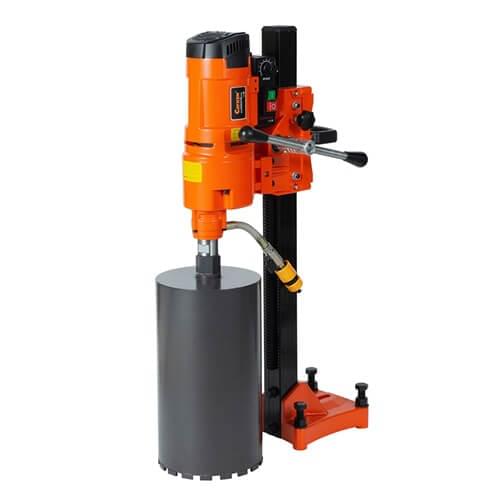 Source: CAYKEN Official Website (https://caykentools.com/ja/diamond-core-drill-machine/ond-925e-diamond-core-drill/)
SCY-18/2EBM
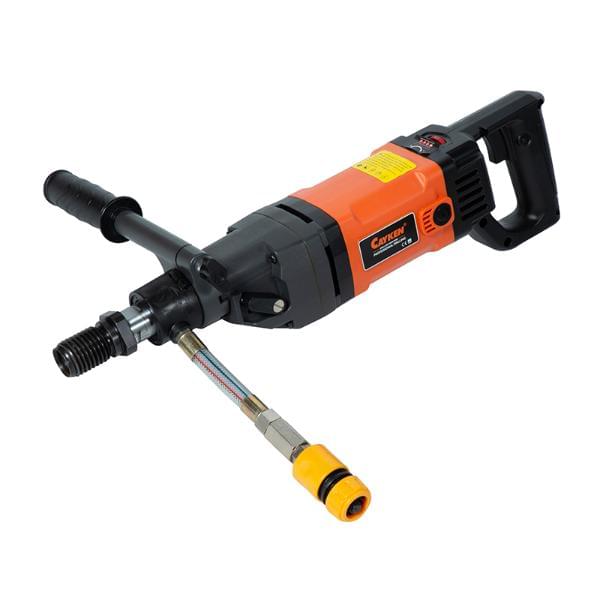 Source: CAYKEN Official Website (https://caykentools.com/diamond-core-drill-machine/scy-18-diamond-core-drill/)
SCY-1780/3EBS
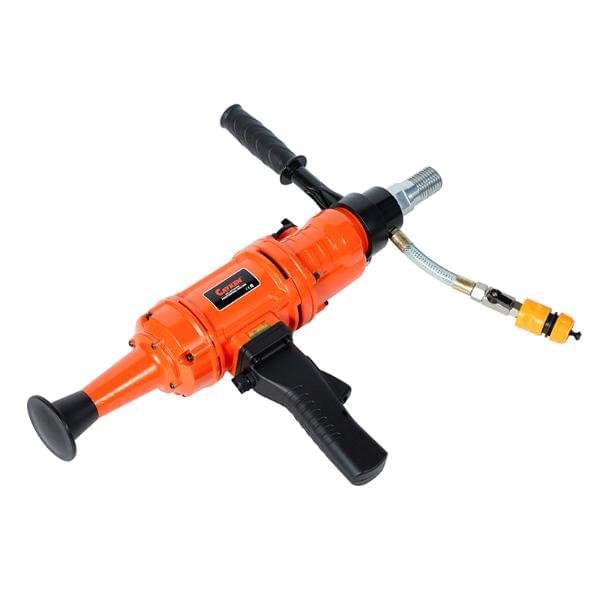 Source: CAYKEN Official Website (https://caykentools.com/diamond-core-drill-machine/scy-1780-diamond-core-drill/)
Rig-based drills start in the $200s, while handheld models start in the $100s, offering affordable options across the lineup(*2). The drill delivers a strong ROI both as a backup for primary machine downtime and for rapid deployment at expanding jobsites.
A reliable mechanical gearbox and a rigid extruded-aluminum stand reflect a specialist manufacturer's focus on core drilling fundamentals. It reliably delivers precise drilling performance even at demanding jobsites, at a competitive cost.
*1.Based on CONSEC SPZ-253U2i specifications: two-speed no-load at 490/1,150 min⁻¹ with the proprietary Automatic Feeding System (optional).
Source: CONSEC CORPORATION Official Website.(https://www.consec.co.jp/article_source/data/en_product/detail/158.html)
*2.Among the 15 brands ranking at the top of an English-language Google search for "diamond core drill," these models are priced below the category average and are among the lowest in both rig-based and handheld categories (based on the editorial team's independent research as of April 17, 2026).