Navigation
This page explains the basic mechanism and main uses of a diamond core drill rig. This type of drill keeps the bit on axis and produces stable, consistent holes even at large diameters or significant depths. The page also covers common jobsite challenges and their solutions, plus what to weigh when deciding whether a diamond core drill rig is the right fit for your jobsite.
What This Page Covers
- How a Rig-Mounted Drill Delivers High-Precision, Safe Holes
- Typical Applications such as Large-Diameter and Deep-Hole Drilling, Where a Handheld Drill Cannot Keep Up
- Key Selection Criteria such as Column Rigidity and Stroke Length, Matched to Your Jobsite
How a Diamond Core Drill Rig Works
The dedicated rig is anchored to a wall or floor, and the drill unit advances straight along a fixed axis as it cuts the hole. Instead of being held by hand, the drill travels along a fixed rail, which keeps the bit on axis and produces consistent, stable drilling.
The main components are a base that anchors the unit, a column that guides the drill as it advances, and a feed handle that drives the drill unit forward. During operation, the drill unit is fed gradually along the fixed column while the diamond core bit at the tip spins, cutting a cylindrical core through concrete or other base materials.
Main Applications of Diamond Core Drill Rigs
Because the base is rigidly anchored, the drill tracks a steady, wander-free path and delivers strong feed force, making a rig-based setup well suited to large-diameter and deep holes in hard reinforced concrete that a handheld drill cannot handle.
A diamond core drill rig is mainly used where millimeter-level accuracy is required in deep, hard base materials. Examples include seismic retrofits of buildings and bridges, through-penetrations for large MEP runs, and core sampling for dam strength testing, all to the dimensions called out on the drawings.
Typical Bit Shapes and Size Ranges
Most core bits are shaped to cut a cylindrical core out of the base material.
Size ranges vary widely by application, from small diameters of about 20 mm (roughly 0.8 in) up to large diameters of more than 200 mm (about 8 in).
Source: Hilti Official Website (https://www.hilti.com/c/CLS_POWER_TOOLS_7125/CLS_DIAMOND_CORING_7125/r5063?utm_source=chatgpt.com&activeTab=preconfigured-kits-tabs)
Source: Hilti Official Website (https://www.hilti.com/c/CLS_POWER_TOOLS_7125/CLS_DIAMOND_CORING_7125/r18888607?utm_source=chatgpt.com&activeTab=preconfigured-kits-tabs)
Challenges and Solutions When Using a Diamond Core Drill Rig
Frictional Heat That Burns Out the Bit
When using a rig-based drill on hard concrete, intense frictional heat builds up where the bit contacts the base material. This can cause the cutting edge to degrade and burn out. As burnout progresses, cutting performance drops, forcing operators to stop and replace the core bit, which decreases overall productivity.
The basic technique for preventing burnout is to avoid pushing the feed handle too hard and maintain a consistent feed pressure while drilling. A rig with an auto-feed system that senses load and adjusts feed rate on the fly evens out operator-to-operator variation and reduces stress on the core bit.
Slurry Splatter and the Cleanup It Creates on the Jobsite
Most diamond core drill rig work uses wet drilling, where cooling water mixes with cuttings to produce slurry. If that slurry splatters across the work area, it can stain floors and nearby equipment, driving up cleanup and site protection work.
A common fix is to build a water collection ring or vacuum port into the base so slurry is captured as you drill. On jobsites where moisture and mess need to be kept to a minimum, choosing a dry-rated rig that connects to a dust extractor can dramatically cut down on post-job cleanup.
How to Choose a Diamond Core Drill Rig
When choosing a rig, check the maximum drilling diameter and the stroke length, which indicates how deep the rig can advance in a single pass. The next key factor is the power source. Electric rigs are the standard choice for general use, but a hydraulic rig is the better fit for underwater work, hot-work-restricted areas, or extra-large-diameter jobs that demand maximum power.
Another important factor is the balance between rig rigidity and weight. Lightweight aluminum columns pay off on jobsites where the rig moves often, while a high-rigidity steel column with minimal flex—or a heavy, wide-base rig—is the better choice for deep or large-diameter holes. On jobsites where water cannot be supplied, look for brands and accessories rated for dry drilling (operation without water).
Summary
A diamond core drill rig delivers stable, millimeter-precision drilling with minimal bit wander on large-diameter or deep holes that are tough to handle with a handheld drill.
To boost jobsite productivity, it is essential to first identify the required drilling diameter and the site constraints (power, water, space), then determine the type of drill that fits your operation.
Once the right type of drill is settled, the next step is to pick a model that directly solves the jobsite challenges at hand—whether that means hitting tight deadlines or boosting safety on large-scale infrastructure projects.
This site features recommended diamond core drills categorized by use case. Use it to help shortlist a drill that fits the team's needs.
By Priority:
3 Diamond Core Drills, Matched to Your Need-
Prioritize Lightweight
Japanese-Built Durability in a Serviceable Compact Design
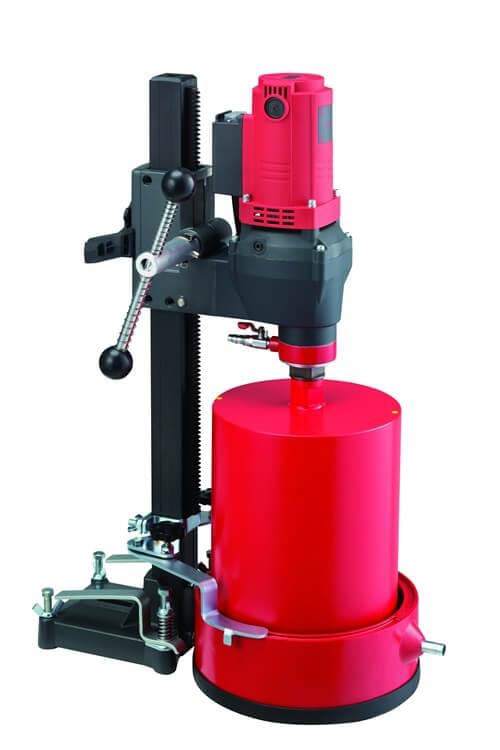
Hakken(CONSEC)SPZ-253U2i
 Source: CONSEC CORPORATION Official Website
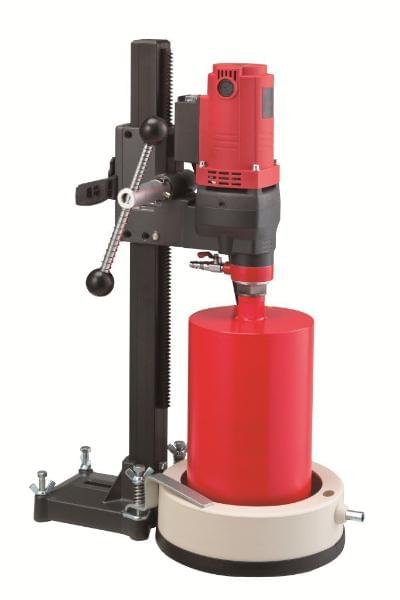
(https://www.consec.co.jp/article_source/data/en_product/detail/158.html)Drill Head SPN-203At
 Source: CONSEC CORPORATION Official Website
(https://www.consec.co.jp/article_source/data/en_product/detail/162.html)SPO-400U3w
 Source: CONSEC CORPORATION Official Website
(https://www.consec.co.jp/article_source/data/en_product/detail/166.html)Built to strict Japanese quality standards, this compact machine packs a high-performance motor into a 13.6 kg body. Robust against temperature swings and tough conditions—lightweight yet reliable enough to keep crews drilling with minimal downtime.
A proprietary control design that delivers both precision and light weight. The Automatic Feeding System reads drilling load in real time, physically preventing operator over-feeding and eliminating abnormal tool wear. Holds steady drilling speed and extends consumable life(*1)—even on sites with limited space or a high volume of small-diameter holes.
-
Prioritize Automation
Advanced Digital Control for Automation and On-Site Safety
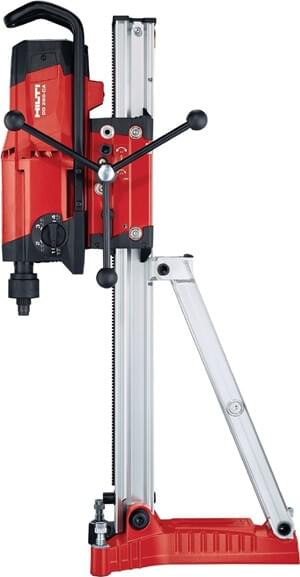
HiltiDD 250-CA
 Source: Hilti Official Website (https://www.hilti.com/c/CLS_POWER_TOOLS_7125/CLS_DIAMOND_CORING_7125/r12321865)
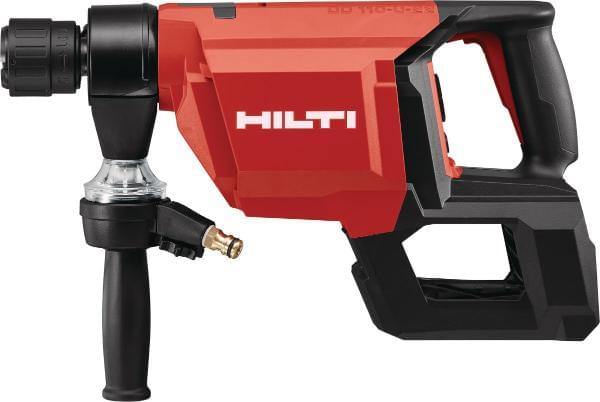
DD 110-U-22
 Source: Hilti Official Website (https://www.hilti.co.jp/c/CLS_POWER_TOOLS_7125/CLS_DIAMOND_CORING_7125/r18888605)
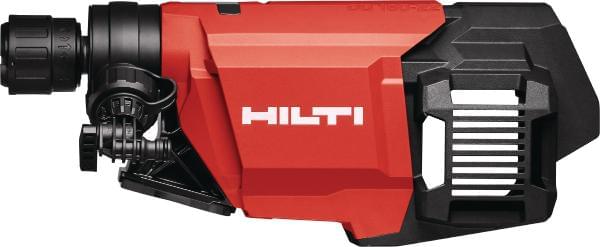
DD 160-22
 Source: Hilti Official Website (https://www.hilti.co.jp/c/CLS_POWER_TOOLS_7125/CLS_DIAMOND_CORING_7125/r18888607)
Hilti Cut Assist digitally controls drilling pressure and water flow throughout the cut. Once set, the hole is drilled fully automatically. This drives labor savings and productivity gains on large-scale jobs with hundreds of holes.
Active Torque Control (ATC) instantly detects jamming of the core bit, and electronically stops sudden kickback that can cause workplace injuries. ATC meets strict safety standards for large-scale projects while reducing the risk of human error.
-
Prioritize Value
Professional Coring Performance at a Reasonable Price
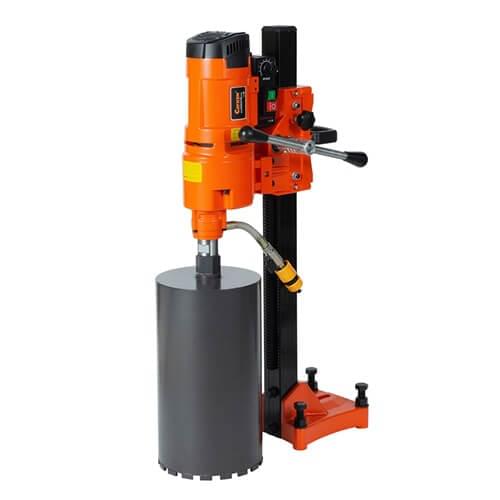
CAYKENOND-925 (E)
 Source: CAYKEN Official Website (https://caykentools.com/ja/diamond-core-drill-machine/ond-925e-diamond-core-drill/)
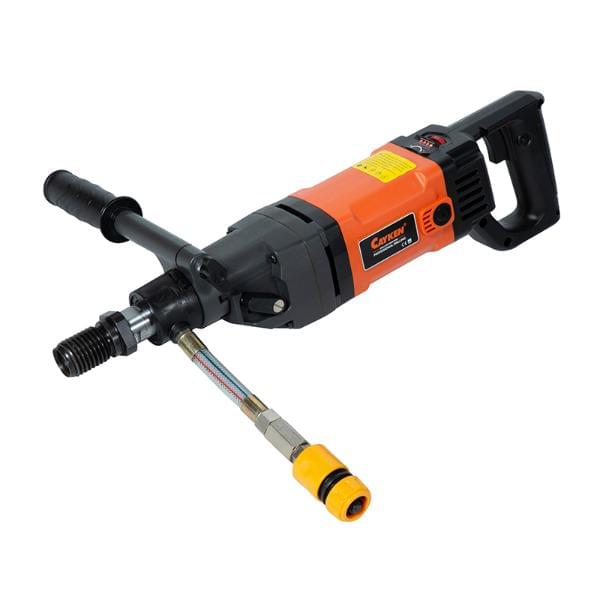
SCY-18/2EBM
 Source: CAYKEN Official Website (https://caykentools.com/diamond-core-drill-machine/scy-18-diamond-core-drill/)
SCY-1780/3EBS
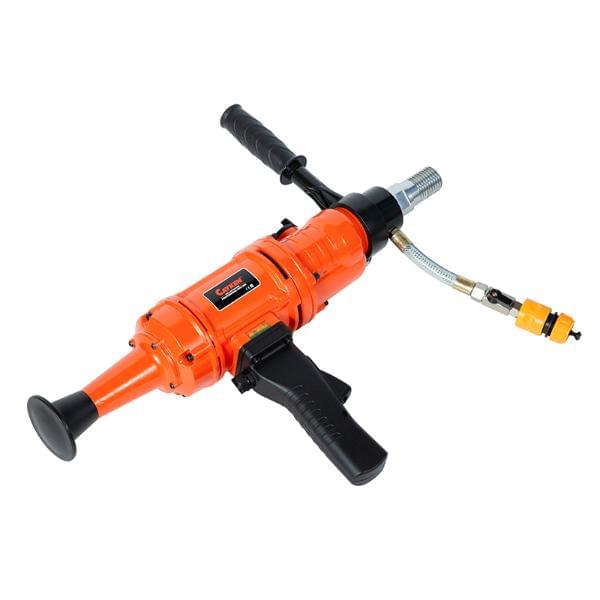 Source: CAYKEN Official Website (https://caykentools.com/diamond-core-drill-machine/scy-1780-diamond-core-drill/)
Rig-based drills start in the $200s, while handheld models start in the $100s, offering affordable options across the lineup(*2). The drill delivers a strong ROI both as a backup for primary machine downtime and for rapid deployment at expanding jobsites.
A reliable mechanical gearbox and a rigid extruded-aluminum stand reflect a specialist manufacturer's focus on core drilling fundamentals. It reliably delivers precise drilling performance even at demanding jobsites, at a competitive cost.
*1.Based on CONSEC SPZ-253U2i specifications: two-speed no-load at 490/1,150 min⁻¹ with the proprietary Automatic Feeding System (optional).
Source: CONSEC CORPORATION Official Website.(https://www.consec.co.jp/article_source/data/en_product/detail/158.html)
*2.Among the 15 brands ranking at the top of an English-language Google search for "diamond core drill," these models are priced below the category average and are among the lowest in both rig-based and handheld categories (based on the editorial team's independent research as of April 17, 2026).