
Industrial Diamond Core Drill Compendium » Diamond Core Drill Comparison » Hilti vs Husqvarna Core Drill
Start your Hilti vs Husqvarna core drill comparison with the holes you need to drill: their diameter, depth, material, and number of holes per day. Then determine whether the job requires handheld drilling, a stand-mounted system, or cordless operation. These requirements will help you narrow down the options before brand preference becomes a factor.
For each candidate, compare the complete drilling setup and request a demonstration using materials representative of your actual work. This guide references U.S. product listings reviewed on September 18, 2026. Product specifications, availability, packages, and support arrangements in India may differ, so confirm the details with the local supplier before purchasing. This comparison covers documented capabilities and purchasing considerations; it does not include a head-to-head drilling test.
Hilti vs Husqvarna Core Drills at a Glance
Both brands offer handheld and stand-mounted options, including cordless machines. The examples below group products by the applications they cover. They are intended as starting points for comparison, not as an indication that every paired model has identical capabilities.
◀◀ Swipe to scroll ▶▶
| Requirement | Hilti examples | Husqvarna examples | What to confirm first |
|---|---|---|---|
| Corded handheld and stand-mounted work | DD 150-U | DM 230 | Permitted diameter for the material and operating mode |
| Corded rig-based drilling | DD 250-CA | DM 400 | Required diameter, stand configuration, and site power supply |
| Cordless handheld or stand-mounted work | DD 150-U-22, using Nuron batteries | DM 540i, using BLi-X batteries | Whether the model covers your typical drilling requirements |
| Larger cordless stand-mounted work | Select a model based on the job specification | DM 1 PACE, using PACE batteries | Complete system capacity and charging requirements |
For occasional drilling work, also compare the cost of rental or specialist drilling services. For recurring work, ask each supplier to specify the complete equipment setup required for the same set of jobs.
Sources: Hilti and Husqvarna official product pages
Hilti DD 150-U, DD 250-CA, and DD 150-U-22
Husqvarna DM 230, DM 400
Hilti DD 150-U, DD 250-CA, and DD 150-U-22
Husqvarna DM 230, DM 400
Compare Core Drills for the Same Type of Work
Handheld and Stand-Mounted Corded Drilling
The Hilti DD 150-U and Husqvarna DM 230 are both candidates for applications that require corded equipment capable of handheld and stand-mounted drilling. Hilti lists wet drilling in concrete and dry drilling in masonry for the DD 150-U. Husqvarna lists wet and dry drilling applications for the DM 230.
Match the drilling method to the material before comparing capacity. An overall diameter range does not indicate the permitted diameter for every handheld, stand-mounted, wet, or dry application. Ask the supplier to confirm the applicable operating limits for your exact model and configuration.
The U.S. product page for the DM 230 contains conflicting information about the maximum handheld drilling diameter, so confirm this specification before ordering. For either machine, a useful demonstration should cover tool positioning and switching between the operating modes you expect to use, as well as the drilling itself.
Rig-Based Drilling for Larger Holes
Hilti describes the DD 250-CA as a rig-based machine with an overall diameter range of 12–500 mm, approximately 1/2–20 inches. Husqvarna gives the DM 400 a recommended range of 55–350 mm and lists a maximum stand-mounted diameter of 14 inches. These specifications are defined differently and should not be treated as equivalent working ranges.
If your required hole diameter exceeds the DM 400's stated capacity, consider another suitable model rather than treating this limitation as representative of Husqvarna's entire range. For applications where the two machines overlap, compare the proposed stand, power requirements, drilling depth, and bit specifications.
A wider published diameter range can be useful if it covers jobs that another machine cannot handle. However, it does not indicate faster drilling at diameters supported by both machines. Before drawing conclusions about productivity, request a trial using your typical hole diameter and depth.
Cordless Drilling: Match the Platform to the Hole Size
Hilti's DD 150-U-22 uses Nuron batteries. Its model-specific page describes concrete coring from 52–162 mm and masonry coring up to 252 mm. Because these figures are material-specific, confirm the permitted operating mode for your intended diameter.
Husqvarna's BLi-X-powered DM 540i covers a smaller diameter range, with capacities of up to 75 mm for handheld drilling and up to 100 mm when used with the DS 150 stand. The DM 1 PACE serves a different type of application as a stand-mounted machine using the 94V PACE system, with a listed maximum diameter of 16 inches.
These models give buyers several distinct cordless options. For each suitable machine, request a battery and charger proposal based on representative drilling work, including any expected charging breaks. If you already use either battery platform, verify the exact compatible battery models before assuming that existing batteries can be reused.
Sources: Hilti and Husqvarna official product pages
Hilti DD 150-U, DD 250-CA, and DD 150-U-22
Husqvarna DM 230, DM 400, DM 540i
Hilti DD 150-U, DD 250-CA, and DD 150-U-22
Husqvarna DM 230, DM 400, DM 540i
Compare the Complete Drilling Setup
Stands, Fixing Methods, and Core Bit Connections
Ask each supplier to identify the approved stand, base, fixing method, and core bit connection in writing. Include access restrictions and drilling direction in your request so that the proposed setup reflects the conditions in which the machine will actually be used.
If you plan to reuse existing equipment, provide the model numbers and dimensions. Ask the supplier to confirm the complete combination, including any required adapters, before treating existing bits or stands as a purchasing advantage. During a demonstration, also check the space required for positioning, adjustment, and core removal.
Water Supply, Slurry Collection, and Dry-Drilling Equipment
Hilti lists Bluetooth connectivity between the DD 150-U and its WMS 100 water management system. Husqvarna lists the WT 15i water tank, WSR slurry collectors, and W 70 P wet vacuum among the DM 400's related accessories. These listings do not indicate which accessories are included in a particular package.
Ask for a proposal that covers water supply, slurry collection, and cleanup for your drilling locations. For dry drilling, request the specified bit and dust-extraction equipment for the material being drilled. During a demonstration, include filling, emptying, and cleaning the equipment when measuring the total time required for the job.
Feed Control and Operator Feedback
The DD 250-CA offers an optional Cut Assist autofeed unit. The DM 400 lists an LED load indicator, Elgard overload warning, and a three-speed gearbox. Automatic feed and operator feedback serve different purposes, so combining them into a single “smart features” score would hide important differences between the systems.
If automatic feed is important to your application, ask each supplier to specify an approved combination of motor, stand, and feed unit. Confirm how the system is operated and supervised. The U.S. DM 400 page reviewed for this comparison does not identify an equivalent autofeed configuration. This should therefore be verified with the supplier rather than interpreted as evidence that Husqvarna does not offer such an option.
Purchase Price, Running Costs, and Local Support
Compare Itemized Quotes, Not Motor Prices Alone
Give both suppliers the same job specification and request separate prices for the motor, stand and base, fixing equipment, bits, water or dust-extraction equipment, and any feed unit. For cordless systems, include batteries and chargers. Make sure the quotation clearly identifies what is included and what must be purchased separately.
Then compare expected running costs based on your own workload. Ask for consumable prices and maintenance requirements, and record bit wear during any trial. Without comparable packages and workload data, a lower advertised motor price does not necessarily mean a lower cost per completed hole.
During a demonstration, record the total time from unloading the equipment to packing it away, in addition to the actual drilling time. This provides a better basis for assessing the overall operation than estimating labour requirements from cutting speed alone.
Check Repairs, Spare Parts, and Rental Options
Hilti lists Tool Service and Fleet Management on the DD 150-U-22 product page. Husqvarna's DM 400 page provides routes for dealer support and demonstration requests. These are useful starting points for investigating local support, but they do not indicate which supplier can return a machine to service more quickly in India.
Ask who handles repairs locally, where commonly required spare parts are stocked, whether a replacement machine can be provided, and what the written service terms exclude. For infrequent drilling work, compare the complete purchase proposal with local rental and subcontracting costs before deciding whether ownership is justified.
Sources: Hilti and Husqvarna official product pages
Hilti DD 150-U-22 services
Hilti DD 150-U-22 services
Which Brand Fits Your Work?
When to Shortlist Hilti
Consider shortlisting Hilti when a suitable Nuron model matches your intended battery setup, or when you specifically want to evaluate the documented WMS connection or optional Cut Assist configuration. These are reasons to investigate particular systems rather than benefits that apply to every Hilti core drill.
Among the larger corded models compared here, the DD 250-CA may also be worth considering when your required drilling diameter falls outside the DM 400's stated capacity. Confirm the complete configuration required for that application.
When to Shortlist Husqvarna
Consider shortlisting Husqvarna when the DM 230 or DM 400 matches your corded drilling requirements, or when you want to evaluate its different cordless options: the DM 540i for smaller-diameter holes and the DM 1 PACE for stand-mounted drilling.
An existing supplier or dealer relationship may also be relevant if the dealer can confirm the required equipment, consumables, and repair arrangements. Evaluate these factors alongside the machine's documented operating limits.
What to Confirm Before You Buy
Provide each supplier with a short specification covering diameter, depth, material, reinforcement, drilling direction, holes per day, and available power and water. Ask for a complete equipment list and written confirmation that the proposed configuration supports those conditions.
If both proposals meet your requirements, compare them through a representative demonstration and documented ownership costs. The final choice should be based on the drilling requirements and support arrangements you can verify for your site.
Frequently Asked Questions
Is Hilti or Husqvarna better for reinforced concrete?
This comparison does not identify a brand-wide winner. Compare suitable machines under the same conditions, including hole diameter, depth, reinforcement, and equivalent bit specifications. Record setup, drilling, and cleanup time, as well as consumable wear.
Do both brands offer cordless core drills?
Yes. The models discussed above show that both brands offer battery-powered options, although their drilling capacities and battery platforms differ. Confirm the operating mode and material-specific limits before selecting a machine.
Can Hilti and Husqvarna use the same core bits?
Do not assume that core bits are interchangeable based on the brand alone. Ask the supplier to confirm the exact machine connection, compatible bit, any required adapter, and the permitted operating conditions for the proposed combination.
By Priority:
3 Diamond Core Drills, Matched to Your Need-
Prioritize Lightweight
Japanese-Built Durability in a Serviceable Compact Design
Hakken(CONSEC)SPZ-253U2i
 Source: CONSEC CORPORATION Official Website
(https://www.consec.co.jp/article_source/data/en_product/detail/158.html)Drill Head SPN-203At
 Source: CONSEC CORPORATION Official Website
(https://www.consec.co.jp/article_source/data/en_product/detail/162.html)SPO-400U3w
 Source: CONSEC CORPORATION Official Website
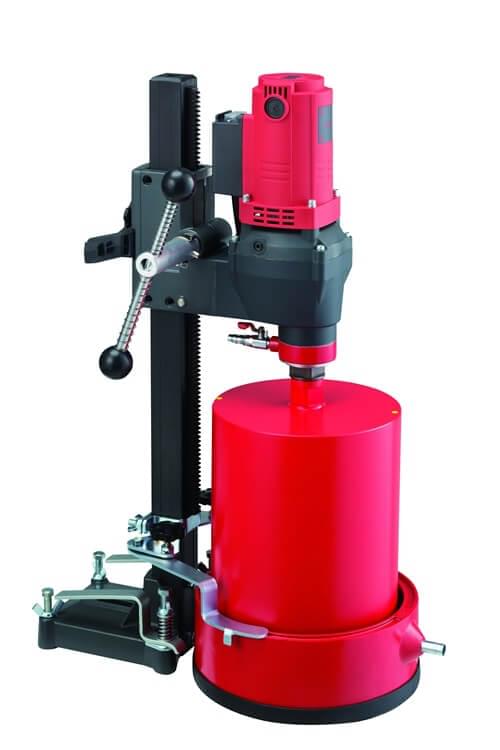
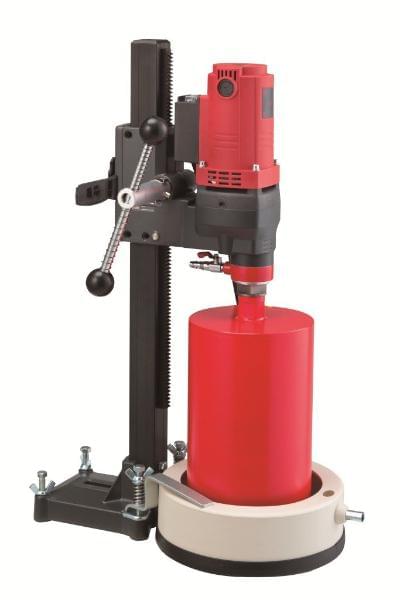
(https://www.consec.co.jp/article_source/data/en_product/detail/166.html)Built to strict Japanese quality standards, this compact machine packs a high-performance motor into a 13.6 kg body. Robust against temperature swings and tough conditions—lightweight yet reliable enough to keep crews drilling with minimal downtime.
A proprietary control design that delivers both precision and light weight. The Automatic Feeding System reads drilling load in real time, physically preventing operator over-feeding and eliminating abnormal tool wear. Holds steady drilling speed and extends consumable life(*1)—even on sites with limited space or a high volume of small-diameter holes.
-
Prioritize Automation
Advanced Digital Control for Automation and On-Site Safety
HiltiDD 250-CA
 Source: Hilti Official Website (https://www.hilti.com/c/CLS_POWER_TOOLS_7125/CLS_DIAMOND_CORING_7125/r12321865)
DD 110-U-22
 Source: Hilti Official Website (https://www.hilti.co.jp/c/CLS_POWER_TOOLS_7125/CLS_DIAMOND_CORING_7125/r18888605)
DD 160-22
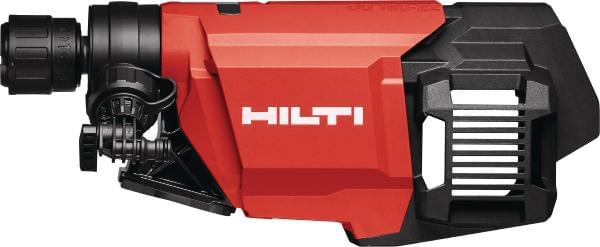 Source: Hilti Official Website (https://www.hilti.co.jp/c/CLS_POWER_TOOLS_7125/CLS_DIAMOND_CORING_7125/r18888607)
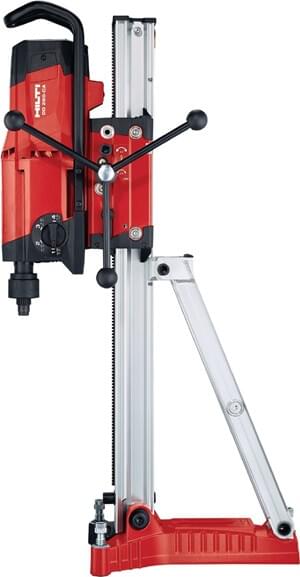
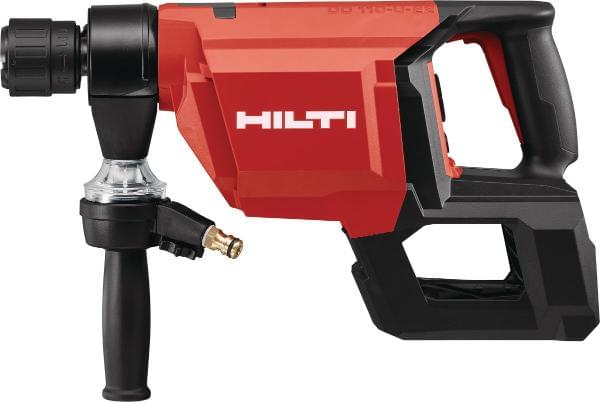
Hilti Cut Assist digitally controls drilling pressure and water flow throughout the cut. Once set, the hole is drilled fully automatically. This drives labor savings and productivity gains on large-scale jobs with hundreds of holes.
Active Torque Control (ATC) instantly detects jamming of the core bit, and electronically stops sudden kickback that can cause workplace injuries. ATC meets strict safety standards for large-scale projects while reducing the risk of human error.
-
Prioritize Value
Professional Coring Performance at a Reasonable Price
CAYKENOND-925 (E)
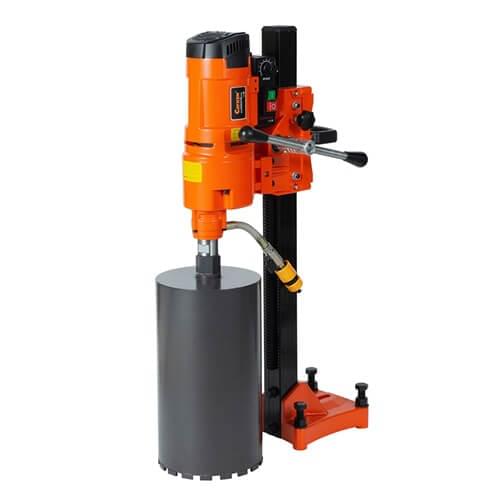 Source: CAYKEN Official Website (https://caykentools.com/ja/diamond-core-drill-machine/ond-925e-diamond-core-drill/)
SCY-18/2EBM
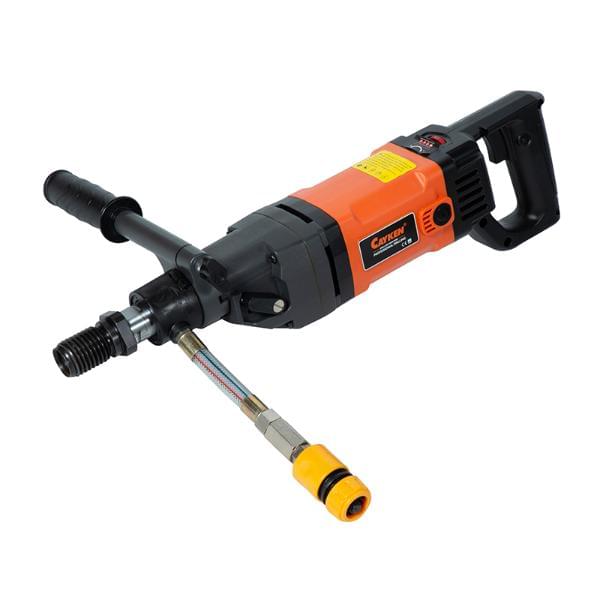 Source: CAYKEN Official Website (https://caykentools.com/diamond-core-drill-machine/scy-18-diamond-core-drill/)
SCY-1780/3EBS
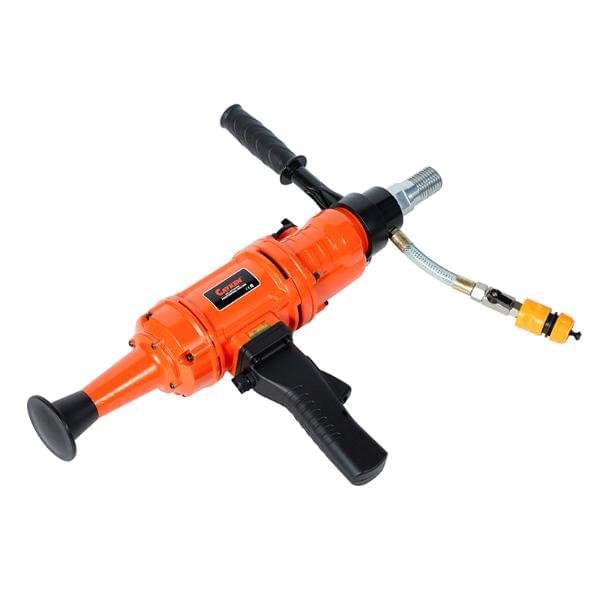 Source: CAYKEN Official Website (https://caykentools.com/diamond-core-drill-machine/scy-1780-diamond-core-drill/)
Rig-based drills start in the $200s, while handheld models start in the $100s, offering affordable options across the lineup(*2). The drill delivers a strong ROI both as a backup for primary machine downtime and for rapid deployment at expanding jobsites.
A reliable mechanical gearbox and a rigid extruded-aluminum stand reflect a specialist manufacturer's focus on core drilling fundamentals. It reliably delivers precise drilling performance even at demanding jobsites, at a competitive cost.
*1.Based on CONSEC SPZ-253U2i specifications: two-speed no-load at 490/1,150 min⁻¹ with the proprietary Automatic Feeding System (optional).
Source: CONSEC CORPORATION Official Website.(https://www.consec.co.jp/article_source/data/en_product/detail/158.html)
*2.Among the 15 brands ranking at the top of an English-language Google search for "diamond core drill," these models are priced below the category average and are among the lowest in both rig-based and handheld categories (based on the editorial team's independent research as of April 17, 2026).