
Navigation
Dry diamond core drills are an effective option for indoor renovation and MEP penetrations where water cannot be used. This page covers dry diamond core drills—how they work, how they differ from wet drilling, suitable applications, common challenges, and key selection criteria.
What This Page Covers
- How a dry diamond core drill works and how it differs from a wet diamond core drill
- Suitable jobsites and materials, plus typical bit shapes and sizes
- Selection criteria that address dust and heat challenges
How a Dry Diamond Core Drill Works
A dry diamond core drill grinds holes without using water as a coolant. It reduces water management and site protection work, making it a strong fit for indoor renovation and MEP work where water is hard to use. Eliminating the need for water is the key difference from a wet diamond core drill.
In recent years, the range of applications has expanded thanks to dry-specific bits with friction-reducing spiral profiles, combined with core drills that feature a micro-vibration (soft percussion) function for tackling hard-to-cut materials.
That said, dry drilling requires managing cooling and dust suppression through means other than water. Dry drilling isn't just about convenience—it works best when heat and dust can be managed effectively. Keeping this in mind makes selection easier.
Main Applications of Dry Diamond Core Drills
Dry diamond core drills are well suited to indoor renovation, occupied facilities, electrical wiring and plumbing penetrations, drilling around brick, block, and stone, and openings in concrete walls and floors. Because dry drilling eliminates water splash, it's ideal for jobsites looking to minimize site protection and cleanup work.
Typical Bit Shapes and Size Ranges
Bits are essentially hollow cylinders. Dry core bits often feature spiral barrels and dust extraction capability. Typical sizes run 42–202 mm*1, up to 162 mm for handheld units*2, or 9/16 to 8 inches*3. In practice, beyond hole diameter, you also need to check several other points, including length, connection standard, and whether the drill is handheld or rig-based.
*1 Source: Husqvarna Official Website (https://www.husqvarnaconstruction.com/int/diamond-tools/diamond-core-drill-bits/elite-drill-d20dry/)
*2 Source: Hilti Official Website (https://www.hilti.com/c/CLS_POWER_TOOLS_7125/CLS_DIAMOND_CORING_7125/r4141)
*3 Source: DEWALT Official Website (https://www.dewalt.com/en-us/products/power-tools/power-tool-accessories/drill-impact-bits)
Challenges and Solutions When Using a Dry Diamond Core Drill
Dust and Heat Are the Main Hurdles in Dry Drilling
Although dry drilling is easier to set up, it presents challenges such as dust, heat buildup, increased bit wear, and inconsistent drilling accuracy. Unlike wet drilling, where water handles cooling and dust suppression, dry drilling demands a different operating and maintenance approach. Pay close attention to variations in product specifications. Some drills are designed for unreinforced concrete and are not suitable for hard-aggregate concrete.
Getting the Most Out of Dry Drilling with Dust Extraction and Good Setup
It's best to apply countermeasures in this order: pair the drill with a dust extractor or vacuum dust collection system (VDCS), capture dust at the source, select bits that match the material, control feed pressure to avoid pressing too hard, and inspect bits before drilling. The real advantage of dry drilling goes beyond skipping water—these drills perform at their best on jobsites with proper dust extraction and well-matched materials.
How to Choose a Dry Diamond Core Drill
When choosing a drill, start by checking the type of material and the amount of rebar. Among dry diamond core drills, some are designed for reinforced concrete, while others are intended for brick, block, and unreinforced concrete. Next, check the required hole diameter and depth, and work backward from those dimensions to spec the drill.
Next, decide whether a handheld drill is sufficient or whether a rig-based setup is needed to prioritize precision. Finally, check the dust extraction environment and the connection standard. Do not rely solely on the 'dry' label when choosing a diamond core drill. Instead, compare across four conditions: material, hole diameter, drilling method, and surrounding environment.
This site features a wide range of diamond core drills, including dry drills. Use it as a reference when selecting a drill.
Summary
Dry diamond core drills provide an effective drilling method at jobsites where the use of water is impractical. They perform well in indoor renovations and MEP penetrations, but dust control, heat management, and material compatibility must still be considered. Review the application and jobsite conditions before choosing a drill—there are several criteria to weigh, including handheld vs. rig-based drills and the dust extraction environment.
This site features information on a wide range of diamond core drill manufacturers. Use it as a reference when comparing and evaluating drills.
By Priority:
3 Diamond Core Drills, Matched to Your Need-
Prioritize Lightweight
Japanese-Built Durability in a Serviceable Compact Design
Hakken(CONSEC)SPZ-253U2i
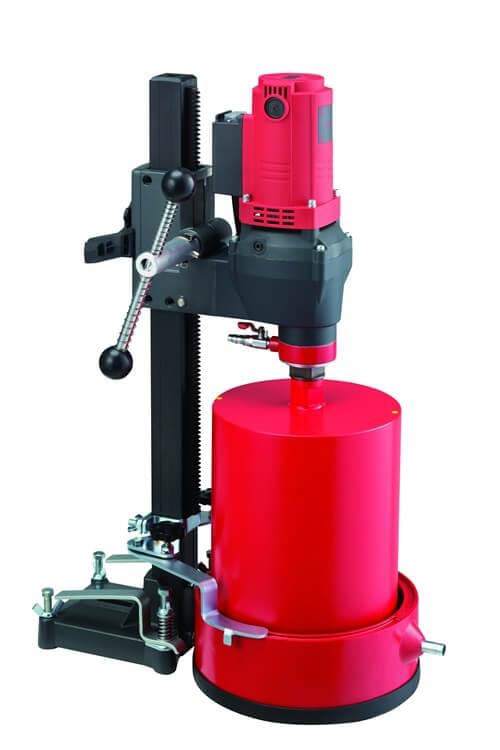 Source: CONSEC CORPORATION Official Website
(https://www.consec.co.jp/article_source/data/en_product/detail/158.html)Drill Head SPN-203At
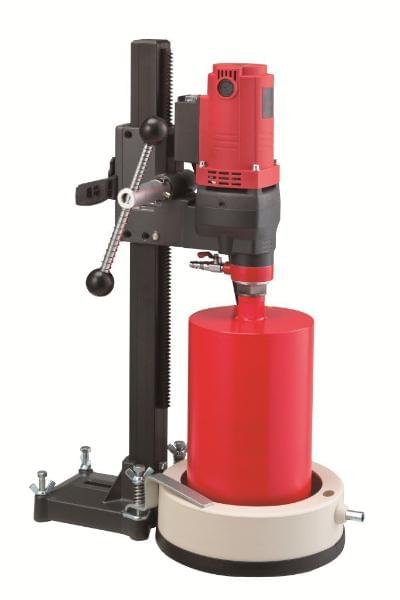 Source: CONSEC CORPORATION Official Website
(https://www.consec.co.jp/article_source/data/en_product/detail/162.html)SPO-400U3w
 Source: CONSEC CORPORATION Official Website
(https://www.consec.co.jp/article_source/data/en_product/detail/166.html)Built to strict Japanese quality standards, this compact machine packs a high-performance motor into a 13.6 kg body. Robust against temperature swings and tough conditions—lightweight yet reliable enough to keep crews drilling with minimal downtime.
A proprietary control design that delivers both precision and light weight. The Automatic Feeding System reads drilling load in real time, physically preventing operator over-feeding and eliminating abnormal tool wear. Holds steady drilling speed and extends consumable life(*1)—even on sites with limited space or a high volume of small-diameter holes.
-
Prioritize Automation
Advanced Digital Control for Automation and On-Site Safety
HiltiDD 250-CA
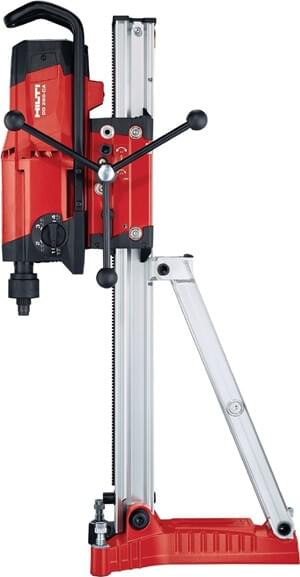 Source: Hilti Official Website (https://www.hilti.com/c/CLS_POWER_TOOLS_7125/CLS_DIAMOND_CORING_7125/r12321865)
DD 110-U-22
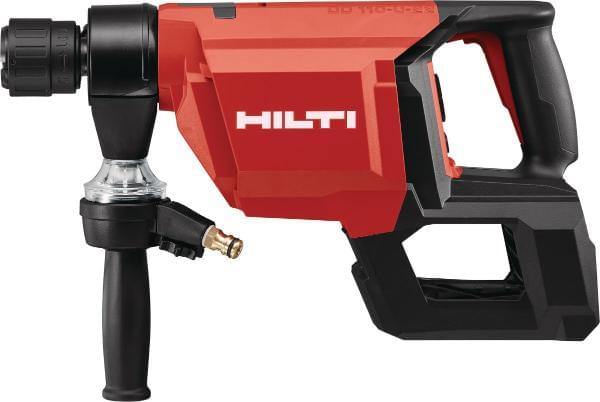 Source: Hilti Official Website (https://www.hilti.co.jp/c/CLS_POWER_TOOLS_7125/CLS_DIAMOND_CORING_7125/r18888605)
DD 160-22
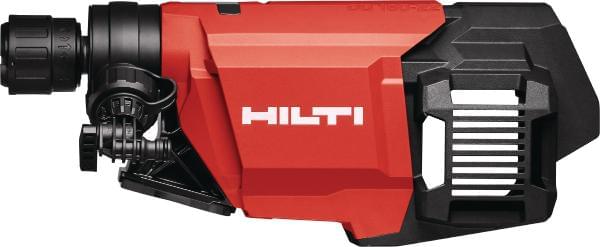 Source: Hilti Official Website (https://www.hilti.co.jp/c/CLS_POWER_TOOLS_7125/CLS_DIAMOND_CORING_7125/r18888607)
Hilti Cut Assist digitally controls drilling pressure and water flow throughout the cut. Once set, the hole is drilled fully automatically. This drives labor savings and productivity gains on large-scale jobs with hundreds of holes.
Active Torque Control (ATC) instantly detects jamming of the core bit, and electronically stops sudden kickback that can cause workplace injuries. ATC meets strict safety standards for large-scale projects while reducing the risk of human error.
-
Prioritize Value
Professional Coring Performance at a Reasonable Price
CAYKENOND-925 (E)
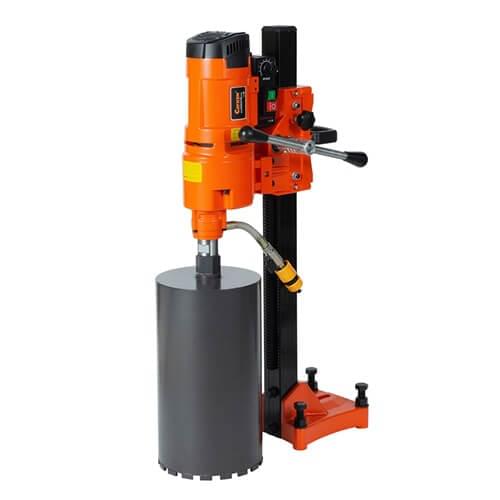 Source: CAYKEN Official Website (https://caykentools.com/ja/diamond-core-drill-machine/ond-925e-diamond-core-drill/)
SCY-18/2EBM
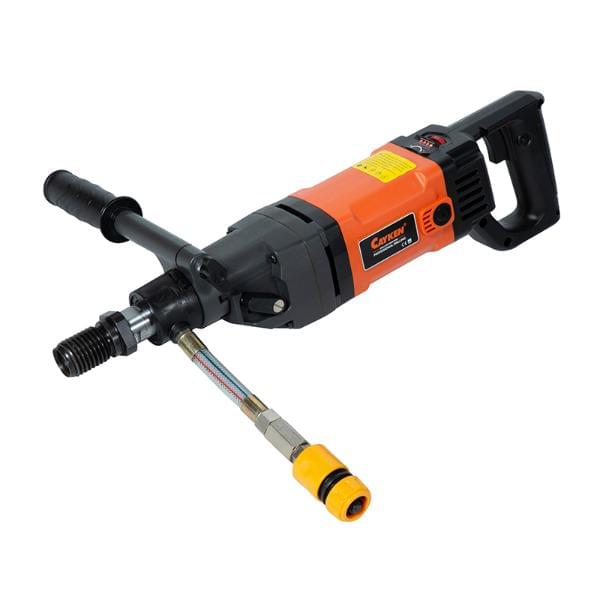 Source: CAYKEN Official Website (https://caykentools.com/diamond-core-drill-machine/scy-18-diamond-core-drill/)
SCY-1780/3EBS
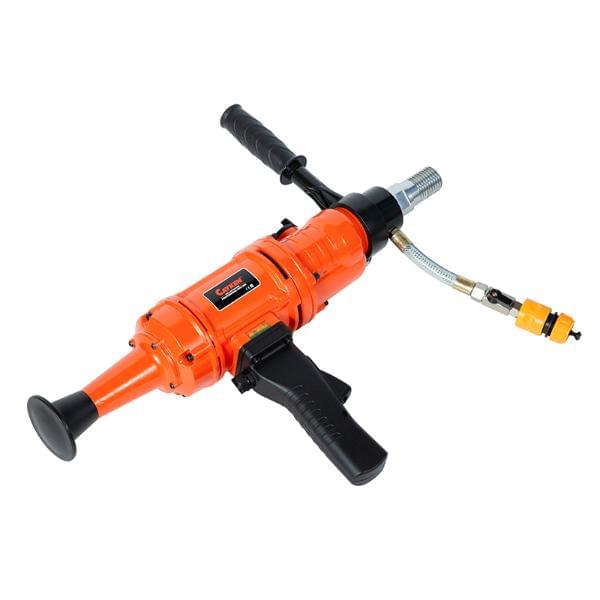 Source: CAYKEN Official Website (https://caykentools.com/diamond-core-drill-machine/scy-1780-diamond-core-drill/)
Rig-based drills start in the $200s, while handheld models start in the $100s, offering affordable options across the lineup(*2). The drill delivers a strong ROI both as a backup for primary machine downtime and for rapid deployment at expanding jobsites.
A reliable mechanical gearbox and a rigid extruded-aluminum stand reflect a specialist manufacturer's focus on core drilling fundamentals. It reliably delivers precise drilling performance even at demanding jobsites, at a competitive cost.
*1.Based on CONSEC SPZ-253U2i specifications: two-speed no-load at 490/1,150 min⁻¹ with the proprietary Automatic Feeding System (optional).
Source: CONSEC CORPORATION Official Website.(https://www.consec.co.jp/article_source/data/en_product/detail/158.html)
*2.Among the 15 brands ranking at the top of an English-language Google search for "diamond core drill," these models are priced below the category average and are among the lowest in both rig-based and handheld categories (based on the editorial team's independent research as of April 17, 2026).